Survey of 4,500 long-term care workers finds average 93 hours worked monthly
Home-visit care workers earn 1.08 million won, far below facility-based peers
86% demand pay raises; 38.5% endure mistreatment without reporting it
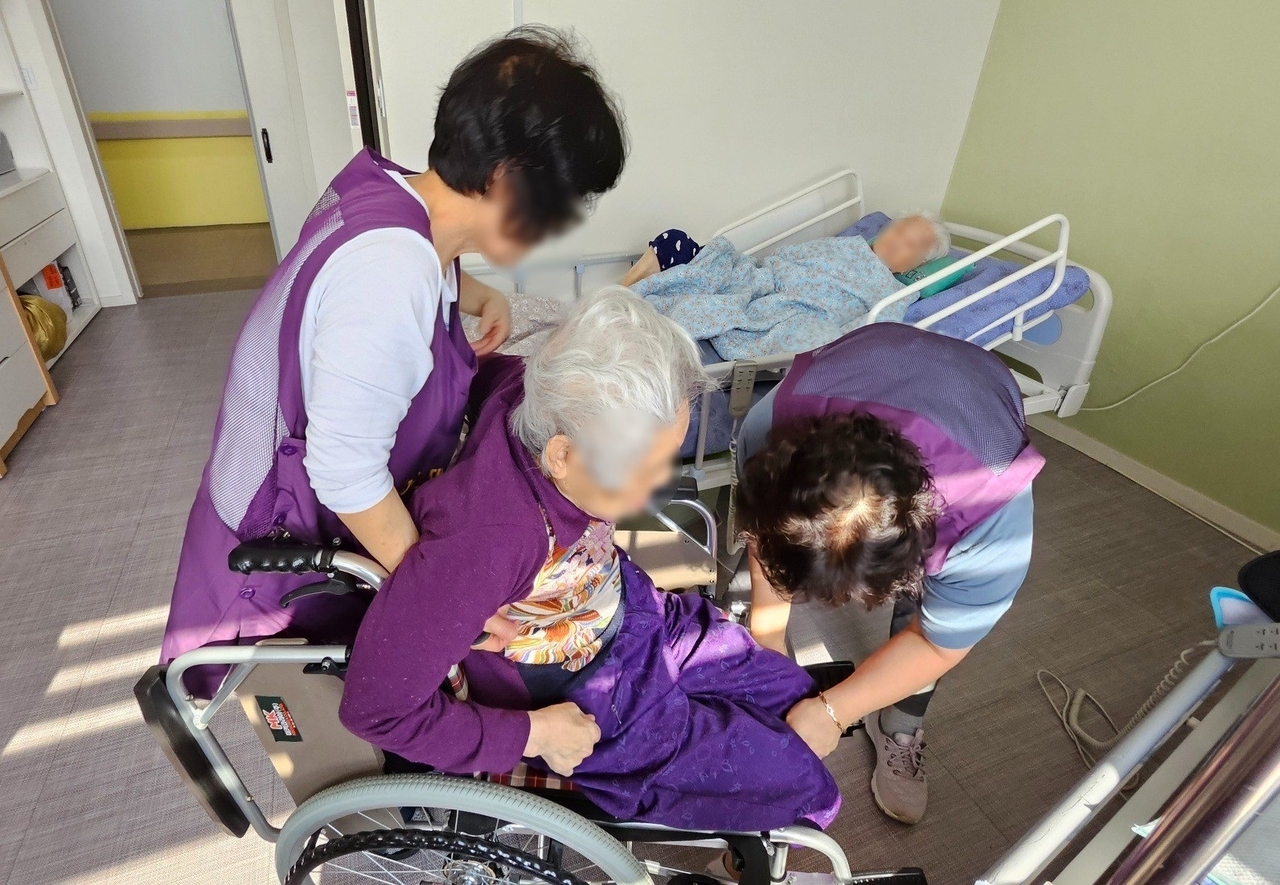
As South Korea deepens its transition into a super-aged society, workers providing frontline elder care earn an average of just 1.27 million won ($949) a month, a new survey shows. Six in 10 care workers are employed on hourly-wage contracts, and those in home-visit care earn even less — an average of 1.08 million won monthly.
With demand for long-term care services rising amid rapid aging, experts warn that low pay and precarious employment conditions among care workers could threaten the long-term sustainability of the system.
According to a report published Thursday in the November issue of Health and Welfare Forum by the Korea Institute for Health and Social Affairs, care workers — among the 4,500 long-term care workers who took part in the 2025 long-term care survey — earned an average of 1.27 million won a month and worked an average of 93 hours monthly.
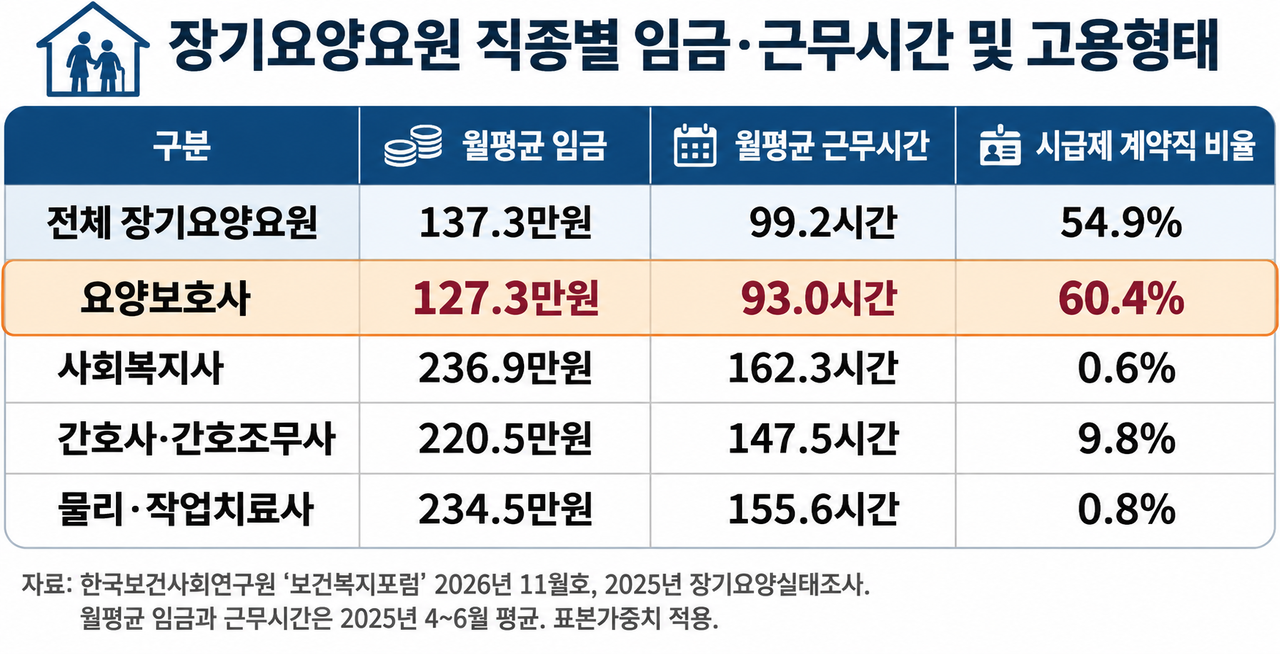
Across all categories of long-term care workers, the monthly average wage was 1.37 million won, with average working hours of 99.2 per month.
By occupation, social workers earned 2.37 million won on average, physical and occupational therapists 2.35 million won, and nurses and nursing assistants 2.21 million won — all significantly higher than care workers. The report cautioned, however, that differences in working hours make it difficult to interpret the monthly wage gap as a direct reflection of hourly pay differences.
Employment conditions were also unstable. Among care workers, 60.4 percent were on hourly-wage contracts, while 27.4 percent held permanent positions and 12.2 percent were on full-time fixed-term contracts. Even across all long-term care workers combined, hourly contract workers accounted for 54.9 percent — more than half.
Particularly stark was the gap between home-based and facility-based care workers. Those providing home-based care earned an average of 1.18 million won a month, roughly half the 2.23 million won earned by facility-based workers. Average monthly working hours also differed sharply — 84.2 hours for home-based workers versus 163.7 hours for facility-based workers. Among home-visit care workers specifically, the monthly average wage was just 1.08 million won, with average hours of 77.3.
Structural and regulatory factors contributed to the gap. Among home-based care workers, 39.1 percent were either caring for a family member or combining family caregiving with general care work. Because family caregivers face limits on billable hours under the benefit cost calculation system, their average working hours and wages tend to be recorded at lower levels.
The care workforce itself is also aging. Workers in their 60s made up the largest share at 45.7 percent, and those aged 70 or older accounted for 17.7 percent — meaning 63.4 percent of all long-term care workers are 60 or older.
Low pay has emerged as a leading reason workers leave the field. Among those who changed jobs in the past year, 21.7 percent cited low wages — up 12.3 percentage points from 9.4 percent in 2022. By contrast, the share who left due to a lack of work fell from 24.5 percent to 13.4 percent over the same period.
Working conditions remained difficult in other respects. Over the past year, 15.6 percent of long-term care workers reported experiencing verbal abuse — including criticism, shouting or profanity — from clients or their families, while 10.5 percent reported physical threats such as pinching or shoving. Another 6.5 percent said they had experienced sexual harassment or inappropriate physical contact.
Among those who had experienced mistreatment, 38.5 percent said they simply endured it and continued working without taking any action. Even when incidents were reported to their employing organization, 30.6 percent said the organization took no follow-up measures.
The improvement workers most urgently called for was higher pay. Some 86.1 percent of long-term care workers listed wage increases as their top priority for better treatment. Guarantees of legally mandated allowances and rest and working hours came second at 38.8 percent, followed by reducing wage disparities between organizations at 33.8 percent. The figures reflect combined first- and second-choice responses.
"Working conditions for long-term care workers are improving in some respects, but continued support is needed in terms of wage levels and safe working environments," said Kang Eun-na, a research fellow at the Korea Institute for Health and Social Affairs. "Policy to improve the treatment of long-term care workers should center on raising wages, while also addressing safety and rights protection and tailoring working environment improvements to each type of care service."
fact0514@heraldcorp.com