Big three shipbuilders compete for AI executives in second half
Samsung Heavy hires from LG Display; HD Korea Shipbuilding scouts from SK On; Hanwha Ocean poaches from HD Hyundai Heavy
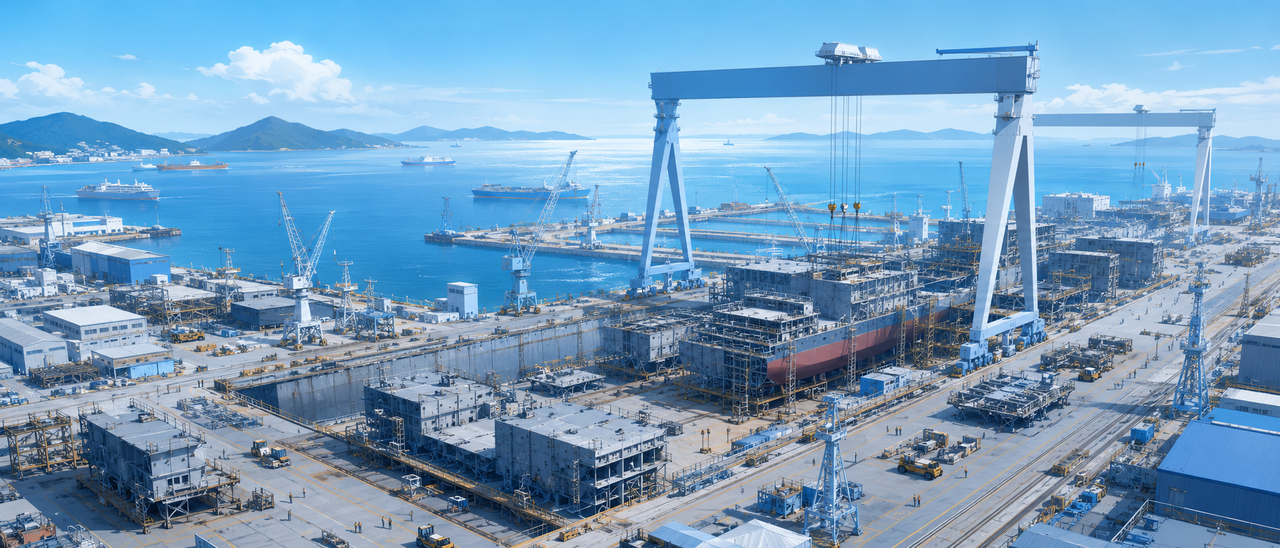
South Korea's major shipbuilders have been aggressively recruiting AI talent in the second half of this year, poaching executives not only from advanced industries such as IT, defense and batteries but also from direct competitors, as they push to accelerate their AI transformation.
Quarterly reports filed Wednesday by the country's three largest shipbuilders — HD Korea Shipbuilding & Offshore Engineering, Hanwha Ocean and Samsung Heavy Industries — confirm that all three brought in outside AI hires in the second half of this year. The recruitments coincide with sweeping organizational restructurings centered on AI transformation that each company has carried out in succession.
Samsung Heavy Industries in August recruited Lee Young-ju, a former head of the manufacturing AI division at LG Display, as executive director of its newly elevated AX and PI Center — a unit upgraded from the previous ADX division. Lee had led AI transformation projects at LG Display.
HD Korea Shipbuilding & Offshore Engineering appointed No Jong-geuk, formerly of SK On, as head of its digital transformation strategy division in June. The company had launched an AI command center called the AIX Promotion Office earlier this year, then reorganized its digital transformation unit by splitting it into separate strategy and operations arms — a restructuring that brought No on board. No is a smart-factory specialist who previously served as chief investment officer at HL Mando before becoming a vice president at SK On.
Hanwha Ocean in August recruited Kim Seong-min, former head of the platform innovation department at rival HD Hyundai Heavy Industries, to lead its production innovation task force. The company also added Moon Bo-hyeong as chief information security officer; Moon previously served as head of the technology protection team at Korea Aerospace Industries and head of the security operations center at SK Planet.
South Korea's shipbuilders are accelerating AI-driven innovation as they navigate the twin challenges of expanding cooperation with the United States and competing with China. HD Korea Shipbuilding & Offshore Engineering aims to complete a fully operational Future Optimal Shipyard by 2030, targeting a 30 percent improvement in productivity and a 30 percent reduction in construction time. To that end, the company is working with Germany's Siemens to build an AI-powered smart shipyard.
Shipyard AI transformation is also a central pillar of the MASGA project, a framework for shipbuilding cooperation with the United States. Given the shortage of skilled workers in the US market stemming from the industry's long decline there, the companies are pursuing cooperation focused on using AI to drive up productivity.
HD Hyundai has set the construction of an AI-enabled shipyard in the United States as its cooperation goal. Last month, HD Hyundai established a shipbuilding joint venture called HD Kiewit Shipbuilding with Kiewit, a major American construction and engineering firm. The two companies plan to break ground on the US shipyard in 2027 and begin full operations in 2029. The facility is set to be the first in the United States to adopt HD Hyundai's Future Optimal Shipyard model.
Hanwha Ocean, which set up a dedicated AI transformation business unit this year, is targeting full automation of its welding processes by 2030. The company currently deploys robots only in welding, but plans to expand their use next year to the Philly Shipyard — its US shipbuilding cooperation hub — and extend automation to more demanding processes such as pre-treatment painting.

klee@heraldcorp.com