Shin Dong-guk used company funds to partly finance off-market purchase of Hanmi Science shares
Move departs from earlier disclosure citing bank loans as sole funding source
Short-term loans to CEO surged more than tenfold last year, raising questions about repayment
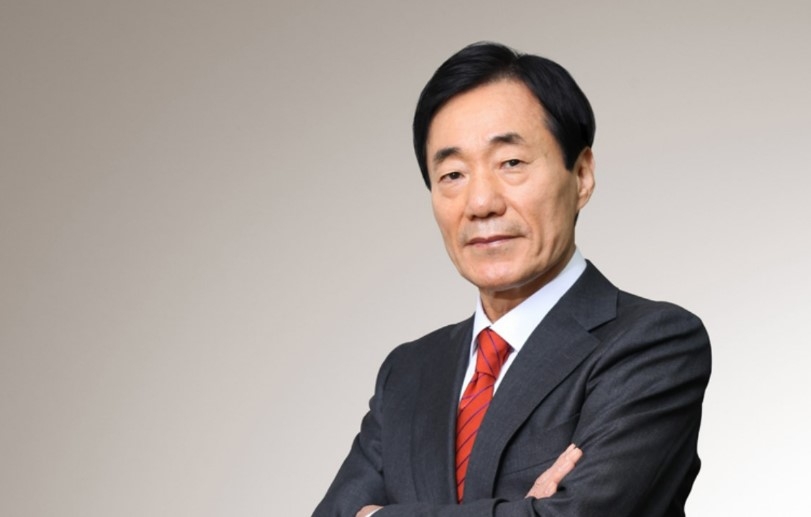
Shin Dong-guk, chairman of Hanyang Precision, has again borrowed a large sum from a company he controls to purchase Hanmi Science shares in his own name, even as he remains under police investigation, according to regulatory filings and legal sources.
The transaction mirrors the pattern that led to the original complaint against Shin, and legal observers say the repeated use of the same funding method is likely to deepen scrutiny of the deal's propriety.
According to the Financial Supervisory Service's DART system and legal sources, Shin purchased 1,382,832 common shares of Hanmi Science in an off-market transaction on Wednesday, investing a total of 69.34 billion won ($51.8 million). Of that amount, Shin borrowed 24 billion won from Hanyang Precision, an unlisted company in which he holds a 100 percent stake.
The funding arrangement differs from what Shin had disclosed when he signed the share acquisition agreement on Oct. 7. At that time, Shin stated that the entire purchase price would be financed through bank loans, with the acquired shares pledged as collateral. The large shareholding report filed as of Wednesday, when the transaction closed, instead shows the funds came from a 24 billion won loan from Hanyang Precision and 45.34 billion won in proceeds from the disposal of securities — with no bank borrowing.
Shin had previously been reported to police on charges of violating the Act on the Aggravated Punishment of Specific Economic Crimes — covering embezzlement and breach of fiduciary duty — over allegations that he repeatedly borrowed corporate funds from Hanyang Precision under the guise of short-term loans to acquire shares in his personal name, then repaid them around the year-end closing period. The case, initially filed with the Yongsan Police Station in Seoul, has since been transferred to the Seoul Metropolitan Police Agency's Financial Crime Investigation Unit and is currently under investigation. The latest transaction, conducted in essentially the same manner, took place while that probe is ongoing.
Questions are also being raised about whether it was appropriate to lend company funds given Hanyang Precision's financial condition. The company posted sales of 82.4 billion won and operating profit of 1.9 billion won last year. Meanwhile, its short-term borrowings jumped 81.6 percent in a single year — from 66.6 billion won in 2024 to 121 billion won last year — and have ballooned more than 43-fold compared with 2.8 billion won in 2023. Annual interest expenses alone reached 8.23 billion won, more than four times the company's operating profit, while cash and cash equivalents at the end of last year stood at just 41.34 million won.
Despite this, short-term loans extended to the CEO — Shin himself — have consistently grown. According to the audit report, Hanyang Precision extended about 40.1 billion won in new loans to its CEO last year, and the outstanding balance of short-term loans to the CEO at year-end stood at 44.41 billion won, more than ten times the 4.31 billion won recorded at the end of the prior year.
The 24 billion won loan from this latest transaction is due for repayment by Dec. 31. Since the original complaint centers in part on the practice of repaying loans at year-end only to redraw funds at the start of the new year, observers are watching closely how cash flows around this year's closing period.
Shin also carries a substantial existing share-backed loan burden. According to the large shareholding report, the outstanding balance on stock-collateral loans secured against 5,959,826 Hanmi Science shares — representing an 8.72 percent stake — held with Hana Securities, Korea Securities Finance and others totals 195.58 billion won. The maturity dates on those collateral agreements are concentrated in March next year, on the 19th and 21st, making the question of how Shin will secure repayment funds another key concern.
Legal experts say that even in a company with a single shareholder, the assets of the corporation and those of the controlling shareholder must be kept strictly separate. While lending funds to a major shareholder is not automatically unlawful, they note that whether breach of fiduciary duty applies depends on factors including whether collateral was provided, the terms of the transaction such as the interest rate, the company's financial condition and the likelihood of repayment.
"Reusing the exact same funding method that is already under investigation could reflect confidence that no legal risk exists — but by ordinary common sense, people generally do not repeat the same approach while a probe is underway," a legal source said. "From the perspective of the Financial Crime Investigation Unit, which has to conduct the investigation, this will only compel them to look at the matter more closely."
silverpaper@heraldcorp.com