Human trial of 100 adults aged 55–85
1,000 mg daily intake outperformed placebo on cognitive tests
Mass-production process and commercial products developed
A compound extracted from milk protein can help improve cognitive functions including memory and concentration, according to new research. A 12-week human trial involving 100 adults aged 55 to 85 with declining memory found that participants who consumed milk-derived peptides showed statistically significant improvements in key cognitive assessment scores compared with those who received a placebo. The research team also developed a mass-production process for the compound and brought it to market as a commercial food product.
The Korea Institute of Planning and Evaluation for Technology in Food, Agriculture and Forestry announced Wednesday that it had confirmed the cognitive benefits of milk-derived peptides and developed both a mass-production process and commercialization technology through the Ministry of Agriculture, Food and Rural Affairs' high-value food technology development project.
The research was led by Neo Cremar in collaboration with Korea University, CJ Wellcare and Yonsei University's Yonsei Dairy, beginning in 2022. The team focused on peptides produced by breaking down milk protein with enzymes. Peptides are compounds formed by chains of amino acids and can be obtained through the protein-digestion process.
Researchers first confirmed the compound's potential through cell and animal experiments. The results showed that milk-derived peptides suppressed the accumulation of reactive oxygen species and dementia-related proteins while increasing levels of neurotransmitters involved in memory and learning. Spatial and object memory improvements were also observed in animal tests.
The team then conducted a human trial with 100 adults aged 55 to 85 who had experienced memory decline. Participants were divided into a group that consumed 1,000 milligrams of milk-derived peptides daily for 12 weeks and a group that received a placebo, and the two groups' outcomes were compared.
The peptide group showed statistically significant improvements over the placebo group in key cognitive scores measuring memory, concentration and verbal ability. Blood protein levels associated with the growth of brain neurons also increased significantly.
However, the press release did not provide specific figures on the magnitude of change in cognitive scores, the number of participants in each group, or detailed information on the trial design. The results therefore cannot be taken as confirmation of any preventive or therapeutic effect against dementia.
The research team went beyond verifying the compound's functional properties and developed a production process capable of manufacturing milk-derived peptides at scale with consistent quality. By standardizing enzyme-breakdown conditions and confirming that quality is maintained during storage, the team established a foundation for use in actual food production.
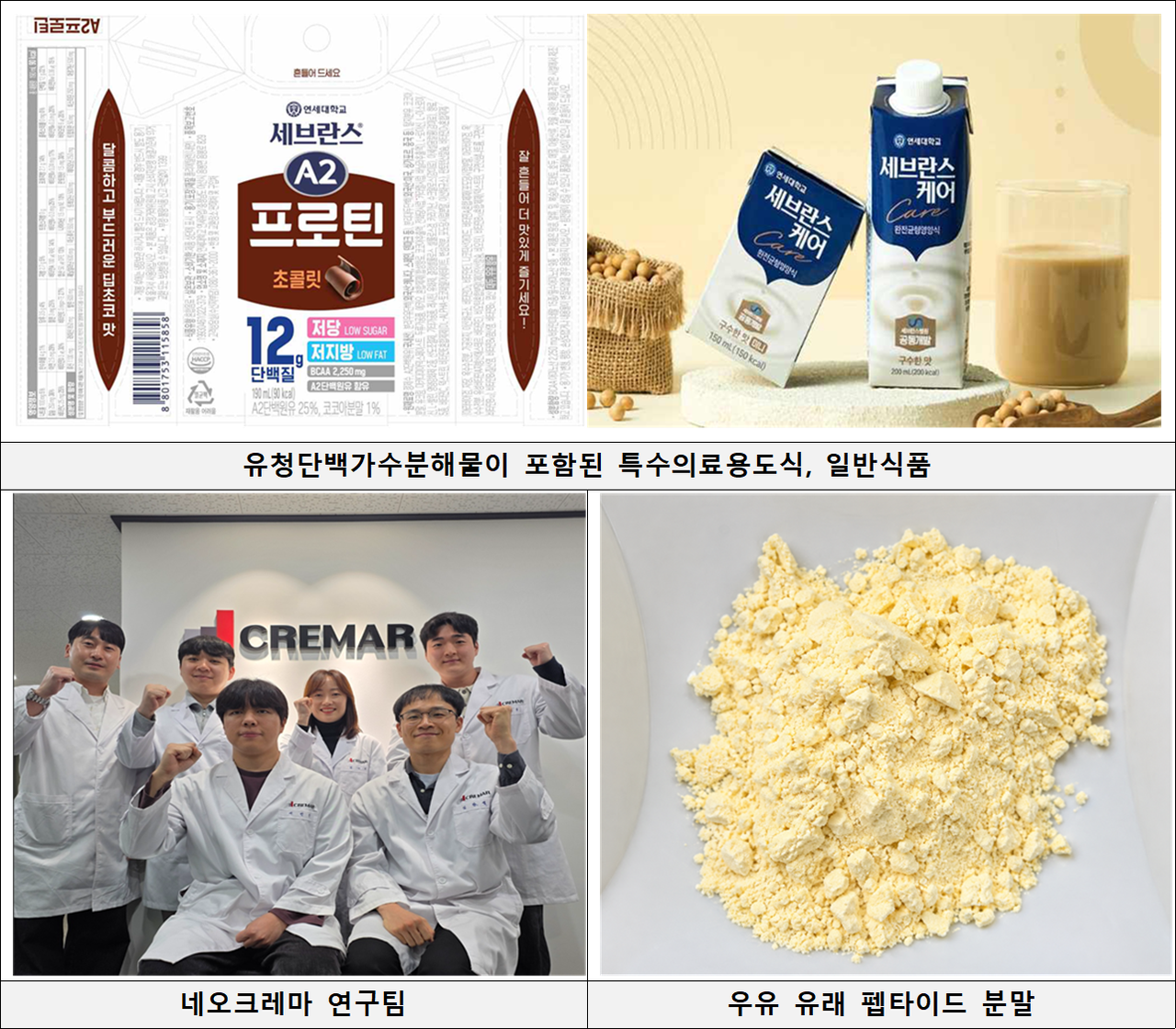
The research also yielded commercial products. Yonsei Dairy, one of the project partners, launched "Severance A2 Protein Chocolate" and "Severance Care Savory Flavor." The institute said the project demonstrated the potential to reposition milk protein from a simple nutritional source into a high-value food ingredient for cognitive health.
The research team plans to pursue broader functional recognition for the ingredient and expand its application to products targeting older consumers.
"This research is an exemplary commercialization case in which R&D support extended beyond basic ingredient development all the way to mass production and the launch of actual consumer products," said Park Hong-jae, president of the institute. "We will continue to actively support field-oriented technology development to promote public health and create added value for the agricultural and food industry."
adastra@heraldcorp.com