Ministry of Statistics releases 2026 social survey results
Share of regular exercisers rises from 48.4% to 51.7%; those in their 40s lowest at 47.7%
Daily stress falls from 38.4% to 33.8%; workplace stress remains at 58%
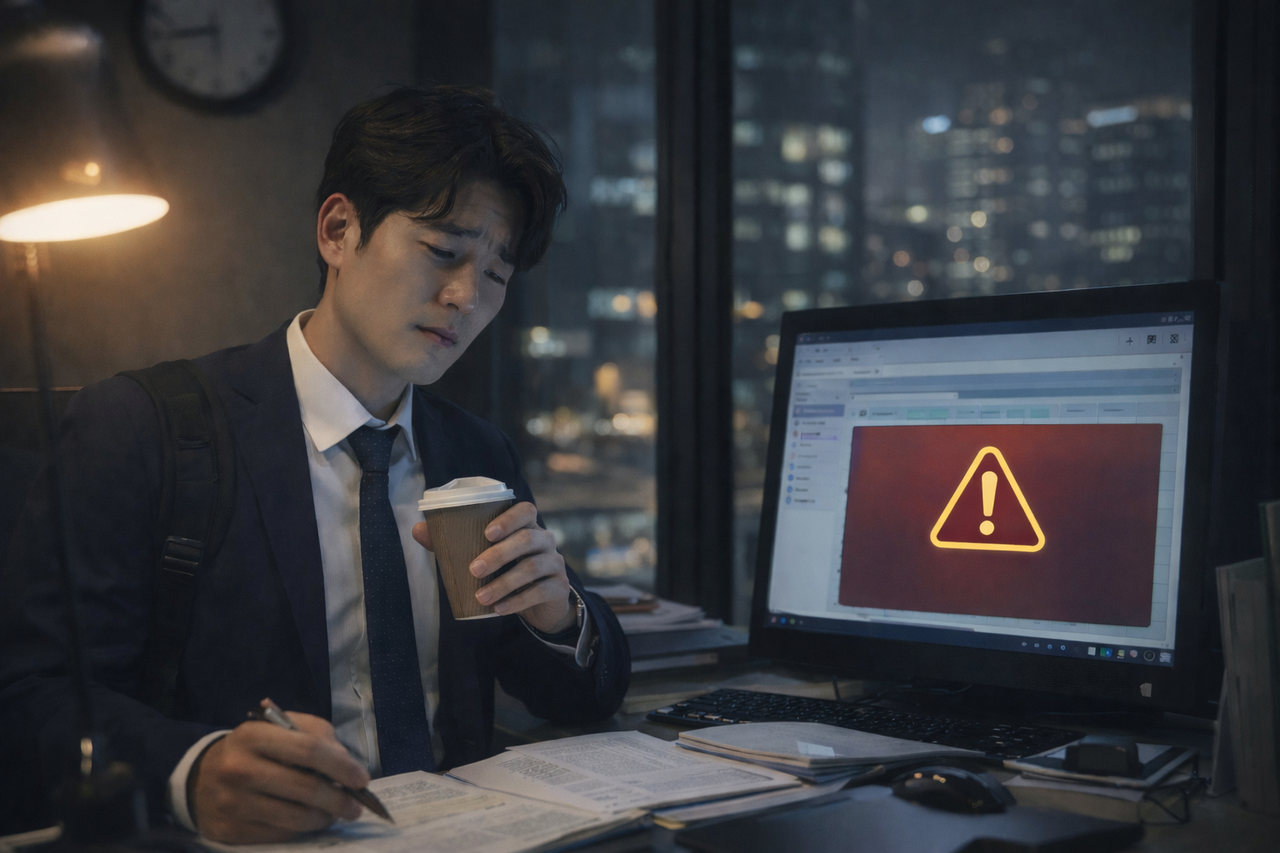
More than half of South Koreans rate their health as good and a majority now exercise regularly, yet six in 10 workers still report feeling stressed at work, according to a new government survey.
While health management practices have improved and the share of people experiencing stress in daily life has declined, workplace stress remains far higher than stress linked to home or school life. People in their 40s — the most economically active age group — had the lowest rate of regular exercise among all age groups.
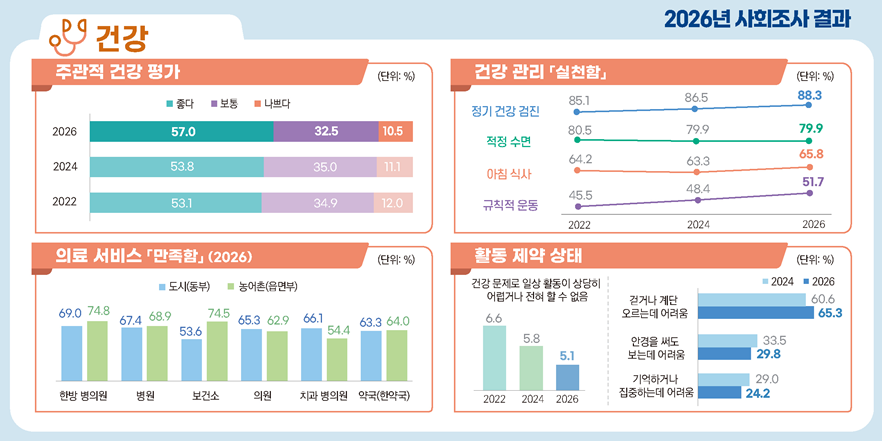
The 2026 Social Survey released Wednesday by the Ministry of Statistics found that 57.0 percent of people aged 13 and older rated their health as good, up 3.2 percentage points from 53.8 percent in 2024. The share who rated their health as poor fell 0.6 percentage points to 10.5 percent.
By gender, 60.1 percent of men gave a positive health assessment, compared with 53.9 percent of women — a gap of 6.2 percentage points. By age, those between 13 and 19 recorded the highest rate at 85.2 percent, with the figure declining steadily with age; among those 60 and older, the share was limited to 36.0 percent.
As subjective health assessments improved, health management practices also rose broadly.
The share of respondents who said they exercise regularly climbed 3.3 percentage points this year to 51.7 percent, up from 48.4 percent in 2024, meaning more than half of the surveyed population now exercises regularly.
However, differences by age group were pronounced. Those aged 60 and older had the highest rate of regular exercise at 54.5 percent, followed by those in their 20s at 52.5 percent, those in their 50s at 51.7 percent and those in their 30s at 51.1 percent. Those in their 40s, at 47.7 percent, ranked lowest among all age groups.
By gender, men reported a regular exercise rate of 54.4 percent, outpacing women at 49.0 percent by 5.4 percentage points.
The share of people who eat breakfast also rose, from 63.3 percent in 2024 to 65.8 percent this year, a gain of 2.5 percentage points. Among younger age groups, however, skipping breakfast remained relatively common.
Those in their 20s had the lowest breakfast rate of any age group at 42.1 percent, while those in their 30s were also low at 46.4 percent. By contrast, 88.5 percent of those aged 60 and older said they eat breakfast regularly — a gap of 46.4 percentage points between the two groups.
The share reporting adequate sleep of six to eight hours a day stood at 79.9 percent, unchanged from two years ago. The rate of regular health checkups rose 1.8 percentage points to 88.3 percent from 86.5 percent, making it the highest-performing health management category in the survey.
As health management practices expanded, the share of people experiencing stress in daily life also declined.
Some 33.8 percent of respondents said they felt stress in their overall daily lives over the past two weeks, down 4.6 percentage points from 38.4 percent in 2024. Of those, 3.1 percent said they felt "a great deal" of stress, while 30.7 percent said they "tend to feel" stressed.
Women reported higher daily stress at 36.0 percent, compared with 31.6 percent for men, a difference of 4.4 percentage points.
Still, the share of people experiencing stress varied widely depending on the area of life.
Some 58.0 percent of respondents said they feel stressed at work, far exceeding the rates for home life at 31.6 percent and school life at 34.7 percent. Workplace stress fell 4.1 percentage points from 62.1 percent in 2024 to 58.0 percent this year, but still well exceeded a majority.
Among those reporting workplace stress, 10.7 percent said they feel "a great deal" of it, while 47.3 percent said they "tend to feel" it. The share who said they do not feel stressed at work was 42.0 percent.
By gender, 58.9 percent of women reported experiencing workplace stress, compared with 57.2 percent of men — a gap of 1.7 percentage points. The share saying they feel "a great deal" of workplace stress was nearly identical: 10.6 percent for men and 10.7 percent for women.
Stress related to home life fell 3.1 percentage points to 31.6 percent this year from 34.7 percent in 2024. School-related stress also eased, slipping 1.0 percentage point to 34.7 percent from 35.7 percent over the same period.
Women reported higher stress in both home and school life. Home-life stress was 36.7 percent for women versus 26.5 percent for men, a gap of 10.2 percentage points. School-life stress stood at 40.2 percent for women and 29.5 percent for men, a difference of 10.7 percentage points.
fact0514@heraldcorp.com