Analysis of 4,483 Koreans aged 40 and older finds one in four sleeps more than an hour later on weekends
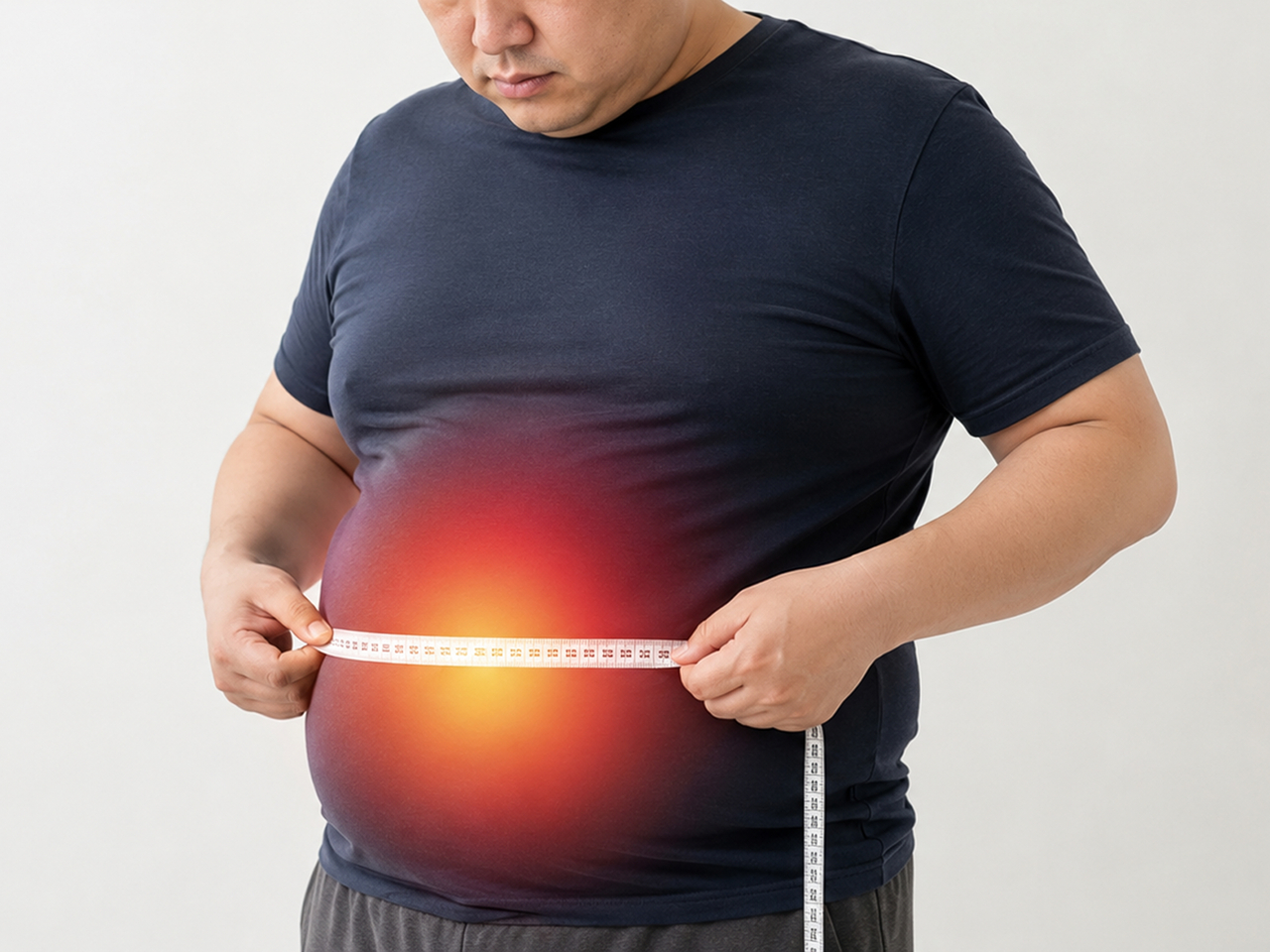
Body fat rate 0.81 percentage points higher; no difference in BMI or waist circumference
Effect most pronounced in adults aged 40–64
Workers pressed by weekday schedules often try to catch up on lost sleep over the weekend. On Saturday mornings, the alarm goes off, and they wake up two or three hours later than usual. But Sunday nights bring restlessness, and Monday mornings arrive with a heavy, sluggish feeling.
Because the number on the scale barely moves, it is easy to dismiss the pattern as harmless. A routine health checkup showing normal BMI and waist circumference only reinforces that sense of reassurance.
The gap between weekday and weekend sleep timing has a name: social jetlag. The term captures how the body's internal clock gradually shifts toward the weekend schedule, only to be forced back to weekday hours come Monday. It is, in effect, adjusting to a new time zone every week.
Research linking greater social jetlag to weight gain is not new. Most earlier studies relied on BMI or tape-measure waist circumference, however — neither of which can distinguish whether the body is made up of fat or muscle. Two people with identical height and weight will have the same BMI regardless of how much muscle they carry.
A research team led by Bae Hee-won, a professor of neurology at Inje University Ilsan Paik Hospital, and Kim Su-jin at the University of Texas Rio Grande Valley School of Medicine recently published findings in the international journal PLOS ONE showing that the wider the gap between weekday and weekend sleep timing, the higher a person's body fat percentage.

Same weight, more fat
The research team analyzed data from the 2024 Korea National Health and Nutrition Examination Survey, released by the KDCA, to calculate how far weekday and weekend sleep timing diverged among Korean adults.
The method used the midpoint between sleep onset and wake time — calculated separately for weekdays and weekends — and compared the two. Someone who falls asleep at midnight and wakes at 7 a.m. on a weekday has a sleep midpoint of 3:30 a.m. If that same person sleeps at 1 a.m. and wakes at 10 a.m. on the weekend, the midpoint shifts to 5:30 a.m. — a social jetlag of two hours.

Among the 4,483 survey respondents aged 40 and older, one in four — 25.7 percent — slept more than an hour later on weekends than on weekdays. Those with a gap of two hours or more numbered 267, or 6.0 percent.
People with a gap of two hours or more averaged 6.6 hours of sleep on weekdays and 8.7 hours on weekends, making up more than two hours of lost weekday sleep on their days off. Those with a gap of under an hour slept nearly the same amount on both — 7.3 hours on weekdays and 7.5 hours on weekends.
Body fat measurements came from whole-body composition scans conducted as part of the 2024 survey for participants aged 40 and older.
On raw averages alone, no difference appeared. In fact, those with social jetlag of two hours or more had a slightly lower body fat rate — 35.1 percent — than those with under an hour of social jetlag, who averaged 35.5 percent.

The group with two or more hours of social jetlag had an average age of 50.8, more than a decade younger than the under-one-hour group, which averaged 61.1. The high-jetlag group also had a higher proportion of men. In general, younger adults and men tend to have lower body fat percentages.
Once the research team adjusted for age, sex, income, education, smoking, alcohol consumption, physical activity, and conditions such as hypertension and diabetes, the difference emerged.
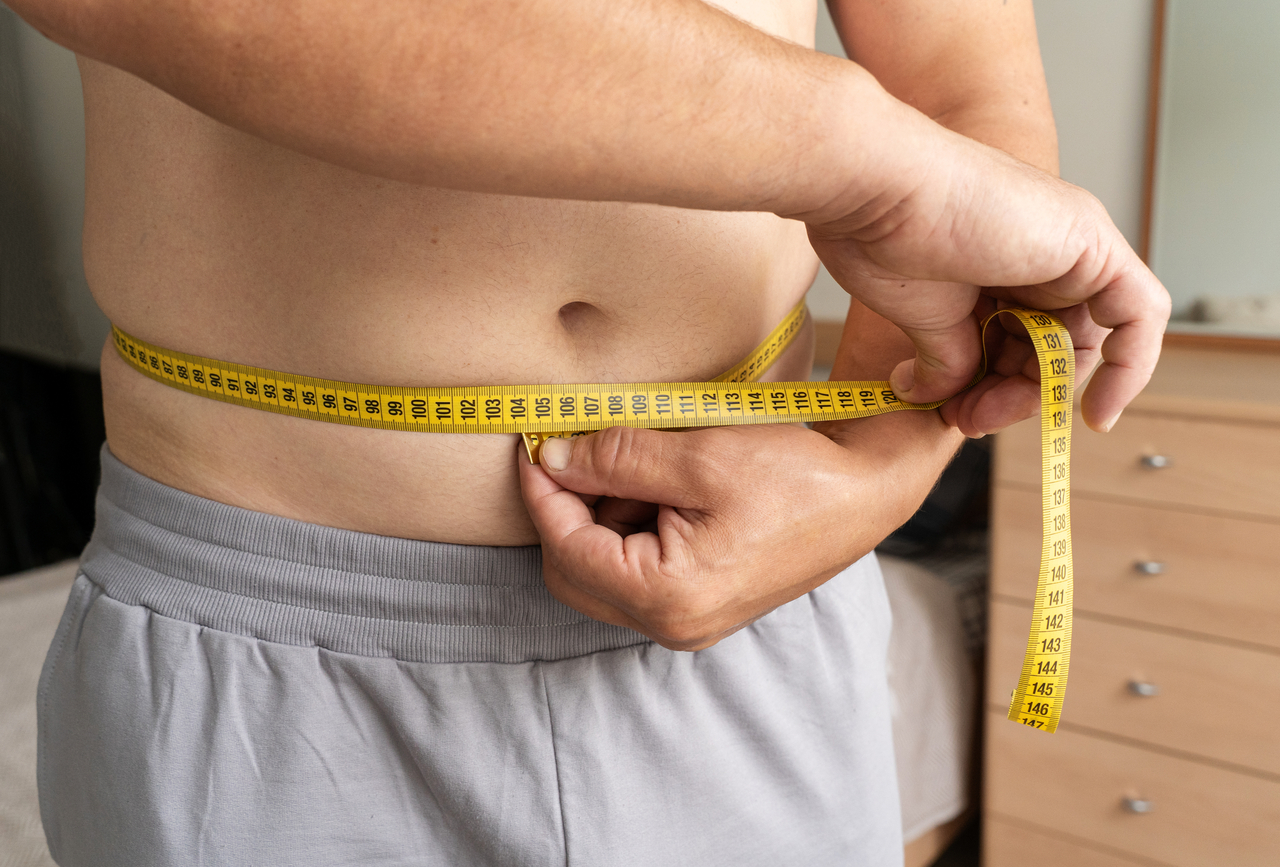
People with two or more hours of social jetlag had a whole-body fat percentage 0.81 percentage points higher, and a trunk fat percentage 1.01 percentage points higher, than those with less than two hours. Those with under two hours showed no difference from those with under one hour. The gap appeared only when social jetlag crossed the two-hour threshold. No differences were found in BMI or waist circumference.
For every additional hour of social jetlag, whole-body fat percentage rose by 0.25 percentage points. By contrast, the same analysis run on differences in sleep duration — rather than sleep timing — between weekdays and weekends showed no association.
Among adults aged 40 to 64, those with two or more hours of social jetlag had trunk fat percentages 1.13 percentage points higher. No such difference appeared in those aged 65 and older.
The research team attributed the pattern to the fact that adults aged 40 to 64 are typically in the workforce, making the weekday-weekend divide particularly pronounced for them. For retirees, the distinction between weekdays and weekends carries far less meaning.
However, the team acknowledged a key limitation: because the study analyzed data collected at a single point in time, it cannot determine whether sleeping in on weekends causes higher body fat, or whether people who already carry more body fat are simply more likely to sleep in on weekends.
Reference
DOI: 10.1371/journal.pone.0362068
S. Kim & H. Bae, Social jetlag and DXA-derived adiposity in Korean adults: A nationwide study using the 2024 Korea National Health and Nutrition Examination Survey, PLoS One 21(11) (2026) e0362068.
dbsdn1110@heraldcorp.com