Korea Enterprises Federation, ECCK hold Green Industry Conference
Groups urge mutual recognition of carbon, recycled-material standards
Phased regulation for steel, reduced ESG reporting overlap proposed
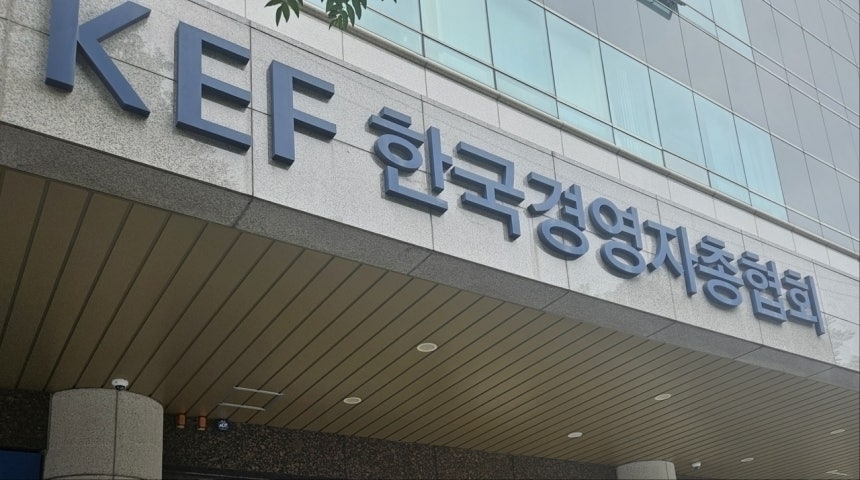
South Korean and EU business groups have joined forces to reduce the regulatory burden on key manufacturing sectors — including batteries and steel — as both sides navigate the green transition. Their joint call centers on harmonizing divergent carbon accounting and recycled-material standards, and applying regulations in phases for industries that require large-scale capital investment.
The Korea Enterprises Federation and the European Chamber of Commerce in Korea co-hosted the Korea-EU Green Industry Conference on Wednesday at the Novotel Ambassador Seoul Dongdaemun in Jung-gu, Seoul, and delivered a joint policy recommendation to the governments of both South Korea and the EU.
The two sides have held expert meetings since September across four areas — eco-friendly mobility, energy, sustainable management and the circular economy — to discuss regulatory reform and technology cooperation.
The centerpiece of the policy recommendations is easing the regulatory burden on manufacturing sectors such as batteries and steel.
Both sides said companies are struggling because national standards for raw-material classification and carbon accounting differ, complicating compliance with EU rules including the EU Battery Regulation, the Ecodesign Regulation and the Critical Raw Materials Act.
In response, they proposed that South Korea and the EU establish a joint committee on the Digital Product Passport to align standards for calculating carbon emissions and recycled-material content. The Digital Product Passport is a system that manages product information — including raw materials, carbon emissions and recyclability — in digital form.
The groups also called for expanded joint investment in facilities for collecting, sorting and recycling spent batteries to secure critical minerals, and said the recovery system for black mass — the metal-bearing powder extracted from used batteries — should be strengthened.
For industries such as steel that require large-scale facility investment, the groups said regulatory timelines should be applied flexibly. They proposed aligning the implementation schedules of the EU Green Deal and South Korea's Korean Green Transformation policy with companies' equipment-replacement cycles, and rolling out regulations in stages.
To offset the additional costs of using recycled materials and low-carbon inputs, the groups also called for tax credits, expanded eco-friendly public procurement and price-gap subsidies for raw materials.
On environmental, social and governance matters, the groups recommended that South Korea and the EU mutually recognize each other's sustainability disclosure and supply chain due-diligence standards to reduce duplicative reporting for companies. They particularly proposed improving compatibility among South Korean, international and EU disclosure frameworks, and applying regulations in phases that account for sector-specific conditions.
In eco-friendly vehicles and the aviation and maritime sectors, the groups called for expanded joint research and development on alternative fuels and zero-emission technologies. They also put forward policy tasks including building out megawatt-class charging networks for electric commercial vehicles and expanding hydrogen refueling stations, as well as easing weight-limit regulations for large eco-friendly commercial vehicles.
In the energy sector, the groups proposed improving investment conditions for renewable energy projects such as offshore wind, and mutually recognizing certification standards between the South Korean and EU green taxonomy frameworks.
Lee Dong-geun, standing vice chairman of the Korea Enterprises Federation, said the green transition "must not stop at imposing new obligations and costs on companies," adding that it "must promote corporate innovation and investment, and be pursued in a way that creates new growth opportunities."
Lee also said the differences between South Korea and the EU in carbon accounting, disclosure and certification standards are compounding the compliance burden on companies and making long-term green investment decisions more difficult.
Philippe van Hooff, chairman of the European Chamber of Commerce in Korea, said the green transition "presents common challenges for both European and Korean industries, while at the same time offering an important opportunity to deepen cooperation." Van Hooff expressed hope that the policy recommendations produced through the initiative would "contribute to creating a predictable and competitive industrial environment and to sustainable growth."
About 200 people attended the event, including officials from the Ministry of Trade, Industry and Resources, the EU Delegation to South Korea, and Korean and European companies and experts.
Ugo Astuto, EU ambassador to South Korea, said the green transition and industrial competitiveness "are not conflicting goals but challenges to be pursued together," adding that the EU and South Korea "share the common goal of building a sustainable, resilient and competitive economy on the basis of a solid industrial foundation and technological capabilities."
Kim Young-man, director general for trade policy at the Ministry of Trade, Industry and Resources, said the ministry would "maintain close communication with industry to effectively support the green transition in the industrial sector while also incentivizing investment in eco-friendly technology and strengthening competitiveness."
kwater@heraldcorp.com