Ministry of SMEs and Startups signs cooperation pact with large firms, related bodies
Smart factory support to reach 2,000 SMEs by 2031
Large firms to share AI technology and know-how with smaller manufacturers
30 billion won earmarked for physical AI project next year
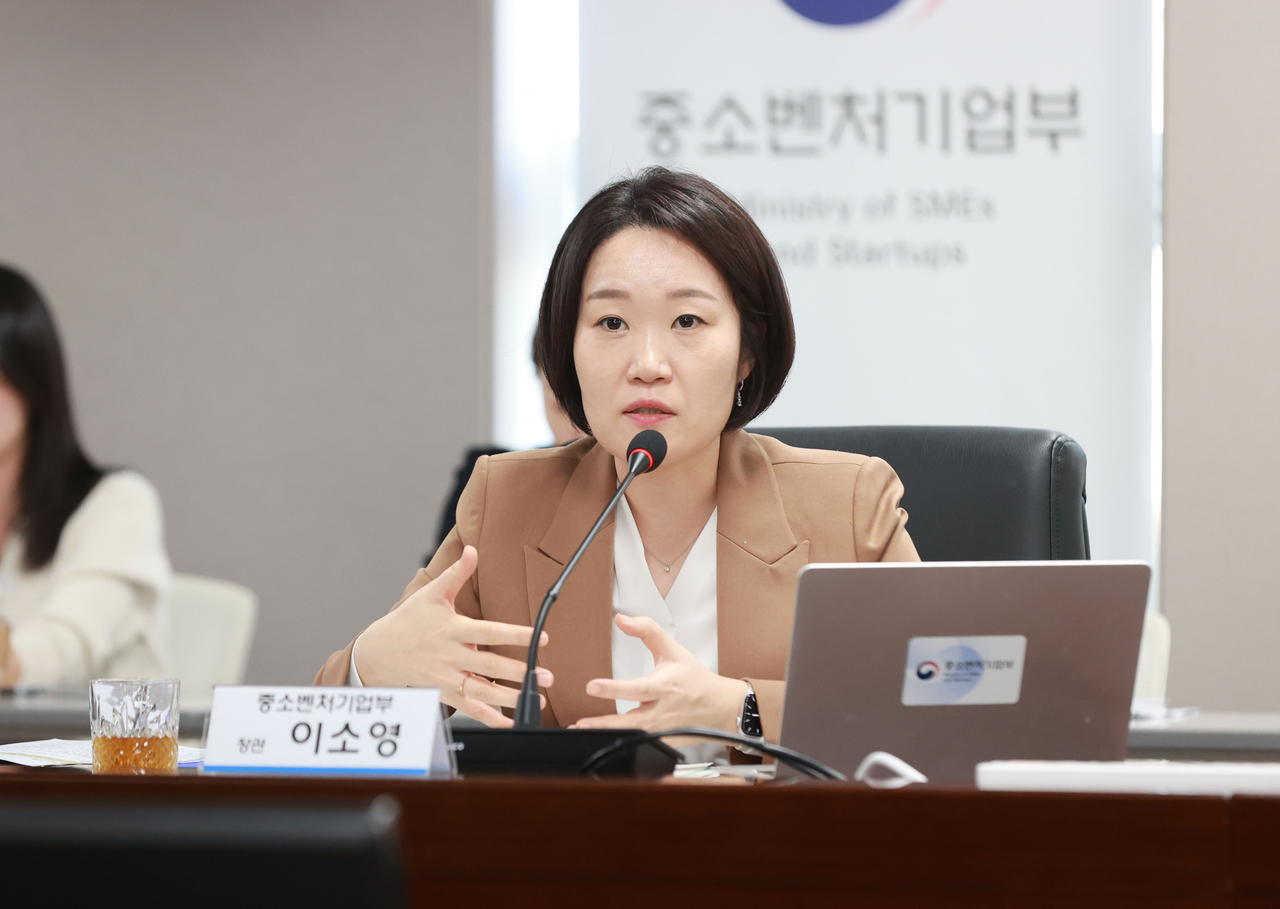
The government has teamed up with 11 large conglomerates, including Samsung Electronics and Hyundai Motor Company, to help small and medium-sized enterprises transition to AI. Starting in 2027, the initiative will pool 2 trillion won ($1.5 billion) with private companies over five years to support smart factory construction at more than 2,000 SMEs.
The Ministry of SMEs and Startups said Wednesday it held the "AI+ Great Transformation Mutual Growth Agreement" ceremony at OSCO in Cheongju, North Chungcheong Province, with large corporations and related organizations. The 11 participating conglomerates include Samsung Electronics, Hyundai Motor Company, LG Electronics, Posco, Samsung Display, LG CNS, Naver Cloud, CJ Olive Networks, Kolon Benit, Hansol PNS and Miracom I&C.
Five industry bodies also joined the pact: the Korea Federation of SMEs, the Large and Small Business, Agriculture and Fisheries Cooperation Foundation, the Smart Manufacturing Innovation Association, the Korea Autonomous Manufacturing Platform Association and the Smart Manufacturing Technology Companies Association.
The agreement was designed to prevent the gap in AI capabilities between large and small companies from widening into a broader manufacturing competitiveness divide. The core aim is for large firms to share their AI technology and manufacturing innovation experience with SMEs, and to deepen step-by-step cooperation covering everything from startup to growth and business transformation.
High upfront costs and a shortage of skilled workers are widely cited as the main obstacles to AI adoption among smaller manufacturers, which — unlike large conglomerates — lack the resources to develop AI technology independently or apply it to production processes. The agreement's mutual-growth model, which leverages large firms' technology and infrastructure, is expected to ease that burden.
Participating organizations agreed to cooperate in three areas: open innovation, mutual-growth smart factories and joint business transformation.
Under the smart factory pillar, the ministry plans to pool a total of 2 trillion won with private companies from 2027 through 2031 and support smart factory construction at more than 2,000 SMEs.
Large firms will contribute funding for smart factory construction and provide AI technology and know-how accumulated on the factory floor. The ministry said it will identify successful cases and spread them to other small manufacturers.
Cooperation between startups and large companies will also expand. Large firms will identify technology needs and strategic challenges in manufacturing AI, then match startups with relevant innovations to address them. The ministry will provide policy and fiscal support for commercialization, and plans to grow the number of open innovation lead organizations to 100 by 2031.
Support will also be strengthened for SMEs seeking to pivot into new business areas. When large firms identify AI-related transformation opportunities and provide the necessary technology and infrastructure, the government will assist companies from the planning stage through to implementation.
Next year, the ministry plans to allocate 30 billion won in new budget funding for a physical AI joint business transformation program supporting 100 companies. Physical AI refers to technology that applies AI to physical devices such as robots to carry out real-world tasks.
A notable feature of the agreement is that large-firm technical support is calibrated to each SME's stage of growth — startups gain access to joint commercialization opportunities with large companies, while existing manufacturers receive support for AI-driven production process innovation. By extending coverage to companies that need to pivot their business, the initiative aims to raise AI capabilities across the SME sector.
At the ceremony, Samsung Electronics and Hyundai Motor Company presented the results of their smart factory support activities. Eplah, which participated in an open innovation project with Posco, and Se-young Technology, which introduced a smart factory in cooperation with LG Electronics, also shared their collaboration experiences.
An official from a large company participating in the mutual-growth smart factory support program said that while support for SMEs may be seen as a cost in the short term, it also functions as a long-term investment — one that raises the competitiveness of partner companies and builds a stable supply chain.
Minister of SMEs and Startups Lee So-young said the benefits of the AI transformation must spread across small and medium-sized manufacturing operations, not remain confined to a handful of companies. "We will strengthen mutual-growth cooperation at each stage of a company's development — so that startups can enter new markets alongside large firms, SMEs can innovate and grow through AI-based smart factories, and businesses can take another leap forward through joint business transformation," Lee said.
boo@heraldcorp.com