Quad allies target China with rare earth, AI partnership push; Trump strikes trade deal with Thailand
ASEAN leaders meet with South Korea, Japan to discuss supply chain resilience and economic recovery
A single word from Donald Trump can shake global markets and economies. If keeping up with the flood of Trump news feels overwhelming, this daily briefing is for you. The Herald Business international desk — on the move from 5 a.m. — delivers a quick, one-minute read covering everything from the US market close to the Trump headlines most likely to move global assets. Whether you're commuting, eating alone, or winding down for the night — just one minute a day. Subscribe to stay ahead.
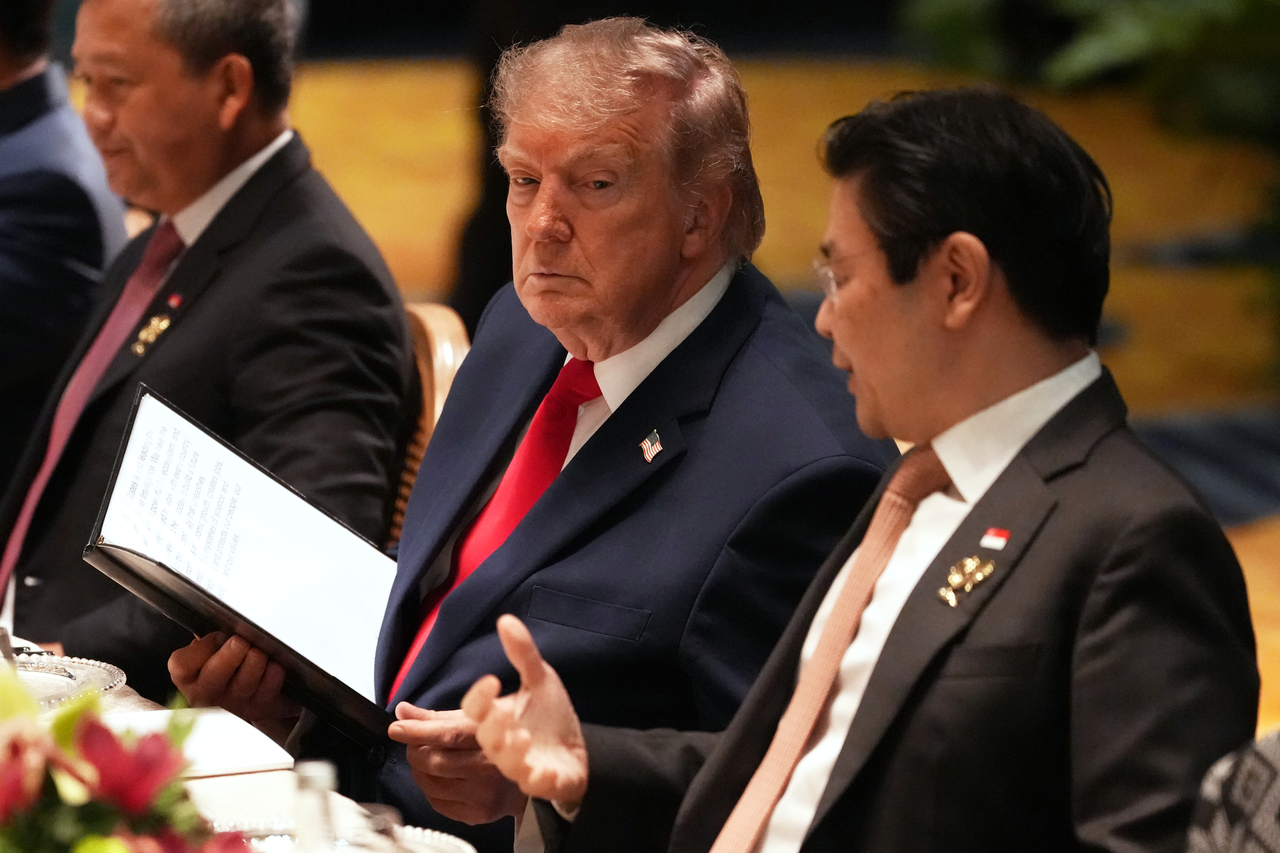
US President Donald Trump traveled to Manila, Philippines, on Tuesday (local time) for the Association of Southeast Asian Nations summit, where he met with leaders of Japan, Australia and India to discuss deeper cooperation on critical minerals, AI and other key areas.
ASEAN member-state leaders also held a series of meetings that day with South Korea, Japan and others, wrapping up the summit's agenda with discussions on crisis response — including the ongoing conflict in the Middle East.
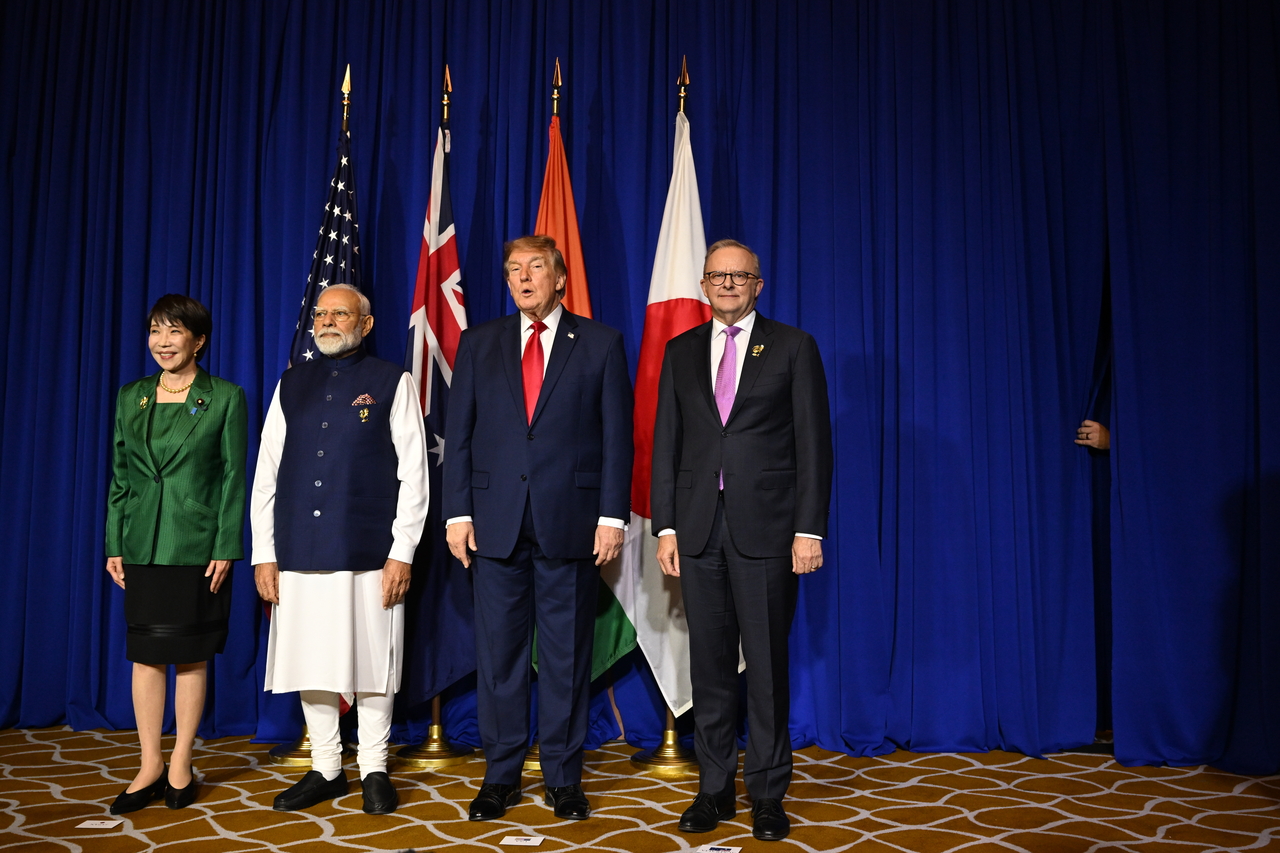
Trump arrived in Manila at around 6 p.m. local time and held a Quad summit with Japanese Prime Minister Sanae Takaichi, Australian Prime Minister Anthony Albanese and Indian Prime Minister Narendra Modi — the four-nation security grouping widely seen as a counterweight to China. The leaders expressed concern over China's military buildup and its tightening controls on critical mineral exports.
In a joint statement issued after the meeting, the four leaders said they "strongly oppose any destabilizing or unilateral actions seeking to change the status quo by force or coercion," and expressed serious concern over economic coercion through arbitrary export restrictions.
While no country was named in the statement, it was widely interpreted as directed at China, which has been expanding its military presence in the South and East China Seas and restricting exports of rare earths and other critical minerals.
Trump said Quad members are negotiating critical mineral deals to ensure they do not become vulnerable to coercion by a single foreign supplier.
"We are producing rare earths at levels never seen before," he said, adding, "We will catch up with them within 10 months."
Trump also announced that the Quad will conduct its first joint maritime patrol exercise in the Pacific next year and launch a program to accelerate AI development.
He said the grouping would invest more than $85 million to expand access to a trusted AI ecosystem across the Indo-Pacific.
The Quad summit was the first since Trump returned to office in January last year, and the first since the September 2024 meeting — a gap of more than two years.
Trump then joined Thai Prime Minister Anutin Charnvirakul in signing a joint statement on bilateral trade. Under the agreement, Thailand will eliminate tariffs on most American products and remove import barriers on US automobiles, food and pharmaceuticals.
Trump said Thailand had agreed to purchase an additional $2.6 billion in US agricultural products, adding, "I look forward to finalizing the details of a formal agreement in the coming weeks."
Trump later appeared as the guest of honor at a gala dinner hosted by Philippine President Ferdinand Marcos and held a special summit with ASEAN leaders.
Addressing the ASEAN leaders, Trump said, "We will always be with you," and added, "We support our partners and allies 100 percent. If you have a problem, call me."
Gesturing toward Secretary of State Marco Rubio, who was seated beside him, Trump joked, "Try reaching Marco or others. If they don't respond, call me directly — I'll pick up myself. And then I'll say, 'Marco, you're fired. You were too slow.'"
Trump also urged ASEAN leaders to ramp up production of rare earths and other critical minerals. "If you're open to it, get into the magnet business — you'll make a lot of money. We need magnets," he said.
Trump is set to hold a brief meeting with Marcos on Wednesday morning before traveling to Shenzhen, China, for the Asia-Pacific Economic Cooperation summit. There, he is expected to meet with Chinese President Xi Jinping and attend what would be the first-ever trilateral summit among the leaders of the United States, China and Russia, with Vladimir Putin also participating.
Earlier in the day, leaders at the ASEAN Plus Three summit — grouping ASEAN with South Korea, China and Japan — agreed on the need to strengthen cooperation to bolster economic resilience amid geopolitical tensions.
President Marcos said a shared challenge was to cushion the impact of crises and ensure stable supplies of goods essential to daily life and business activity.
He urged stronger partnerships between ASEAN and the three Northeast Asian nations, particularly in trade, shipping and logistics.
South Korean President Lee Jae Myung said, "Now is precisely the moment for ASEAN Plus Three — which has proven its strength in past crises — to shine, as conflicts and shocks in one region rapidly threaten everyone's daily lives." Lee called for building greater resilience against compound crises and laying the groundwork for sustainable future growth.
In a closed-door session that followed, Lee proposed measures to strengthen crisis-response capacity, including improving the efficiency and utilization of existing cooperation mechanisms in food and energy security.
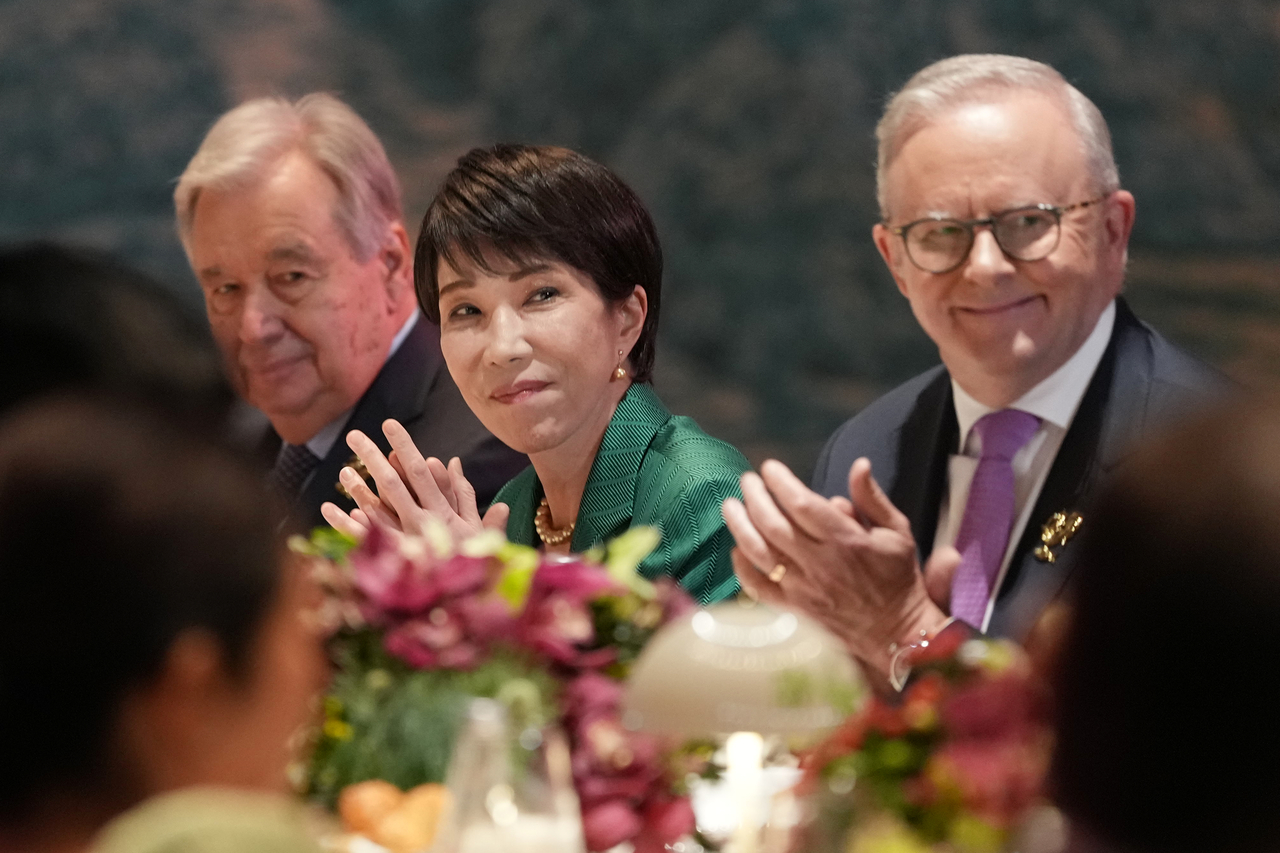
Takaichi said Japan would advance its "Free and Open Indo-Pacific" foreign policy vision and called for closer coordination on energy and food security as well as trade and logistics through maritime shipping.
At a subsequent summit of the Asia Zero Emission Community — a decarbonization cooperation framework — Takaichi proposed establishing an "Asia Oil Security Task Force," a consultative body through which Japan and Southeast Asian nations would share and jointly procure oil in times of crisis. The initiative envisions linking Japan's idle storage facilities with a Philippine-led joint stockpiling plan to create an Asian equivalent of the International Energy Agency.
Zhang Zhu, China's minister of agriculture and rural affairs, attended in place of Premier Li Qiang. Zhang said geopolitical tensions were multiplying challenges to energy and food supply and leaving East Asian supply chains unstable, and urged greater unity and coordination among member states.
Li had returned to China ahead of the APEC summit, which runs Wednesday and Thursday.
Japanese media raised the possibility that Li had skipped the meeting to avoid contact with Takaichi amid a recent deterioration in China-Japan relations.
Leaders at the ASEAN Plus Three summit adopted two statements: one on maritime trade and logistics connectivity, and another on strengthening energy and food security resilience amid external shocks and supply chain disruptions.
In the afternoon, ASEAN and Plus Three leaders were joined by India's Modi, Australia's Albanese and Russian Foreign Minister Sergei Lavrov for the East Asia Summit, where discussions covered energy security and the South China Sea, among other issues.
At the closing ceremony, Marcos highlighted the signing of a Digital Economy Framework Agreement — aimed at streamlining cross-border digital trade and payment processes — as a key achievement of the summit.
He also cited significant progress on the ASEAN power grid project, including an agreement to lay the first undersea power cable between Mindanao in the Philippines and the Malaysian state of Sabah on Borneo.
However, the Philippines fell short of its goal of concluding negotiations with China on a South China Sea Code of Conduct before the end of its ASEAN chairmanship this year.
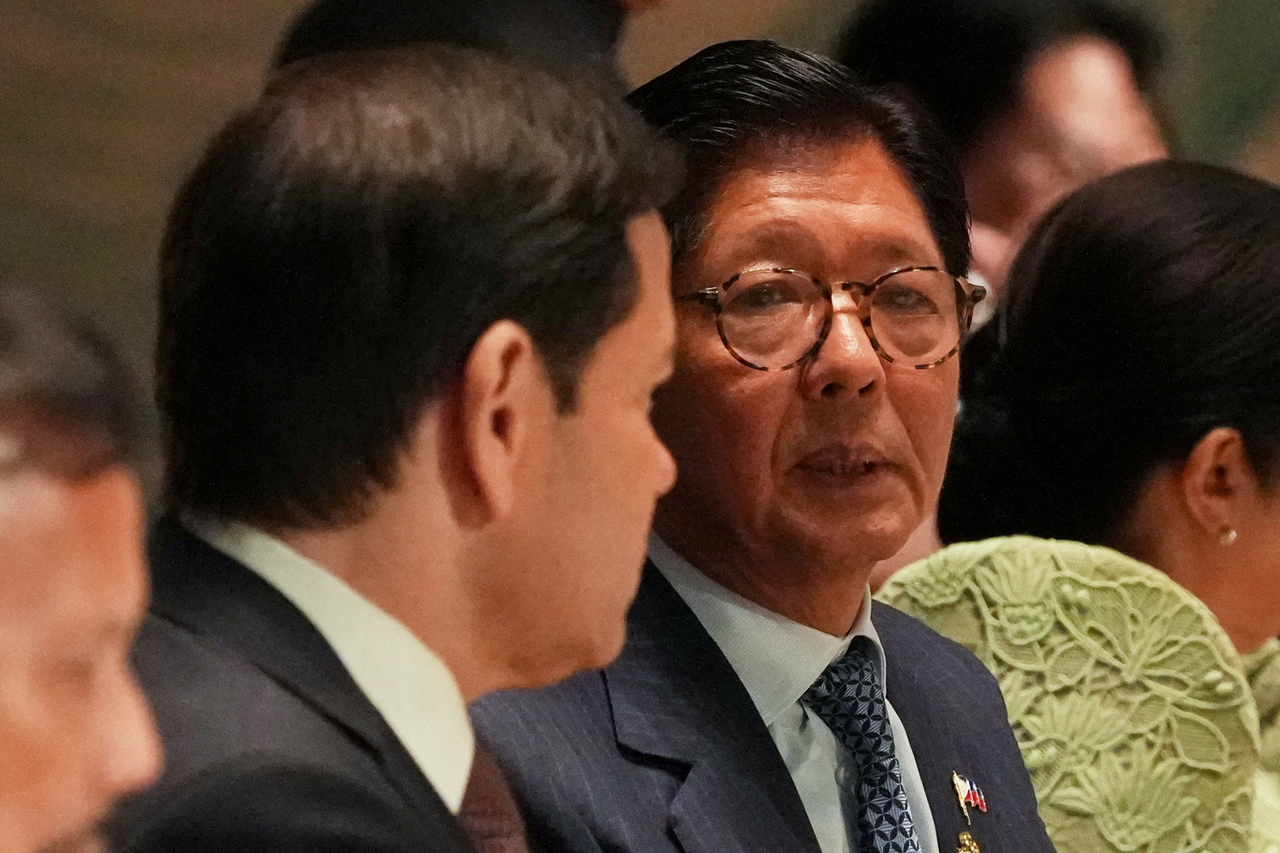
Marcos told reporters that "85 to 90 percent of the negotiations are in effect complete" and said the remaining issues would be handed off to Singapore, which holds the ASEAN chairmanship next year.
Meanwhile, about 2,000 protesters gathered in a plaza in central Manila to demonstrate against Trump's visit and the US-led supply chain initiative known as Pax Silica.
Demonstrators carrying banners reading "Trump, get out now" and "Reject Pax Silica" clashed with police.
Police deployed about 23,000 officers across Manila and the surrounding metropolitan area to manage the protests and secure the summit venue.
mokiya@heraldcorp.com