Bilateral trade hits record $21.3 billion through September; two MOUs signed on aid and science cooperation
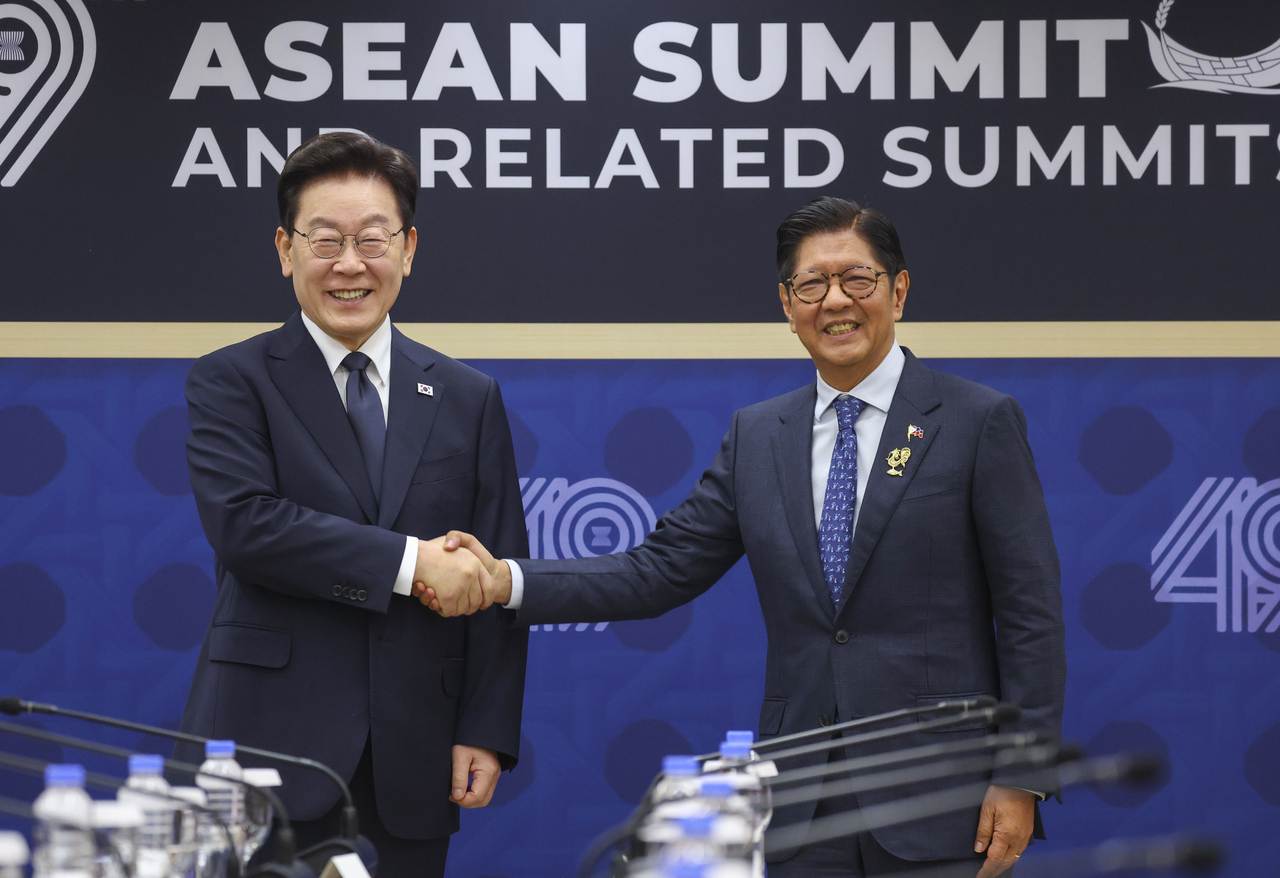
President Lee Jae Myung met with Philippine President Ferdinand Romualdez Marcos Jr. in Manila on Monday (local time) on the sidelines of ASEAN-related summits, agreeing to broaden bilateral cooperation beyond trade, defense and infrastructure into emerging sectors including shipbuilding, AI, nuclear energy and space.
According to a written briefing by Cheong Wa Dae spokesperson Kim Seong-wan, the meeting was the third bilateral summit between the two leaders, following talks on the sidelines of the Asia-Pacific Economic Cooperation forum in Gyeongju last year and a state visit to the Philippines in March.
Lee congratulated the Philippines on its successful chairmanship of ASEAN this year, and Marcos welcomed Lee's second visit to the Philippines in 2026.
The two leaders noted that bilateral trade had already reached $21.3 billion through September, surpassing the previous annual record, and that South Korea had joined the Luzon Economic Corridor as a partner country in May. Lee also expressed gratitude for the Philippines' active cooperation in carrying out a provisional criminal extradition he had personally requested at their March summit, and asked for the Philippine government's continued support in helping South Korean companies expand and operate smoothly in the country.
The leaders agreed to deepen mutually beneficial cooperation in areas where the two countries have already been active, such as defense and infrastructure, while expanding future-oriented collaboration in promising fields including shipbuilding, AI, nuclear energy, space and disaster safety.
On the sidelines of the summit, the two sides signed two agreements and MOUs to strengthen the institutional framework for sectoral cooperation. The first was a supplementary arrangement to the basic agreement on grant aid, concluded after five years of negotiations. The arrangement is expected to enhance legal stability for the Korea International Cooperation Agency's office in the Philippines and facilitate the smooth implementation of future grant aid projects there.
The second was an MOU on strengthening science and technology cooperation, following the digital cooperation MOU signed in March. Through the agreement, the two countries will work to formalize implementation mechanisms for science and technology cooperation — such as a joint science and technology committee — and expand collaboration into areas including smart agriculture.
The two leaders said the summit had served as an opportunity to give concrete shape to the future direction of their "strategic partnership," and agreed to continue generating tangible results through close communication across all sectors of the bilateral relationship.
sunpine@heraldcorp.com