New-loan COFIX hits 3.62%, up 0.44 ppts in two months
At some banks, fixed rates now lower than variable rates
Six-month variable loans reflect rate changes at each borrower's reset date

The COFIX — the Cost of Funds Index that serves as the benchmark for variable-rate home mortgage loans at South Korean banks — hit its highest level in two years and eight months, surging 0.44 percentage points in just two months. For a borrower who took out 500 million won ($375,000), a rate increase of the same magnitude would add roughly 130,000 won to monthly repayments. At some banks, the variable-rate mortgage now carries a higher interest rate than the five-year fixed-rate product, a reversal of the usual relationship.
The new-loan COFIX rose to 3.62 percent in October, up 0.19 percentage points from the previous month, the Korea Federation of Banks said Monday. That is the highest reading since February 2024, when the index also stood at 3.62 percent — a gap of two years and eight months. The index climbed 0.25 percentage points from August to September, from 3.18 percent to 3.43 percent, and has now risen a cumulative 0.44 percentage points over two months.
The outstanding-balance COFIX also rose, climbing 0.11 percentage points from 3.15 percent to 3.26 percent, while the new-outstanding-balance COFIX gained 0.14 percentage points, moving from 2.79 percent to 2.93 percent.
If mortgage rates rise by the same 0.44 percentage points as the COFIX, the added burden on borrowers would be considerable. For a borrower who took out 500 million won on a 30-year equal principal-and-interest repayment plan, a rate increase from 4.60 percent to 5.04 percent per year would push monthly repayments from about 2.56 million won to 2.7 million won — an increase of roughly 130,000 won a month, or about 1.6 million won a year. Actual rate increases and repayment amounts will vary depending on each bank's spread, outstanding loan balance and rate reset schedule.
Variable-rate mortgage rates at some banks tied to the COFIX will rise starting Tuesday. KB Kookmin Bank's six-month variable-rate mortgage will increase 0.19 to 0.20 percentage points, from an annual range of 4.66 to 6.05 percent to 4.85 to 6.25 percent — barely different from the bank's five-year fixed-rate range of 4.90 to 6.30 percent.
At Woori Bank, variable and fixed rates have actually flipped. The six-month variable-rate mortgage will rise from an annual range of 4.85 to 6.05 percent to 5.04 to 6.24 percent, while the five-year fixed rate stands at 4.94 to 6.14 percent per year.
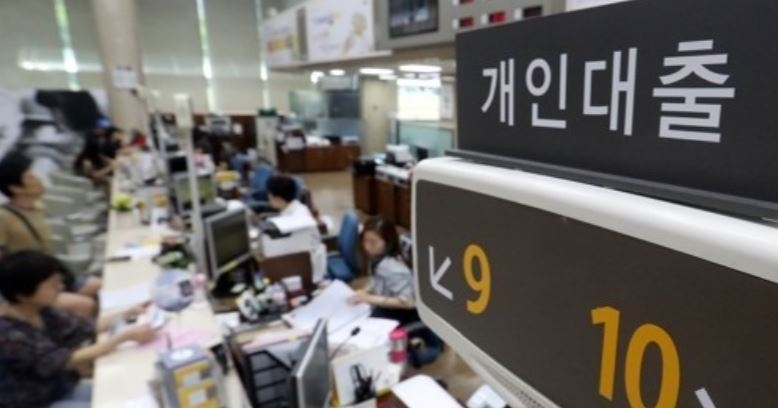
Looking at the floor rates alone, the variable rate is now 0.10 percentage points higher than the fixed rate. Using the same assumption — 500 million won borrowed over 30 years on an equal principal-and-interest basis — a rate of 5.04 percent yields monthly repayments of about 2.7 million won, roughly 30,000 won more per month than the approximately 2.67 million won under a 4.94 percent fixed rate. Variable rates typically offer the advantage of falling quickly when interest rates decline, but at some banks right now, the fixed rate is already the cheaper option from the moment the loan is taken out.
The rapid rise in the COFIX is particularly significant for borrowers on variable-rate mortgages. The index is a weighted average of the funding costs of eight domestic banks: NongHyup, Shinhan, Woori, SC First, Hana, IBK, Kookmin and Citibank Korea. When the rates banks pay on deposits, savings products and bank bonds rise or fall, those changes feed through to the COFIX.
The new-loan COFIX in particular reflects recent market rate movements more quickly than the outstanding-balance or new-outstanding-balance versions, because it is calculated using only funds newly raised during that month. The Korea Federation of Banks notes that borrowers choosing a COFIX-linked loan should take time to understand the characteristics of each index.
Having a variable-rate loan does not mean Monday's COFIX increase applies to every borrower immediately. For six-month variable-rate products, the new benchmark rate is typically applied at each individual borrower's scheduled reset date. As a result, borrowers who took out loans earlier this year attracted by relatively low variable rates may find their rates rising above current levels when their next reset date arrives.
rim@heraldcorp.com