Experts discuss five key principles — including minimizing institutions remaining in Greater Seoul and clustering relocations around existing innovation cities.
The conference addressed the second-round public institution relocation plan expected to be finalized by year's end, and regional strategies for future development.
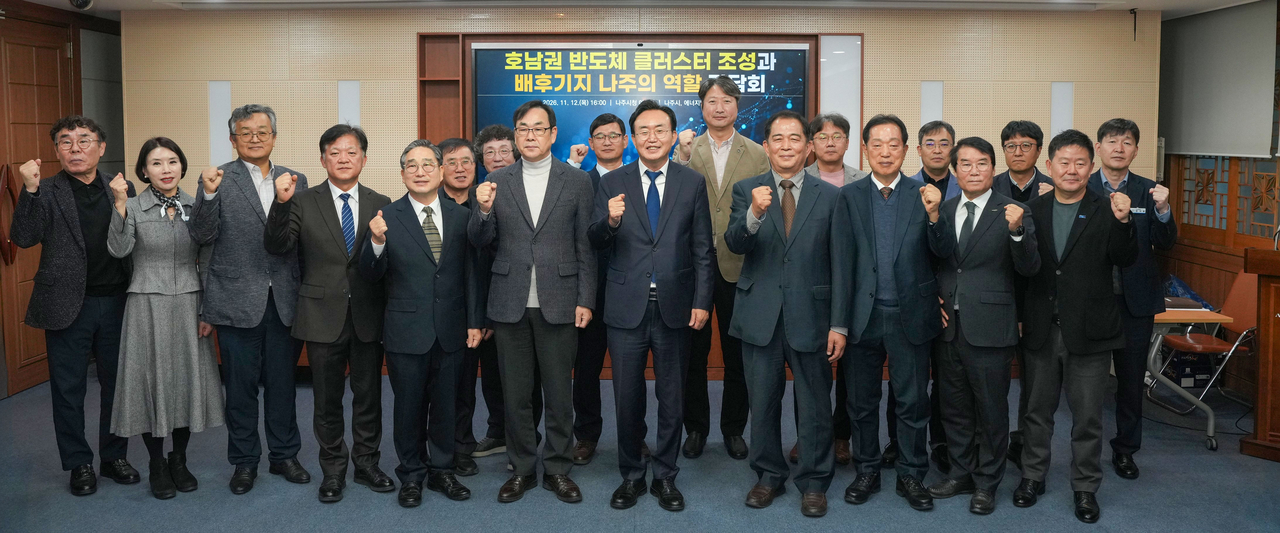
Naju, a city in the proposed South Jeolla-Gwangju integrated special metropolitan area, held an academic conference ahead of the government's finalization of its second-round public institution relocation plan, bringing together experts to examine national balanced-development policy and chart regional growth strategies.
Naju city co-hosted the "2026 Korea Regional Development Association Autumn Academic Conference" with the Korea Regional Development Association on Friday at the Bitgaram Complex Culture and Sports Center. The conference focused on the theme of "Strategies for Balanced Development in the Second Round of Public Institution Relocations and the Integrated Metropolitan Region," the city announced Monday.
The conference was jointly organized by the Korea Regional Development Association, the South Jeolla-Gwangju integrated special metropolitan area, Naju city and the Jeonnam Research Institute. About 200 people attended, including regional development experts, association members, graduate students and civil servants.
The event was convened to discuss regional response strategies and development directions aimed at strengthening the effectiveness of national balanced-development policy, ahead of the second-round relocation plan expected to be finalized by year's end under five government principles — including minimizing institutions remaining in Greater Seoul and clustering relocations around existing innovation cities.
Ko Gwang-wan, a former deputy mayor for public welfare and safety of the South Jeolla-Gwangju integrated special metropolitan area, delivered the keynote address on "Regional Balanced Development Strategies Through the Second Round of Public Institution Relocations," outlining the government's policy direction, regional response challenges and implementation strategies for achieving national balanced development.
In the thematic presentations and discussions that followed, regional development experts broadly examined ways to foster regional growth hubs through the second round of relocations, development strategies for the integrated metropolitan region and policy tasks for narrowing disparities between regions.
Experts and representatives from the Jeonnam Research Institute, the National Association of Mayors and County Heads, the Korea Institute of Civil Engineering and Building Technology and the Korea Rural Economic Institute explored a range of topics — including how to link public institution relocations with balanced-development policy, the role of local governments, and residential mobility and regional policy.
Participants noted that the second round of relocations must account for the industrial characteristics of each region and the existing functions of innovation cities, and that strengthening the self-sustaining growth capacity of regions through cooperation among relocated institutions, local universities, businesses and research organizations is essential.
Naju city said it plans to actively incorporate the expert opinions and policy proposals discussed at the conference into its response strategy for the second round of relocations and its regional development policies, and to work with relevant agencies to strengthen Bitgaram Innovation City's role as a regional growth hub.
"The second round of public institution relocations must not stop at simply moving institutions from Greater Seoul to the regions," Naju Deputy Mayor Kang Sang-gu said. "It must serve as the foundation for building core hubs of national balanced development — hubs that leverage each region's industrial characteristics and strengths to narrow the gap between Greater Seoul and the regions, and to enable regions to grow on their own."
kkm9971@heraldcorp.com