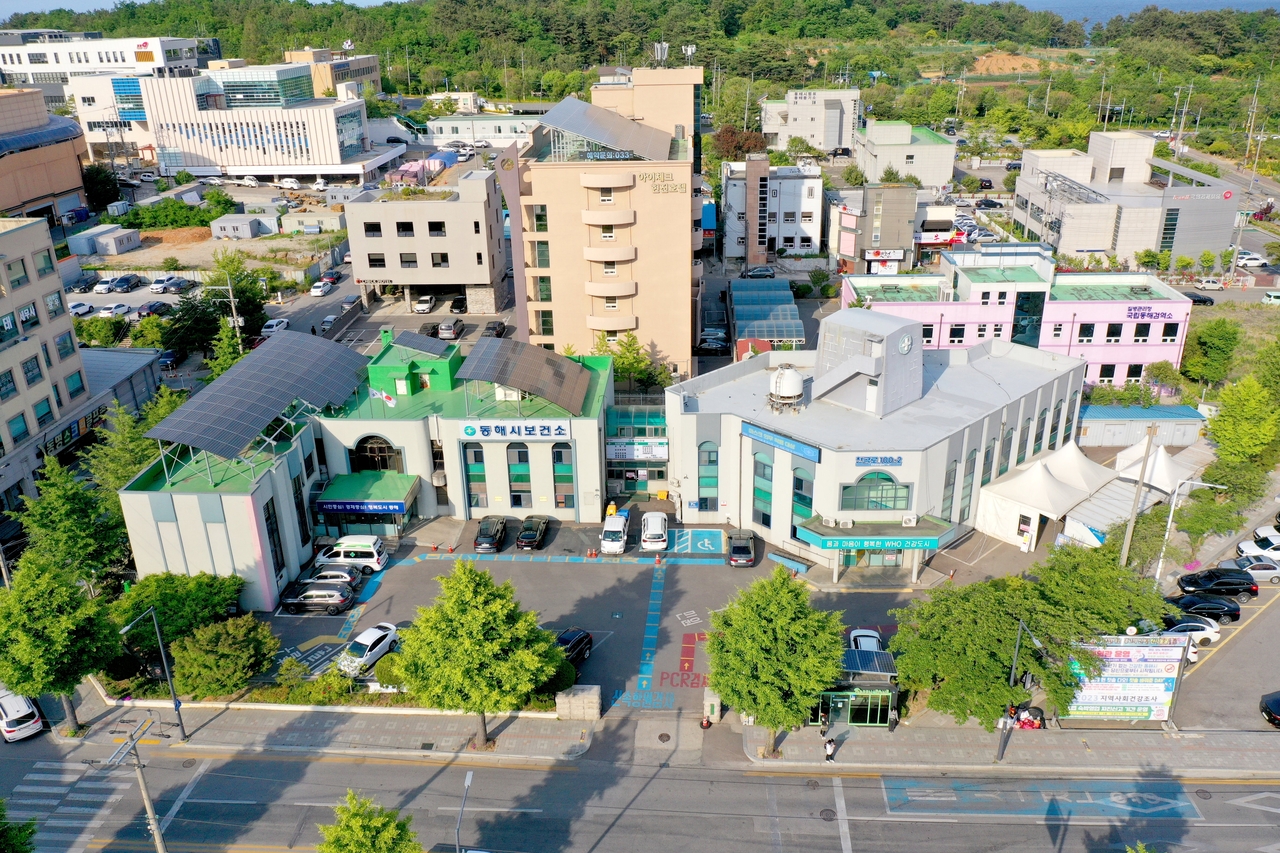
Donghae is taking concrete steps toward becoming a "30-minute emergency care city," expanding access to medical information, strengthening cooperation among healthcare providers and building a more robust emergency medical safety net.
The "30-minute emergency care city" initiative is a core campaign pledge of the city's current administration under Mayor Lee Jeong-hak.
Starting in December, Donghae will launch a real-time medical facility information service (medi.dhits) that lets residents check at a glance which hospitals, clinics and pharmacies are open, along with emergency room availability.
The city also plans to gradually strengthen the patient transfer and treatment coordination system for emergency cases through closer collaboration with local medical institutions.
The service originated as a proposal submitted by Donghae Public Health Center at the 2026 Policy Idea Festa, and was brought to life by staff at the city's Safety Division and Safety Information Center.
Using a "vibe coding" approach powered by generative AI, the team built the platform in about five weeks without outside contractors or a separate development budget. The health center joined in to verify data and conduct on-site checks at night.
The service draws on public data from the National Medical Center's E-Gen system and the Ministry of Food and Drug Safety to display the operating status of pharmacies, hospitals and clinics in three categories: open, closing soon and closed. It also provides hours for holiday-duty pharmacies and late-night public pharmacies, as well as scheduled closures at medical institutions.
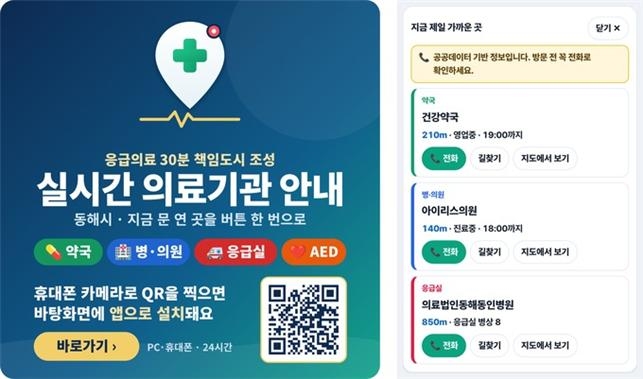
Emergency room data refreshes every 10 minutes, showing available beds, key medical equipment on hand and whether treatment is available for select critical conditions.
The platform also helps users find the nearest medical facility, make a phone call or get directions from their current location. Everyday health information — including clinics offering pediatric care and delivery services, and the locations of automated external defibrillators — is consolidated in one place.
No app download or account registration is required; the service is accessible from smartphones and computers, via QR code or a home-screen shortcut. The city plans to promote it through its official website, the Donghae newsletter and community welfare centers.
On Thursday, Donghae held a regional medical affairs forum attended by the heads of local general hospitals and officers of the local medical association to discuss emergency care cooperation.
At the forum, participants shared updates on efforts to restore full operations at the emergency room of Korea Workers' Compensation and Welfare Service Donghae Hospital by December — the unit had been running on reduced capacity due to a shortage of medical staff. They also discussed improving patient referral and return systems between hospitals and clinics, and establishing a dedicated hotline for rapid response to emergency and critical cases.
Donghae said it will expand cooperation with local medical institutions, fire departments and higher-level hospitals in the Gangneung area to progressively strengthen the full emergency care chain — from the moment an emergency occurs through transport, treatment and transfer. The city also plans to explore ways to improve access for elderly residents and others who have difficulty using digital devices.
Deputy Mayor Kim Jeong-yun said: "It is significant that an idea born from residents' inconvenience was turned into a real service through cross-departmental collaboration and the dedication of our staff. We will steadily build a '30-minute emergency care city' where citizens can feel safe, by improving access to medical information and deepening cooperation among local healthcare providers."
abc@heraldcorp.com