Dedicated sidewalk crews to focus on steep school routes and bus stops, eliminating blind spots in snow clearance
Seodaemun-gu will launch a pedestrian-focused winter snow removal program this season, separating its road and sidewalk clearance operations and expanding sidewalk coverage to 22.4 kilometers.
The district plans to move beyond clearing only major roads, extending systematic management to steep school routes, bus stops, subway station entrances and narrow alleyways where snow removal vehicles cannot reach.
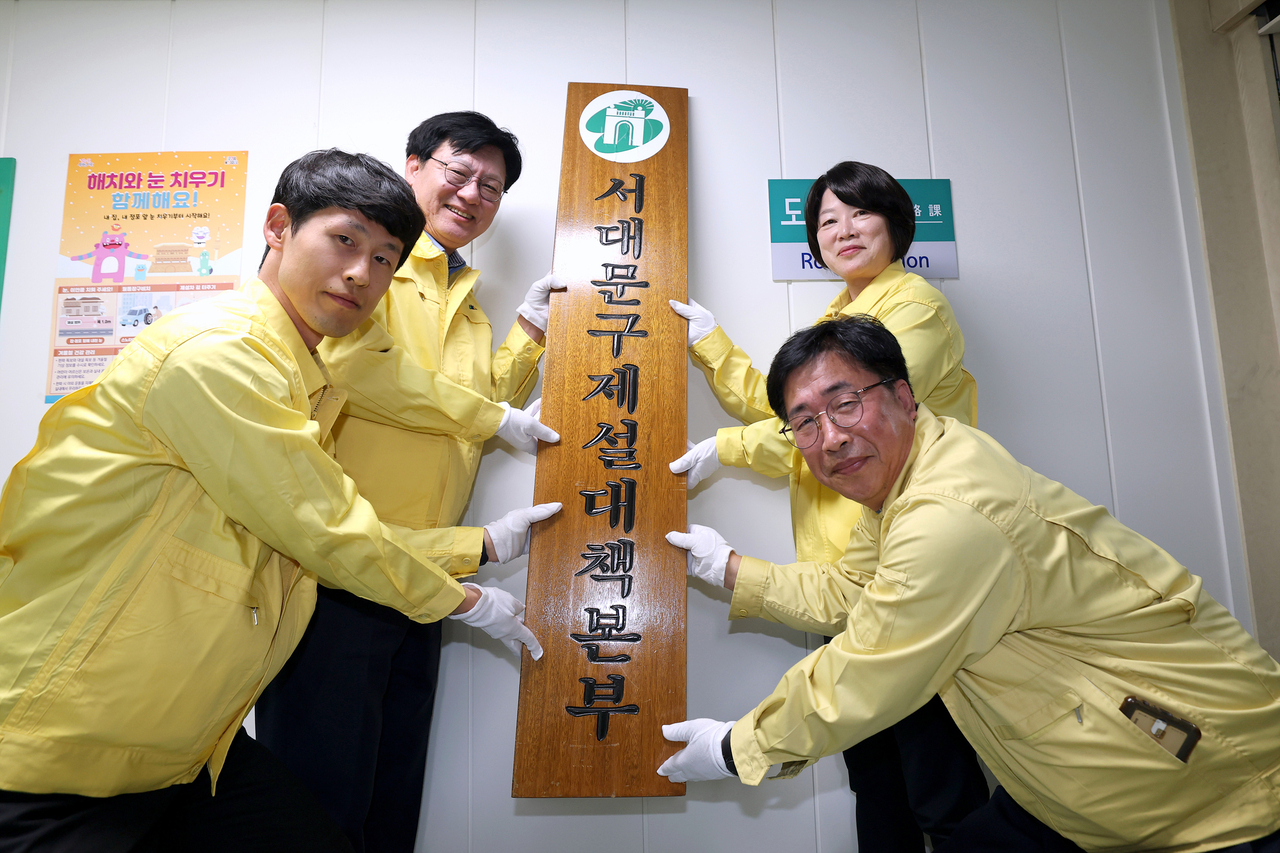
Seodaemun-gu held a sign-hanging ceremony Friday to inaugurate its snow removal response headquarters and announced it will carry out winter snow and cold-wave countermeasures from Sunday through March 15 next year — a four-month operation.
The centerpiece of the plan is the separation of road and sidewalk snow removal, which had previously been handled under a single integrated contract. The number of sidewalk clearance routes has been expanded from 11 to 14, covering a total of 22.4 kilometers.
Six school routes near elementary schools on steep slopes will receive priority attention, and dedicated personnel will be stationed at 205 bus stops and around nine subway stations. The aim is to manage not just snow-covered main roads but the actual paths residents use in their daily movements.
The district is also stepping up its response in alleyways and side streets — areas that have historically been blind spots. Seventy pieces of compact equipment, including electric snow shovels and manual de-icing spreaders, will be distributed to each neighborhood administrative office for use in narrow lanes where vehicles cannot enter.
The snow removal fleet will also be significantly expanded. The number of large plows on arterial roads will increase from 12 to 14, while the combined fleet of administrative and private-contract vehicles for side streets will double from 14 to 28. The district plans to reduce downtime caused by reloading de-icing agents and to assign each neighborhood a designated clearance zone for faster response.
Seven additional road heating cables will be installed at chronically icy sections. Ten fixed brine-spraying systems and 67 mobile units will also be in operation. The district has secured 1,516 tons of de-icing material.
A community-based snow removal system is another notable feature. In July, the district enacted an ordinance establishing resident snow removal teams and has since organized 683 volunteers across 14 neighborhoods. These teams will handle clearance in alleyways, side streets and sidewalks that vehicles cannot access when snow falls.
To make de-icing agents easier for residents to use, the district has reduced the bag weight from 10 kilograms to 5 kilograms and improved the packaging for easier opening.
The district has also prepared measures to protect vulnerable residents during cold snaps. When a cold-wave advisory is issued, disaster safety assistants will call 1,613 elderly people living alone every day to check on their well-being, and will make in-person visits if they cannot be reached. Dosirak and banchan support will be expanded for 196 low-income elderly residents during the winter.
More than 500 cold-vulnerable residents will receive home health care visits, and the Gajwa Community Health Center will extend its weekday hours and operate emergency weekend shifts during cold-wave advisories. The district will also run 50 warming centers, three 24-hour emergency shelters and two safe lodging facilities.
"Even if the snow on the main road is cleared, it is hard to go outside if the slope in front of your house or the path to the bus stop is frozen," Seodaemun-gu District Mayor Park Un-gi said. "This winter, we will station dedicated personnel on sidewalks and work closely with resident snow removal teams to carefully manage alleyways that plows cannot reach."
seouldream01@heraldcorp.com