KOTRA analysis of top 30 export markets, January–September
Non-semiconductor exports up 18.6%; Australia ranks first
Netherlands up 63%, New Zealand up 61%
Petroleum, AI equipment and cosmetics drive growth
While semiconductors continue to lead South Korea's export growth, sales of non-semiconductor goods — including petroleum products, industrial materials and cosmetics — have also expanded sharply overseas. Non-semiconductor exports to Australia jumped nearly 72 percent from a year earlier in the first nine months of this year, with the Netherlands and New Zealand both posting growth rates above 60 percent. Energy products, AI-related equipment and cosmetics drove much of the expansion.
The Korea Trade-Investment Promotion Agency (KOTRA) announced Sunday that Australia recorded the highest non-semiconductor export growth rate among South Korea's top 30 export destinations from January through September this year.
Non-semiconductor exports to Australia reached $18.04 billion, up 71.9 percent from the same period last year. Non-semiconductor goods accounted for 99.97 percent of South Korea's total exports to Australia.
The Netherlands ranked second with a growth rate of 63.4 percent, followed by New Zealand at 60.7 percent, Malaysia at 45.5 percent and Singapore at 44.2 percent.
Belgium (38.1 percent), the United States (29.1 percent), Canada (24.7 percent), Mexico (22.7 percent) and Spain (20.5 percent) also made the top 10.
South Korea's overall non-semiconductor export growth rate for the first nine months of this year stood at 18.6 percent. A notable feature of the results is that the top-performing markets are spread across multiple regions, including Europe, Oceania, Asia and North America.
The biggest driver of export growth to Australia was petroleum products.
Petroleum product exports to Australia totaled $10.78 billion from January through September, up 104.7 percent from the same period a year earlier. The increase reflected strong import demand stemming from Australia's limited refining capacity, as well as higher export prices following disruptions to global energy supply chains caused by the Iran war earlier this year.
Beyond petroleum, exports of industrial materials and equipment also rose sharply.
Exports of industrial silver to Australia surged 1,604.5 percent over the same period. Other major industrial goods also posted gains — power equipment rose 119.2 percent, wire rods, bar steel and rebar climbed 85.0 percent, and aluminum increased 23.5 percent.
Exports of ships, offshore structures and related parts jumped 485.0 percent, driven by increased deliveries of LNG-related offshore facilities and vessels.
KOTRA noted that Australia is actively reducing its dependence on China for industrial imports and diversifying its supply chains.
The Australian government's "Future Made in Australia" policy, which aims to develop domestic manufacturing, was also cited as a factor boosting demand for Korean industrial goods and equipment.
Consumer goods exports also grew. Pharmaceutical exports to Australia rose 116.4 percent, while cosmetics climbed 65.0 percent.
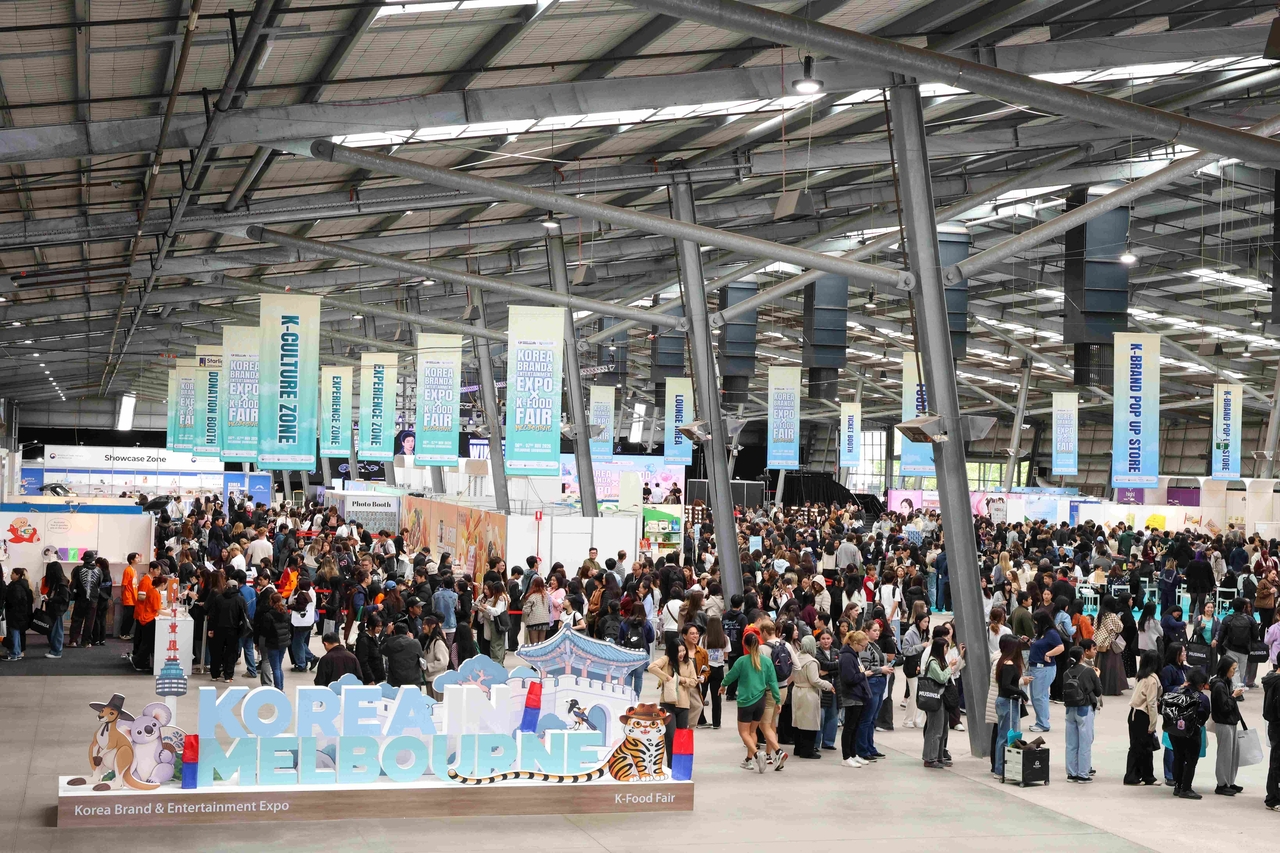
At the hallyu fair held in Melbourne from Thursday to Saturday, South Korean consumer goods companies signed export contracts and MOUs with local buyers totaling 32 deals worth $18 million.
In neighboring New Zealand, non-semiconductor export growth reached 60.7 percent as demand for petroleum products and industrial goods increased. Petroleum product exports rose 76.0 percent, construction and mining machinery climbed 148.0 percent, and cosmetics grew 83.9 percent.
In the Netherlands, AI-related equipment, automobiles, pharmaceuticals and cosmetics led the export increase.
Non-semiconductor exports to the Netherlands totaled $10.13 billion from January through September, up 63.4 percent from the same period a year earlier.
Exports of computer storage media — including solid-state drives used in data centers — surged 191.6 percent. Semiconductor manufacturing equipment also rose 27.6 percent.
Petroleum product exports climbed 240.5 percent, automobiles rose 21.5 percent, wireless communication devices increased 36.8 percent, and pharmaceuticals grew 26.7 percent.
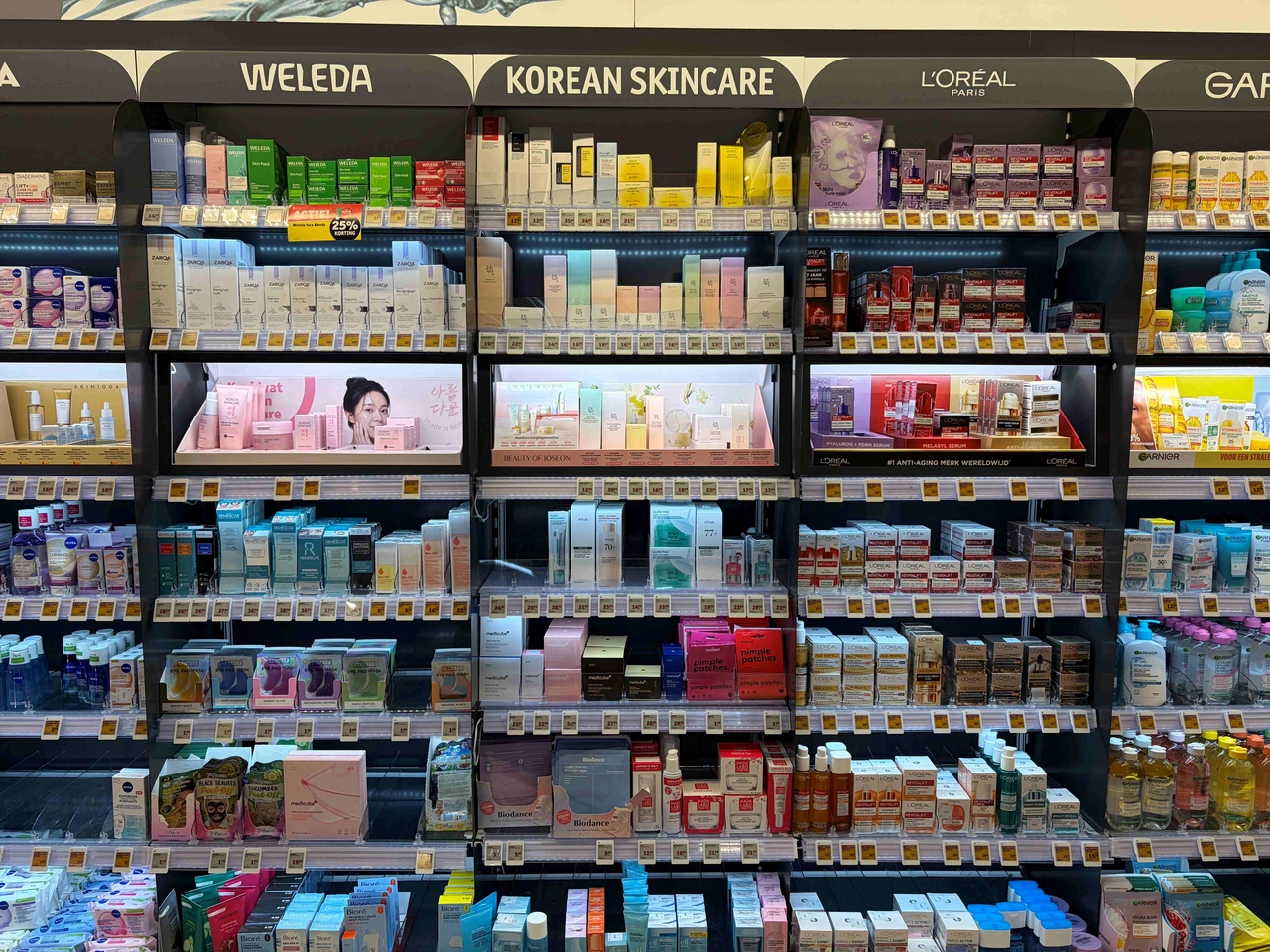
Cosmetics exports posted the sharpest gain, surging 282.5 percent.
The jump was largely attributed to the expansion of local retail networks — Kruidvat, the Netherlands' largest health and beauty retailer, set up dedicated Korean cosmetics sections in stores nationwide.
Industry observers in the Netherlands attributed the trend to growing consumer interest in South Korea fueled by Korean drama series and films, as well as the strong price-to-quality competitiveness of Korean cosmetics.
Belgium also saw gains across several categories — petroleum products rose 64.5 percent, automobiles 30.7 percent, ships 307.1 percent and pharmaceuticals 184.1 percent — bringing Belgium's overall non-semiconductor export growth to 38.1 percent.
In Southeast Asia, demand for components and equipment used in AI data centers and semiconductor production facilities was particularly prominent.
Exports of computer storage media to Singapore and Malaysia surged 881.8 percent and 352.7 percent, respectively, as active data center investment in both countries drove demand for storage devices.
Semiconductor manufacturing equipment exports rose 63.6 percent to Singapore and 188.4 percent to Malaysia. Printed circuit exports grew 42.9 percent and 32.0 percent to each country, respectively.
Power equipment exports climbed 39.6 percent to Singapore and 61.1 percent to Malaysia, while measuring, control and analytical instruments rose 57.8 percent and 65.2 percent to the two countries, respectively.
Malaysia accounts for roughly 13 percent of global semiconductor assembly, packaging and testing, making it a key back-end production hub. Singapore has also developed a strong data center industry alongside vehicle and power semiconductor sectors, sustaining continued demand for related equipment.
Consumer goods exports grew alongside industrial shipments. Exports of household goods and cosmetics to Malaysia rose 18.8 percent and 29.0 percent, respectively, while agricultural, forestry and livestock product exports to Singapore increased 25.1 percent.
However, a closer look at non-semiconductor export growth by product category reveals that a significant portion of the gains stems from higher petroleum product revenues driven by rising global oil prices and increased equipment demand tied to AI industry expansion. While export market diversification is progressing, the underlying drivers of growth vary considerably by product.
Semiconductors' share of overall export growth has been expanding further in recent months.
According to Korea Customs Service, South Korea's exports from Nov. 1 through Nov. 10 totaled $33.5 billion, up 111.9 percent from the same period a year earlier. Semiconductor exports accounted for $16.6 billion, or roughly 49.7 percent of the total.
Cumulative exports from January through Nov. 10 reached $963.7 billion, putting South Korea on the verge of achieving annual exports of $1 trillion for the first time in history.
With semiconductors dominating overall export performance, expanding overseas markets for other product categories — including petroleum products, industrial goods and consumer goods — remains an important challenge.
KOTRA President Kang Kyung-sung said non-semiconductor exports are also recording double-digit growth rates, adding that it is encouraging from a diversification standpoint that the top 10 high-growth markets among the 30 major export destinations include countries from Europe, ASEAN, Oceania, North America and Latin America. "We will actively support Korean companies in expanding overseas in line with local demand — including industrialization trends in each country and the growing popularity of Korean consumer goods," Kang said.
kwater@heraldcorp.com