HD Hyundai Heavy Industries and Anduril launch ASV Alpha one year after partnership deal
Vessel built on VAOne autonomy platform, capable of fully automated navigation, surveillance and attack
US Navy rates its automation performance on par with top American ASV makers
Modular weapons system described as world-first for a warship
Unmanned vessel demand seen rising with global shift toward autonomous warfare
Sea trials off US coast planned for early next year ahead of Navy contract bid
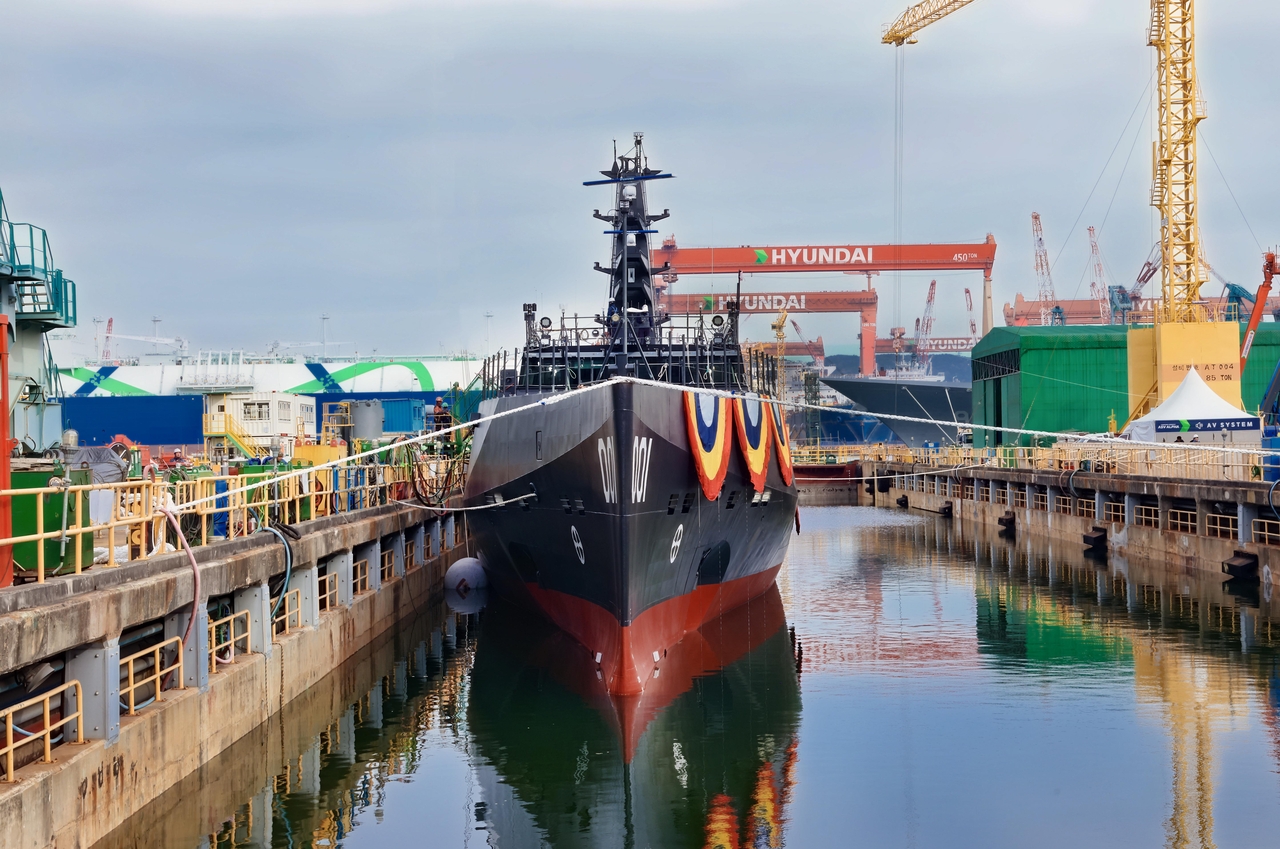
A black warship stood out among the rows of LNG carriers and container vessels under construction at HD Hyundai Heavy Industries' shipyard in Ulsan on Thursday. Smaller and plainer than the state-of-the-art Aegis destroyer Jeongjo the Great — set for delivery next month — it was also notably different in one key respect: no weapons were visible on the hull. The vessel is ASV Alpha, an autonomous surface vessel built jointly by HD Hyundai Heavy Industries and US AI defense company Anduril Industries.
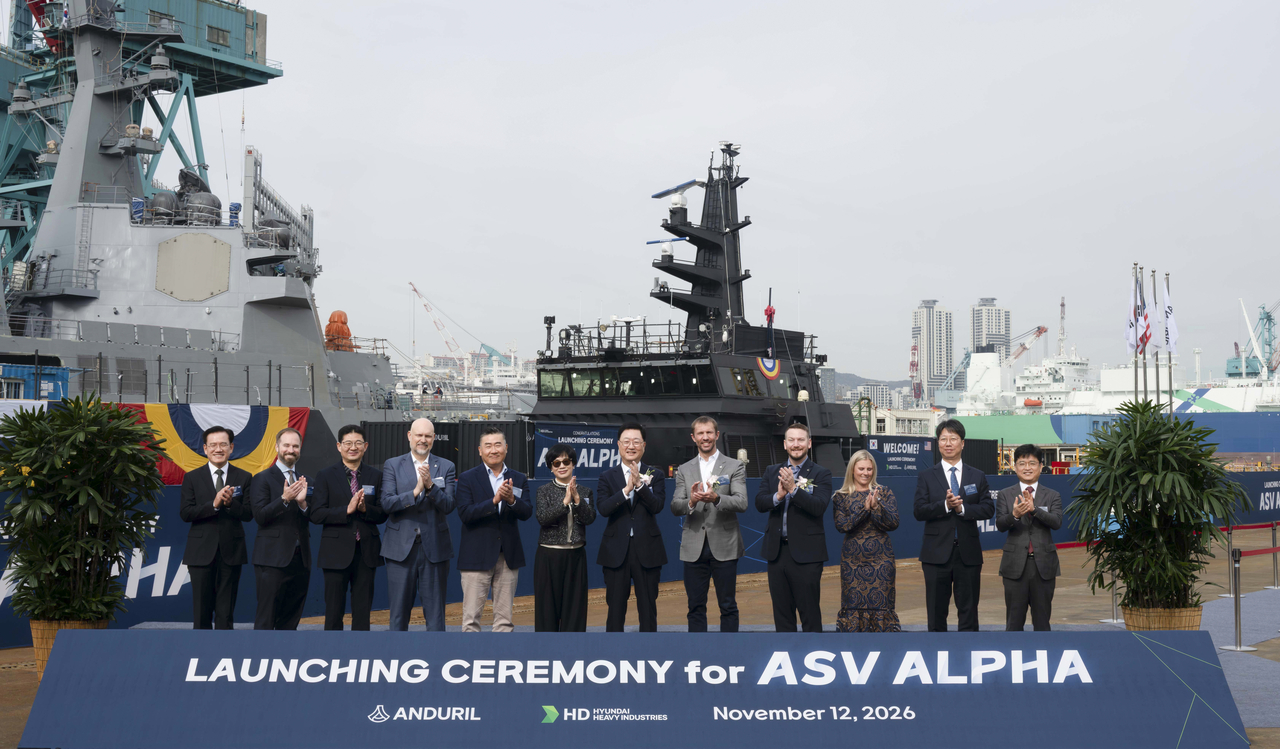
HD Hyundai held a launching ceremony for ASV Alpha at the Ulsan shipyard on Thursday. About 70 people attended, including HD Hyundai Heavy Industries President Joo Won-ho, Anduril Chief Operating Officer Matt Grimm, executives and employees from both companies, and representatives from US Forces Korea and the US Embassy.
"The future of maritime defense will place ever greater importance on platforms that can respond flexibly to diverse missions, and on fast, efficient shipbuilding capabilities," Joo said at the ceremony. "ASV Alpha is not simply another vessel — it is a ship that symbolizes an important leap toward the future of maritime defense."
In developing ASV Alpha, HD Hyundai handled design and construction, propulsion systems, vessel autonomy technology, systems integration and sea trials, while Anduril was responsible for developing the autonomous mission execution system. Shane Arnett, Anduril's executive vice president, said HD Hyundai was chosen as a partner because it possesses "the world's best shipbuilding capabilities."
'Automation performance on par with top US rivals'
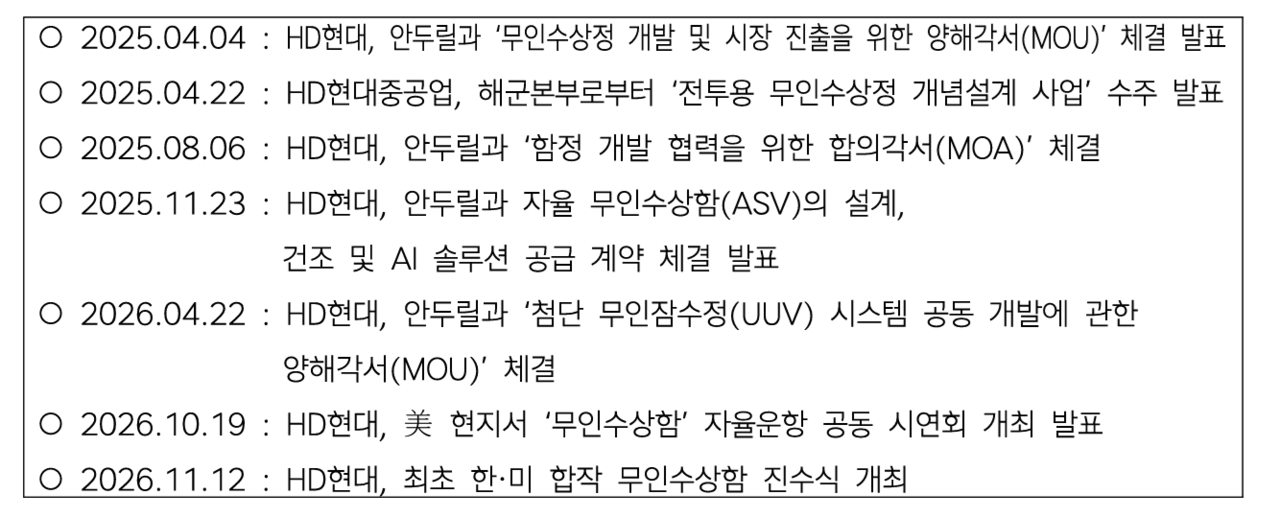
The 600-ton ASV Alpha was launched one year after the two companies signed their partnership agreement last November, and just seven months after construction began. Conventional warships typically take about nine years from concept design to launch. HD Hyundai Heavy Industries compressed that timeline by drawing fully on its accumulated warship design expertise and production management capabilities. "Without our diverse shipbuilding experience, launching an ASV in one year would have been impossible," said Jang Jun-ho, a senior researcher at HD Hyundai Heavy Industries.
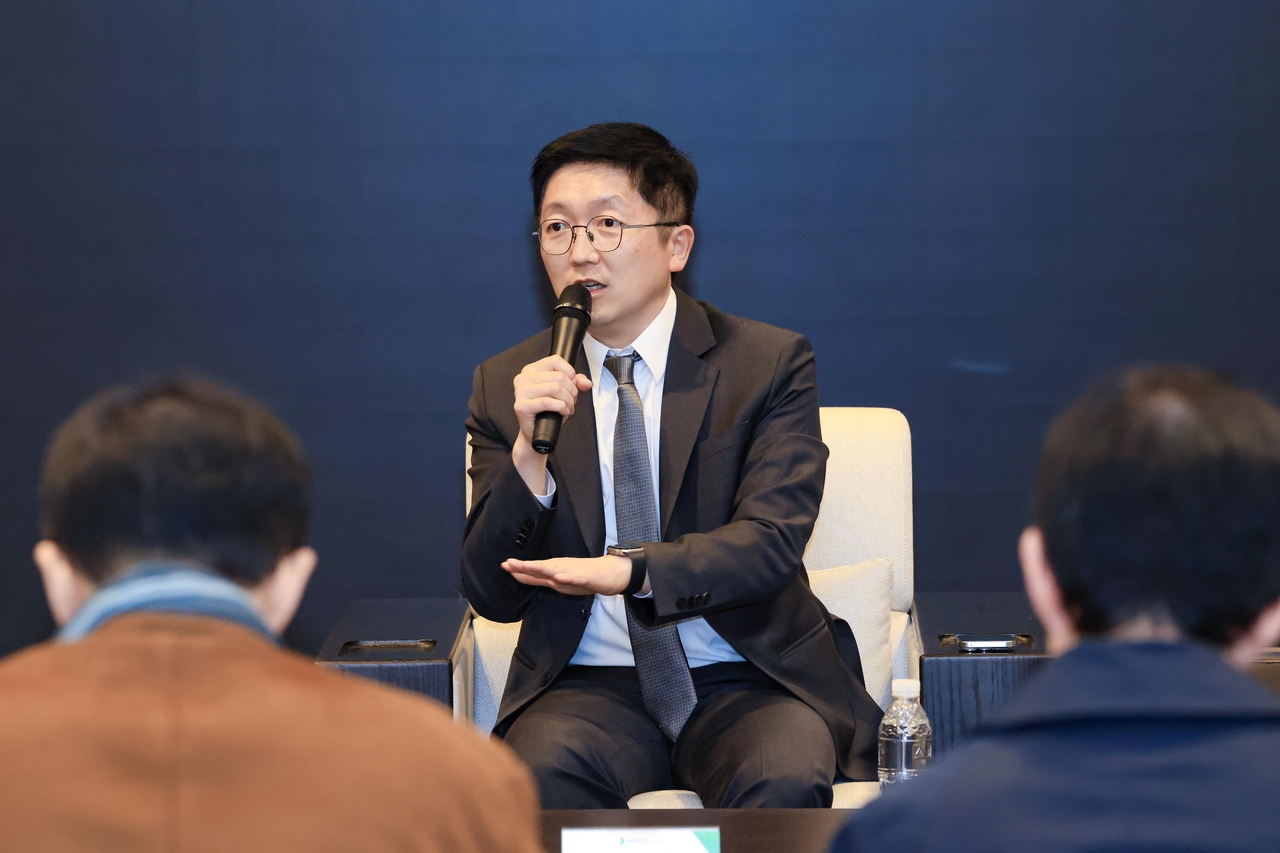
The vessel's greatest strength is that navigation, reconnaissance and surveillance, maritime intelligence gathering, and armed attack operations are all carried out automatically. Kim Hyung-taek, an executive director at HD Hyundai Heavy Industries, said conventional autonomous navigation technology works well up to the first destination but runs into problems after that. "The solution applied to ASV Alpha sets an optimal route, ensures safe arrival at the destination, and automatically responds when engine problems occur," Kim said.
The vessel's broad automation capabilities are largely driven by VAOne, a naval autonomy solution developed in-house by HD Korea Shipbuilding & Offshore Engineering. Built on the autonomous navigation platform of HD Hyundai subsidiary Avikus, VAOne covers three areas of autonomy: navigation, operations and anomaly detection. Anduril's Lattice platform, which plans and assigns missions for the vessel, further enhances ASV Alpha's automated performance.
"At a technical demonstration held in the United States last month, the US Navy assessed the ASV Alpha solution as having automation performance on par with the top American ASV makers," Kim said.
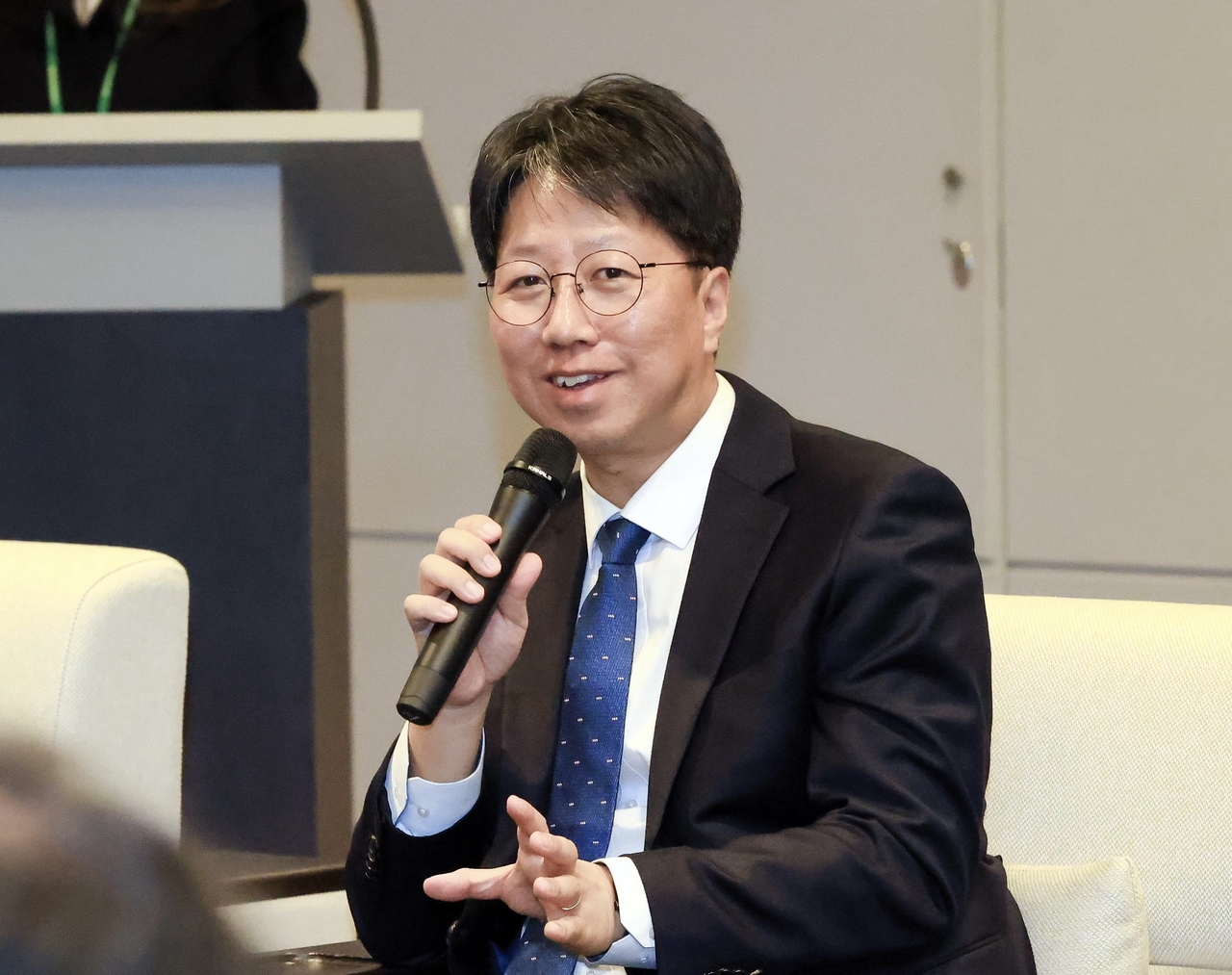
A modular weapons system that allows armaments to be swapped flexibly depending on battlefield conditions is another of the vessel's key advantages. "Applying a modular concept to a warship is a world first," said Lee Sang-bong, an executive vice president at HD Hyundai Heavy Industries. "Compared with ASVs developed by other domestic defense companies, it can carry out a far wider range of missions."
Middle East, Europe also eyeing HD Hyundai ASV
HD Hyundai Heavy Industries is South Korea's leading warship builder. The company constructed the country's first domestically built combat vessel, the ROKS Ulsan, as well as the Sejong the Great-class and Jeongjo the Great-class Aegis destroyers. It has also exported 20 warships — the largest number by any South Korean shipbuilder — bringing the total vessels ordered at home and abroad over the past 50 years to 108.
The company's push into ASV development is driven by a shift in global battlefield trends. While conventional weapons once dominated warfare, unmanned systems such as drones and ASVs now play a decisive role in determining the outcome of conflicts. The United States deployed ASVs in military operations during its confrontation with Iran.
Market research firm Market Research Future projects the global ASV market will grow from $2.62 billion in 2024 to $6.77 billion by 2035, with an average annual growth rate of about 9 percent.
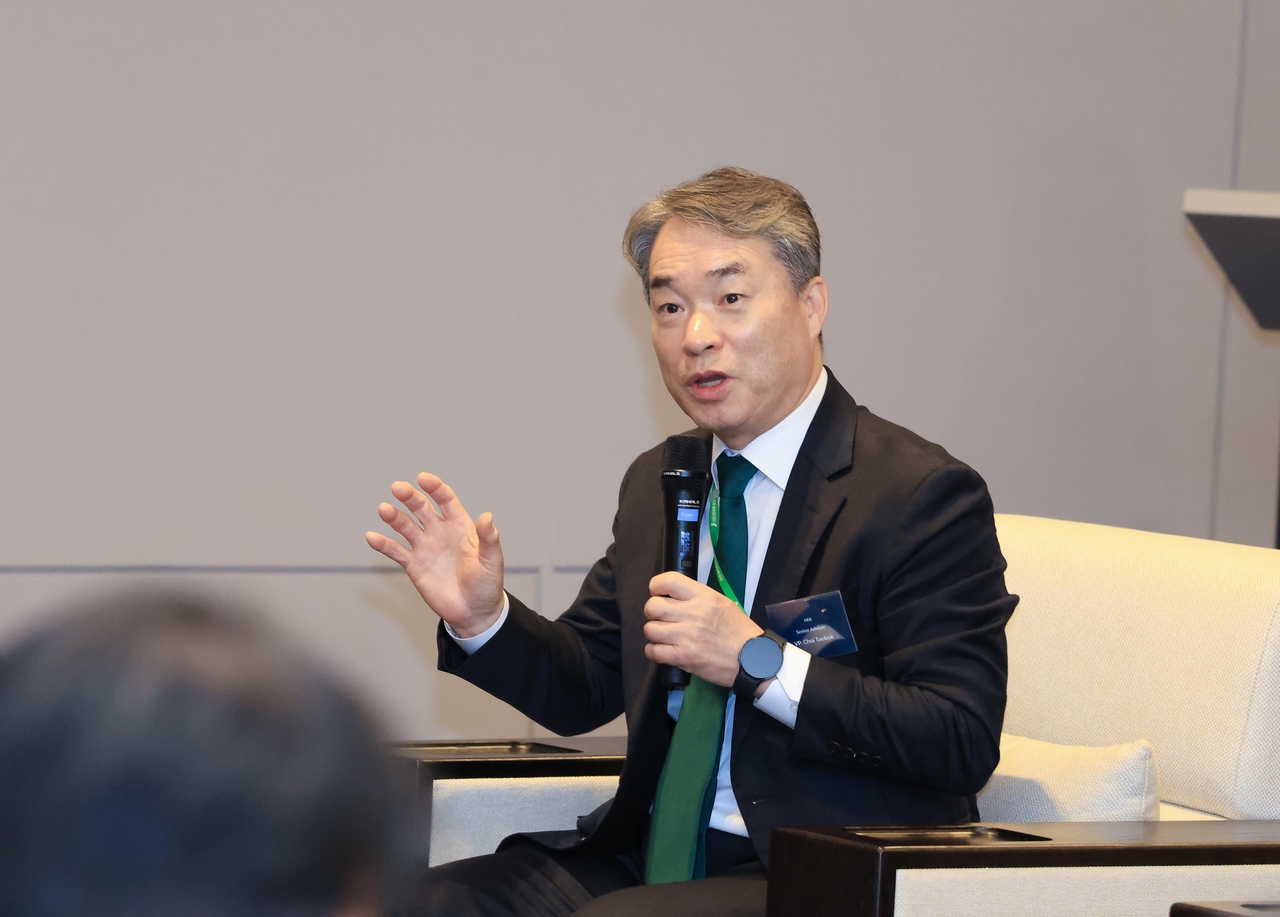
"In the past, companies developed technology in response to demand that emerged in the market first," said Choi Tae-bok, an executive director at HD Hyundai Heavy Industries. "In the unmanned era, companies must take the lead and create results themselves." Choi added that unmanned assets including ASVs offer the advantage of conducting operations without the burden of casualties.
HD Hyundai Heavy Industries' top priority is breaking into the US market. The United States announced a medium-class ASV procurement contract in September, signaling its commitment to building up unmanned naval capacity. HD Hyundai Heavy Industries and Anduril plan to conduct sea trials and demonstrations off the US coast in early next year, after which they intend to build a track record operating in US Navy conditions before pursuing contracts in the American market.
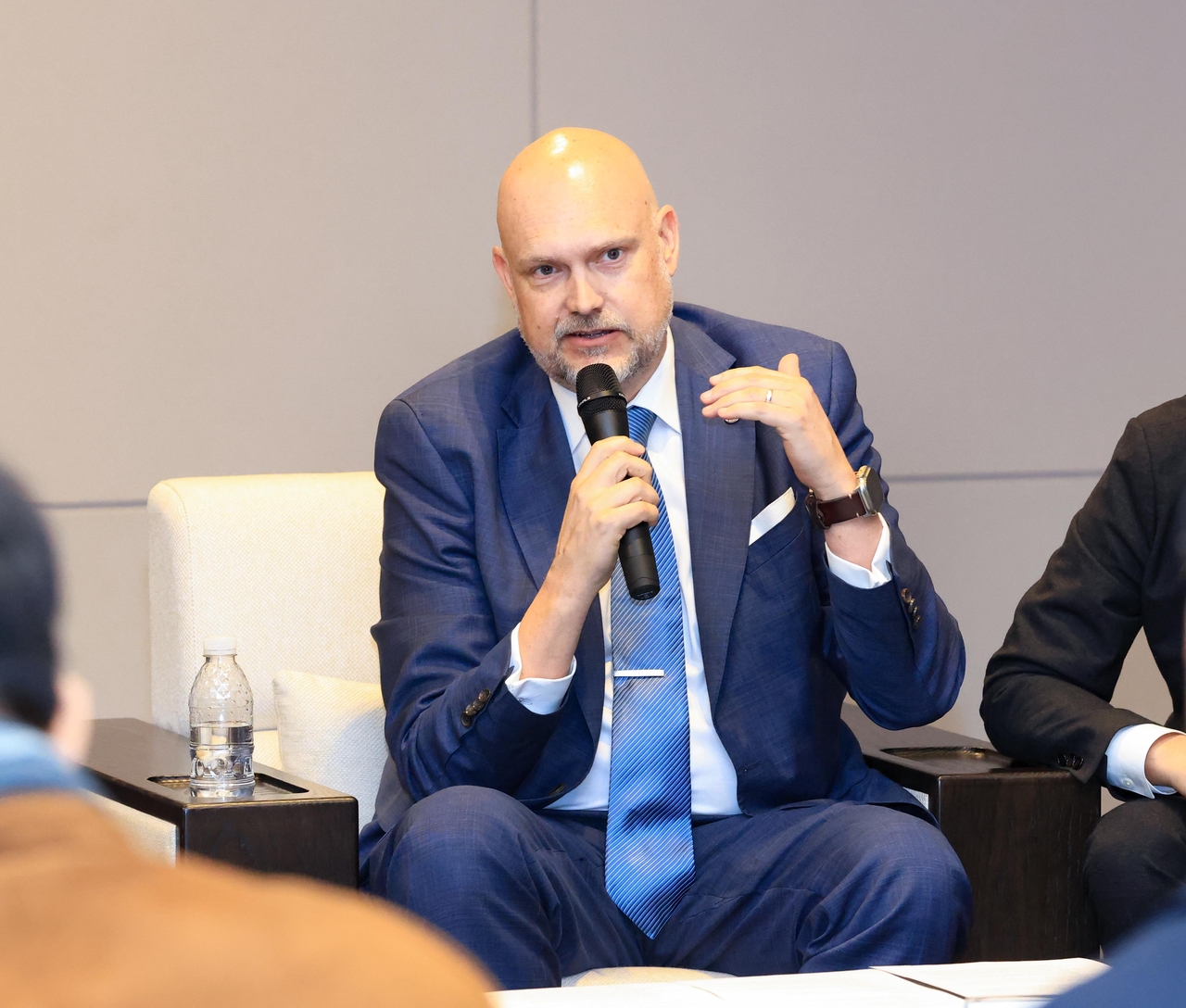
"Not only AUKUS nations — the United States, Australia and the United Kingdom — but also the Middle East and Europe are all showing interest in the ASV developed by HD Hyundai Heavy Industries and Anduril," Arnett said. He expressed confidence in the partnership's competitive edge, noting that while about 10 rivals exist in the ASV space, "ours is the only partnership that combines both shipbuilding and software expertise."
Choi said US defense procurement includes cases where the military adopts technology developed first by private companies, not just government-led programs. "ASV Alpha has technological capabilities that more than meet the requirements of the US Navy," Choi added.
yeongdai@heraldcorp.com