Orders this year hit record 2.8 trillion won
Backlog covers about 2.5 years of production capacity
Shipbuilding boom seen continuing through 2027–2028
Chinese rival absorbing own shipyard volume amid scale-up
New businesses expected to bear fruit around 2029–2030
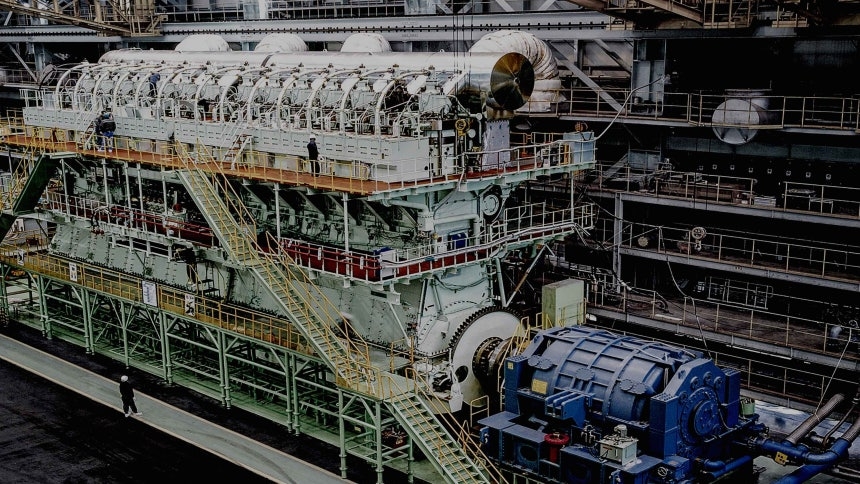
Hanwha Engine is leaning on record-high orders and a robust backlog to weather concerns about a slowdown in the global shipbuilding market. The company believes aggressive capacity expansion by Chinese engine makers poses only limited near-term competitive risk. In addition, Hanwha Engine plans to develop new businesses — including electric propulsion systems and ESS — to build a foundation for medium- to long-term growth.
According to industry sources, Hanwha Engine told securities firms at a recent non-deal roadshow that it expects to maintain a stable order backlog for now, even amid concerns about a global shipbuilding slowdown. While next year's vessel orders are expected to fall short of this year's, the absolute volume remains sizable. Clarkson Research's September outlook projected global newbuild orders for next year at 67.6 million compensated gross tons, down from this year's level. The company nonetheless forecast that the shipbuilding boom will continue through 2027–2028, with market conditions potentially turning softer around 2029–2030.
Hanwha Engine's order backlog is also expected to support earnings for the foreseeable future. Based on its post-expansion production capacity of 5.3 million horsepower, the company has secured roughly 2.5 years' worth of work. Its production slots for 2027–2028 are fully booked, and about 50 percent of its 2029 capacity has already been filled. Orders this year reached a record high of approximately 2.8 trillion won ($2.1 billion), of which engine orders alone accounted for 2.6 trillion won. Container ship engines made up 54 percent of new orders in the third quarter.
Chinese rivals may bear heavier burden if market cools, Hanwha Engine says
Hanwha Engine also argued that Chinese engine makers could face a heavier burden than their Korean counterparts if market conditions deteriorate. The company said production facilities that Chinese rivals have aggressively expanded could sit idle if the market turns down.
In particular, Hanwha Engine assessed that the competitive threat from Chinese rival Hengli's capacity expansion remains limited for now. Concerns about oversupply and intensifying competition have mounted after Hengli recently raised its two-stroke marine engine production capacity from 70–100 units per year to 200, with plans to eventually expand to 300.
Hanwha Engine said it understands that Hengli's shipyard expansion has outpaced its engine capacity growth, keeping the Chinese company focused on absorbing its own in-house shipyard volume. Competitive pressure in the Chinese private shipyard market — Hanwha Engine's primary customer base — also remains limited. In engine tenders at yards such as Yangzijiang Shipbuilding, New Times Shipbuilding, Changhong Shipbuilding and Sanfu Shipbuilding, no new entrants have been observed beyond the existing two domestic engine makers and a handful of Chinese state-owned firms, the company said.
New businesses expected to deliver results around 2029–2030
Hanwha Engine said its new businesses — SEAM and ESS — are still in their early stages, with meaningful sales growth and profitability improvements expected around 2029–2030. The company is pursuing ESS tied to its marine engine business and an electric propulsion systems venture through its acquisition of Norwegian firm SEAM.
For the SEAM business, Hanwha Engine expects integration costs to ease, allowing the unit to recover its baseline profitability from next year onward. SEAM had previously generated annual sales of 150 billion won with an operating profit margin of around 10 percent, but quarterly sales are currently running at roughly 28 billion to 30 billion won. Over the medium to long term, the company aims to grow SEAM's sales by 10 percent year-on-year next year and lift its operating profit margin above 11 percent.
The ESS business remains at an early investment stage, with quarterly sales currently at only about 500 million won. Research and development spending is running at roughly 2.5 billion won per quarter. The company said it is still in the stage of non-binding order discussions, and does not expect meaningful revenue to begin until 2028.

keg@heraldcorp.com