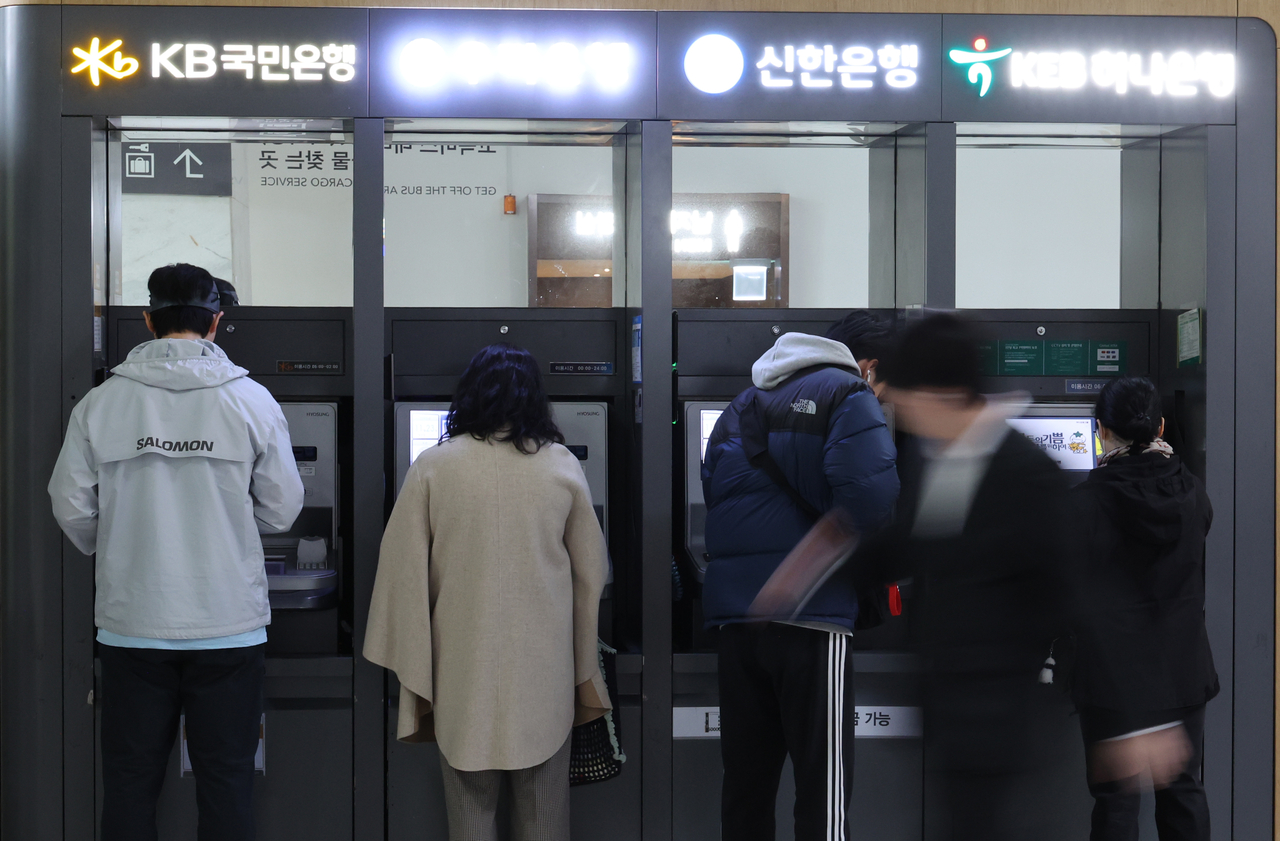
Wage income tax revenue set to top 100 trillion won next year for first time
Tax brackets unchanged despite rising prices and wages
Government cautious over concerns that reform would benefit high earners most
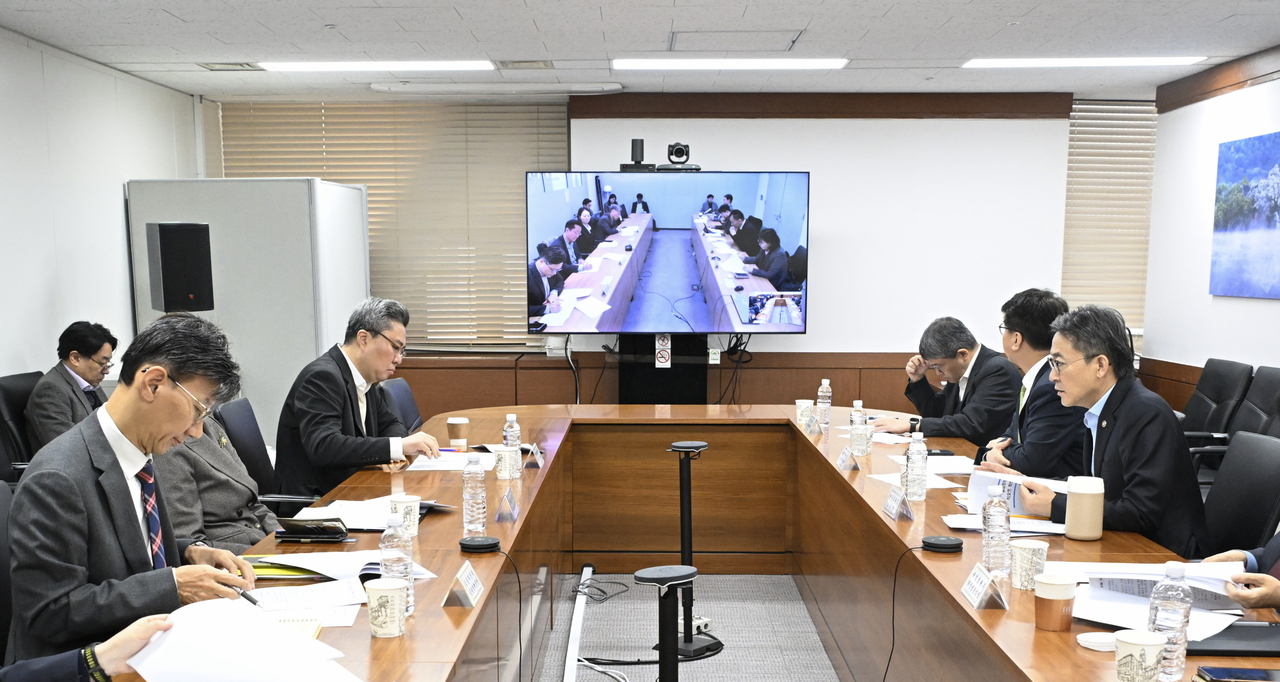
The government has launched a cross-ministry task force called the "Wage Defense Corps" to boost salaried workers' real incomes, but its inaugural meeting focused on existing support measures — leaving untouched the tax bracket structure that critics say quietly inflates workers' tax burdens. Whether the TF will eventually take on the so-called "stealth tax" — where nominal wage growth driven by inflation pushes workers into higher brackets without any rate increase — remains the central question going forward.
The Ministry of Economy and Finance said it held the kickoff meeting of the cross-ministry Wage Defense Corps TF on Friday, chaired by First Vice Minister Kwon Dae-young. Attendees included Lee Dong-jin, presidential secretary for growth and the economy, along with officials from the Ministry of Planning and Budget, the Ministry of Health and Welfare, the Ministry of Employment and Labor, and the Financial Services Commission. The TF was organized into four working groups — covering existing support measures, taxation, fiscal policy, and finance — and will work through year-end to identify new initiatives.
The meeting centered on worker-support measures already included in the 2026 tax code revision bill and the 2027 budget proposal. The tax bill would ease the income threshold for the basic deduction for spouses and dependents from 1 million won ($751) to 3 million won, and raise the monthly rent tax credit ceiling from 10 million won to 12 million won. Under the Earned Income Tax Credit, the income eligibility threshold for dual-income households would rise from 44 million won to 52 million won, and the maximum benefit would increase from 3.3 million won to 3.6 million won.
The 2027 budget proposal includes a plan to raise the cashback rate on the "Modu Card" transit payment card by 30 percentage points during off-peak commuting hours, fully cover tuition for 60,000 incoming students at regional national universities, and establish a new Child Independence Fund.
"The measures in the 2026 tax bill and the 2027 budget are directly tied to workers' livelihoods next year," Vice Minister Kwon said. "We will work closely with both the ruling and opposition parties while respecting the National Assembly's deliberations, and move swiftly to roll out measures that workers can feel on the ground as soon as they pass."
However, the meeting did not address structural reforms such as adjusting income tax brackets or introducing inflation indexing. Whether the TF will go beyond existing support measures to tackle the underlying tax structure that has steadily increased workers' burdens remains to be seen.
Wage income tax revenue has already been rising sharply. Total income tax revenue for the first nine months of this year reached 110.8 trillion won, up 15.7 trillion won from the same period last year. While income tax encompasses comprehensive income tax and capital gains tax, wage income tax paid by salaried workers has also been climbing steeply.
Last year, wage income tax revenue hit a record 68.4 trillion won, up 7.4 trillion won, or 12.1 percent, from the previous year. That figure is roughly 2.5 times the 27.1 trillion won collected in 2015 — a 152.4 percent increase over a decade during which total national tax revenue grew 71.6 percent. Wage income tax's share of total national tax revenue rose from 12.4 percent to 18.3 percent over the same period.
The trend is expected to continue next year. According to the national tax revenue budget the government submitted to the National Assembly in September, wage income tax receipts are projected to reach 102.44 trillion won — surpassing 100 trillion won for the first time in history.
The surge in wage income tax revenue reflects a combination of factors: a growing workforce, rising nominal wages, and higher performance bonuses. Separately, however, the tax bracket structure's failure to keep pace with inflation has been identified as a driver of heavier individual tax burdens. In a report published in April last year, the National Assembly Budget Office found that under a progressive tax system with fixed brackets, more workers are pushed into higher rate bands as nominal incomes rise, causing tax revenue to expand gradually even without any rate changes.
Wage income tax is levied at progressive rates of 6 to 45 percent on taxable income — gross wages minus various deductions. In 2023, the government raised the ceilings on the two lowest tax brackets, from 12 million won to 14 million won and from 46 million won to 50 million won, but the upper threshold of the 24 percent bracket — 88 million won — has remained unchanged since 2008. Income above 88 million won is taxed at 35 percent on the excess. The basic personal deduction has also been frozen at 1.5 million won per person since it was last raised in 2009.
When tax brackets remain fixed for extended periods, workers whose nominal wages rise with inflation can find themselves in higher rate bands even as their real purchasing power stays flat — paying more tax without any rate increase. Economists call this "bracket creep," a form of silent taxation that expands the government's take without ever changing the rates on paper.
Calls for bracket reform have also come from within the ruling party. Democratic Party of Korea lawmaker Moon Jin-seog told the National Assembly's finance and economy planning committee during a national audit on Oct. 6 that while average total wages per worker rose 31.7 percent between 2015 and 2024, average final tax liability surged 78.9 percent over the same period. "We need to consider introducing inflation indexing and other measures so that the phrase '20 million salaried workers are suckers' stops being repeated year after year," Moon said, urging a reform of the tax bracket structure.
The government has been cautious about adjusting the brackets. Finance Minister and Deputy Prime Minister Lee Hyong-il said at the same national audit that a blanket adjustment of tax brackets would disproportionately benefit high-income earners over low-income ones. "Rather than adjusting brackets, we have pursued policies to channel benefits directly to lower-income groups through expanded income deductions and a strengthened Earned Income Tax Credit," Lee said.
Bracket reform is also an issue that key figures in the current administration raised when they were in opposition. President Lee Jae Myung, during his tenure as Democratic Party leader, highlighted the problem of rising wage income tax burdens even as real wages stagnated despite nominal gains driven by inflation. Im Gwang-hyeon, now chief of staff at the presidential office, who led the Democratic Party's side on the Wage Defense Corps committee as a lawmaker, also called for raising the basic deduction amount and introducing inflation indexing.
If bracket reform discussions gain momentum, the key flashpoints will be the projected loss in tax revenue and the distribution of tax cuts across income groups. The National Assembly Research Service said any move toward inflation indexing must weigh the resulting revenue shortfall and the potential rise in the share of workers who pay no income tax at all. The Korea Enterprises Federation has also proposed introducing inflation indexing while arguing that the proportion of tax-exempt earners should be brought down to internationally comparable levels.
y2k@heraldcorp.com