Gangwon Province lawmaker Baek So-ryeon presses education office on victim protection
A student with a disability at a middle school in Gangwon Province was subjected to physical and emotional bullying by 14 classmates over roughly four months, from April through July this year, it has been revealed.
The victim found it impossible to continue attending class alongside the perpetrators and ultimately transferred to another school.
The situation amounts to the victim being punished twice — first by the bullying itself, and then by being the one forced to leave. There is no guarantee the student will be safe from similar treatment at the new school.
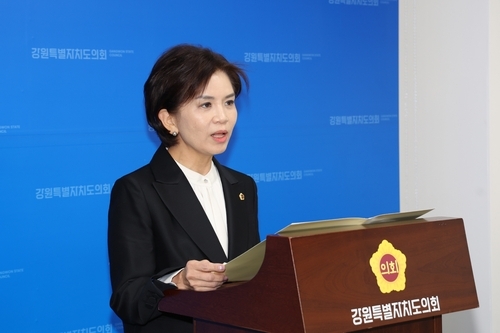
Baek So-ryeon, a member of the Gangwon Special Self-Governing Province Council's education committee, disclosed the case during a 2026 administrative audit of the Gangwon Provincial Office of Education, drawing on a report from a disability rights advocacy agency. Baek urged the education office to take stronger action on school violence.
"We must take seriously the fact that a student bullied by 14 peers over four months was ultimately forced to leave school," Baek said. "Disciplining the perpetrators matters, but above all, protecting the victim so they can continue learning safely at their original school must come first."
"It must not keep happening that a student with a disability is left without protection because they cannot fully articulate what was done to them, or that the victim ends up being the one who has to leave," Baek said, urging the Gangwon Provincial Office of Education to strengthen investigation and protective measures tailored to the needs of students with disabilities, and to establish an effective joint response system so that victims and their parents are not subjected to secondary harm.
A school violence review panel handed down Level 4 sanctions — community service — to seven of the perpetrators, while the remaining seven received Level 1 through 3 measures. Even so, education circles widely hold that it is unjust for the victim, a student with a disability, to be the one who must leave, with no assurance the student will not face the same treatment at the next school.
"If the victim felt compelled to transfer even after measures were taken against the perpetrators, we need to ask whether the protections offered to the victim were truly adequate," Baek said, demanding confirmation that practical safeguards such as classroom separation had been considered and put in place.
Baek also highlighted that more than 18 students had been identified as perpetrators when the case was first reported — raising questions about why that number dropped to 14, why school security camera footage suddenly covered only the most recent month, and whether the school had taken sufficient steps to protect the victim.
"Evidence in school violence cases can become harder to secure as time passes," Baek said. "Particularly in cases of prolonged, repeated bullying, the management system must be reviewed from the moment a report is filed to ensure that CCTV footage and other evidence are preserved without delay."
Baek called for a careful investigative framework that brings in specialists with a thorough understanding of disability, and that comprehensively reviews objective materials such as CCTV footage alongside statements from fellow students, school staff and parents. "The success of a school violence response cannot be measured solely by what punishment was handed to the perpetrators," Baek said. "The more important standard must be how safely the victim was protected and how fully they were able to return to normal school life."
abc@heraldcorp.com