'Sinhwa TF' cuts approval periods by up to 67%; Eunma apartment project approval slashed from 60 days to 27
Team of 41 experts deployed to resolve resident disputes and accelerate reconstruction timelines
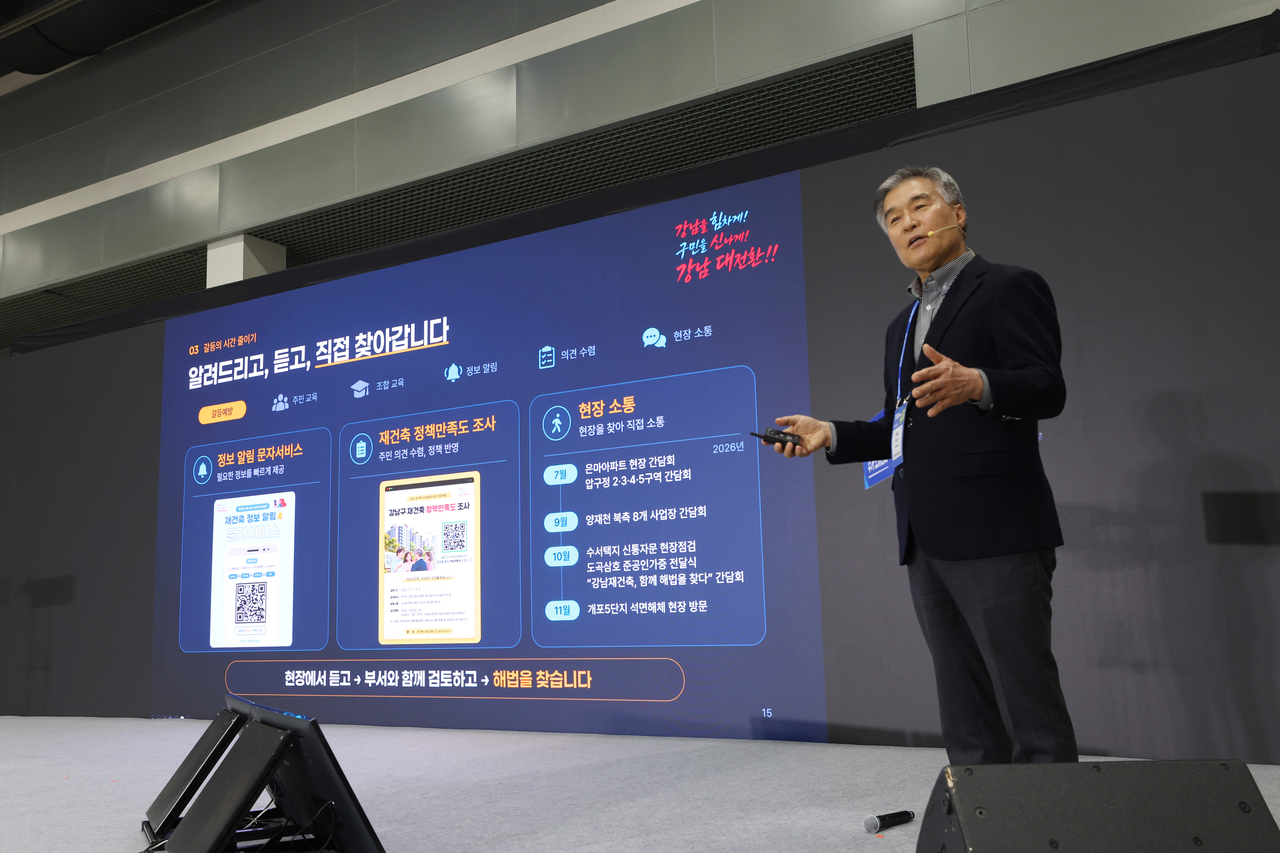
Seoul's Gangnam-gu has put forward a new model for residential urban renewal in South Korea through what officials are calling the "Kim Hyun-ki fast-track reconstruction project," an initiative centered on cutting administrative red tape and resolving disputes among residents.
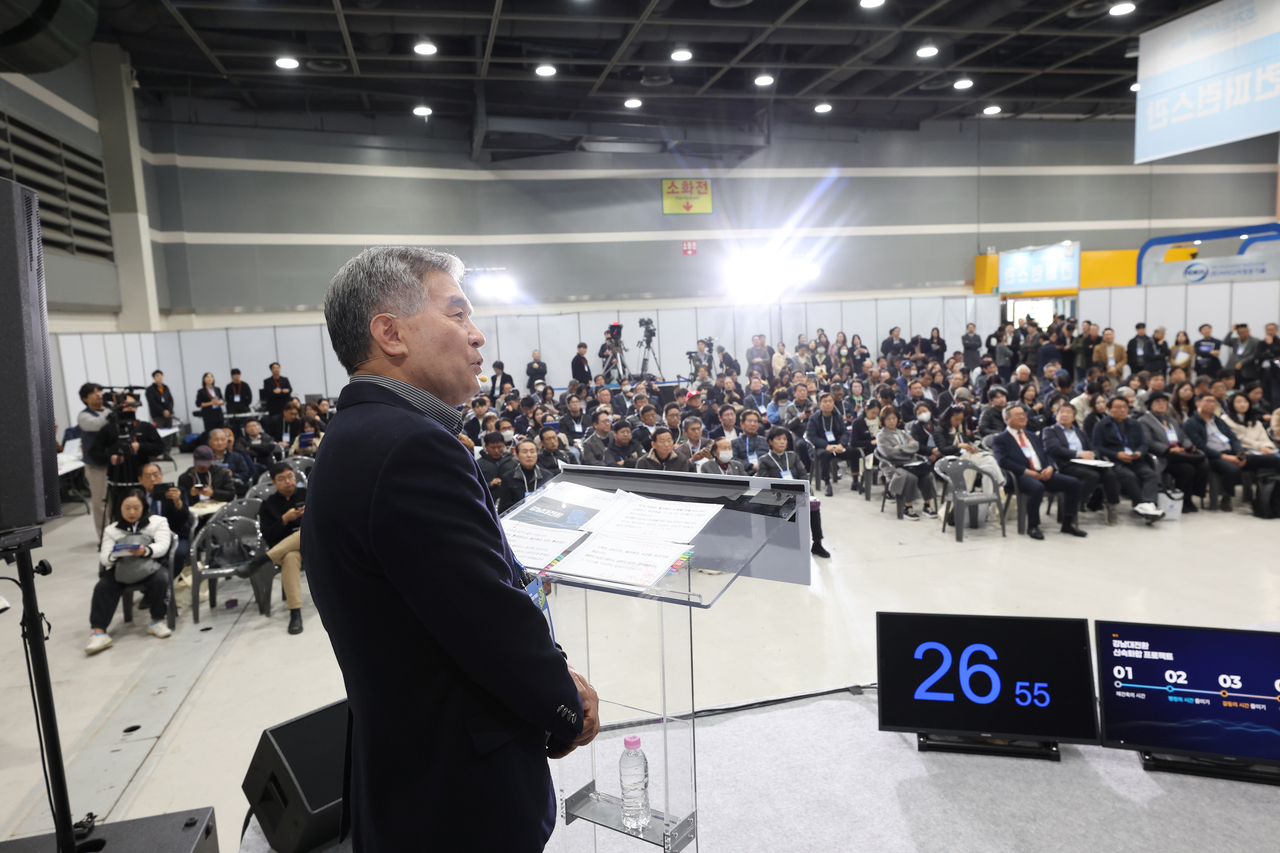
Gangnam-gu District Mayor Kim Hyun-ki unveiled the district's administrative reform efforts at a special lecture Thursday at the aT Center in Yangjae-dong, held as part of the 2026 Korea Residential Urban Renewal Expo. Kim set a target of breaking ground on 15 project sites totaling 27,330 units by 2030.
The expo runs through Saturday, featuring policy lectures on urban renewal, expert forums and exhibitions by industry firms.
Kim delivered his lecture under the theme "The Great Gangnam Transformation: Changing the Timeline of Reconstruction," identifying the streamlining of administrative procedures and the resolution of resident conflicts as the two central challenges facing reconstruction projects.
"Reconstruction is not simply a matter of building new apartments — it involves residents' property rights, their quality of life and the future of Gangnam," Kim said. "We are concentrating our administrative resources on shortening project timelines that have been stretched out by procedural delays and community disputes."
The push began with the launch in July of the "Reconstruction Fast-Track Harmony Task Force," known by its Korean acronym Sinhwa TF. Kim chairs the task force himself, with relevant departments covering reconstruction, roads, transportation and the environment working together to review issues at each project site in an integrated manner. The district mayor receives daily briefings on the progress of major sites and personally oversees the schedule and key issues for each project.
Processing times for administrative approvals have fallen sharply as a result. Approval of reconstruction promotion committees for three complexes — Ilwon Hansol, Daechi Seonkyung and Ilwon Sangnoksu — was cut from the standard 30 days to 10 days, a reduction of up to 67 percent.
Particularly notable, the project implementation plan approval for Eunma apartment in Daechi-dong was shortened by 55 percent, from 60 days to 27 days, while the cooperative establishment approval for Ilwon Garam apartment was processed in just 10 days.
The district attributed the gains to parallel preparation and inter-departmental coordination that minimized unnecessary waiting time during administrative procedures.
Viewing resident disputes as another key source of project delays, the district has also moved proactively to address them. It operates a rapid-advancement expert support team of 41 specialists drawn from fields including law, architecture, urban planning, property valuation, transportation and conflict management.
The team has helped mediate disputes between reconstruction cooperatives and commercial tenants, and has provided expert legal advice on issues related to integrated reconstruction projects where precedents are scarce, assisting in resolving complex problems at project sites.
The district is also investing in resident capacity-building and communication. It runs a reconstruction academy four times a year and an expert training course twice a year, while boosting residents' access to information through a text message alert service, policy satisfaction surveys and on-site meetings at individual project locations.
A total of 53 reconstruction projects are currently under way across Gangnam-gu. Backed by its rapid administrative support and conflict management systems, the district plans to accelerate progress toward its goal of breaking ground on 15 project sites comprising 27,330 units by 2030.
Gangnam-gu also operated a promotional booth at the expo, showcasing future renderings of major reconstruction sites along with planned sky community spaces and elevated pedestrian bridges. The expert support team offered tax consulting on reconstruction matters at the booth.
"We owe residents who have waited a long time for reconstruction an answer in the form of results," Kim said. "I will take responsibility to the end — cutting unnecessary procedures and resolving disputes on the ground — so that project timelines can be significantly shortened."
seouldream01@heraldcorp.com