Record sales and operating profit forecast
Car-carrier revenue up 38.5%
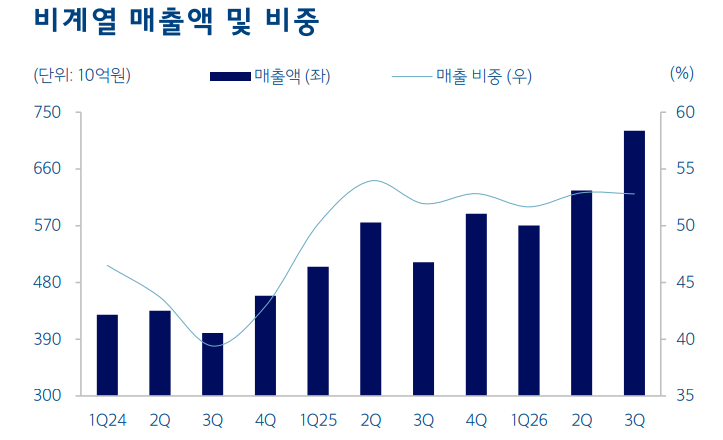
Non-affiliate sales top 700 billion won
4 ultra-large vessels in Q4, 10 more in 2027
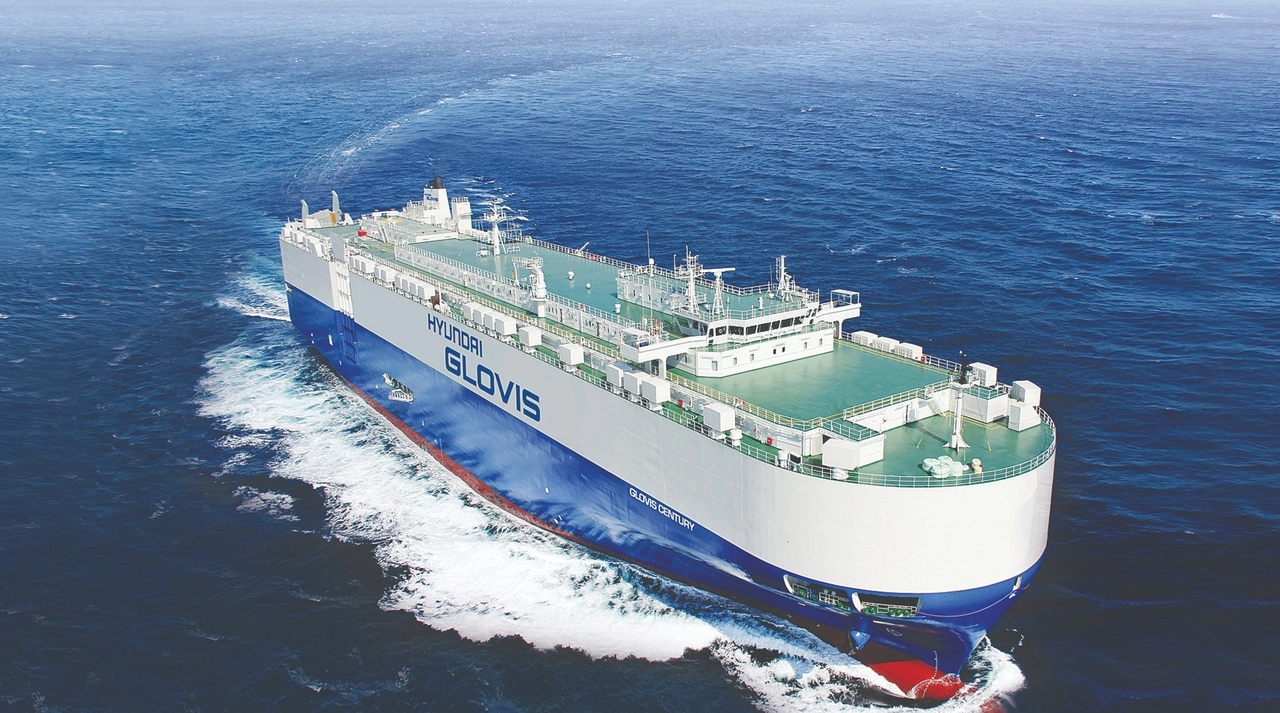
China's automobile exports are on track to surpass 10 million units this year for the first time in history, and Hyundai Glovis stands to be a major beneficiary — with its annual sales now widely expected to break 30 trillion won ($22.4 billion). As Chinese automakers flood global markets with finished vehicles, demand for pure car and truck carriers has outstripped supply, allowing Hyundai Glovis — which secured a large fleet ahead of rivals — to capture high-rate Chinese cargo at scale.
According to FnGuide, a financial data provider, the market consensus for Hyundai Glovis this year puts sales at 34.03 trillion won and operating profit at 2.15 trillion won. Both figures would surpass last year's records of 29.57 trillion won in sales and 2.07 trillion won in operating profit, setting new all-time annual highs.
Through the third quarter, cumulative sales reached 25.57 trillion won and operating profit 1.58 trillion won. If fourth-quarter operating profit exceeds 490 billion won, full-year operating profit will top last year's annual total.
China's 65.8% export surge creates car-carrier shortage
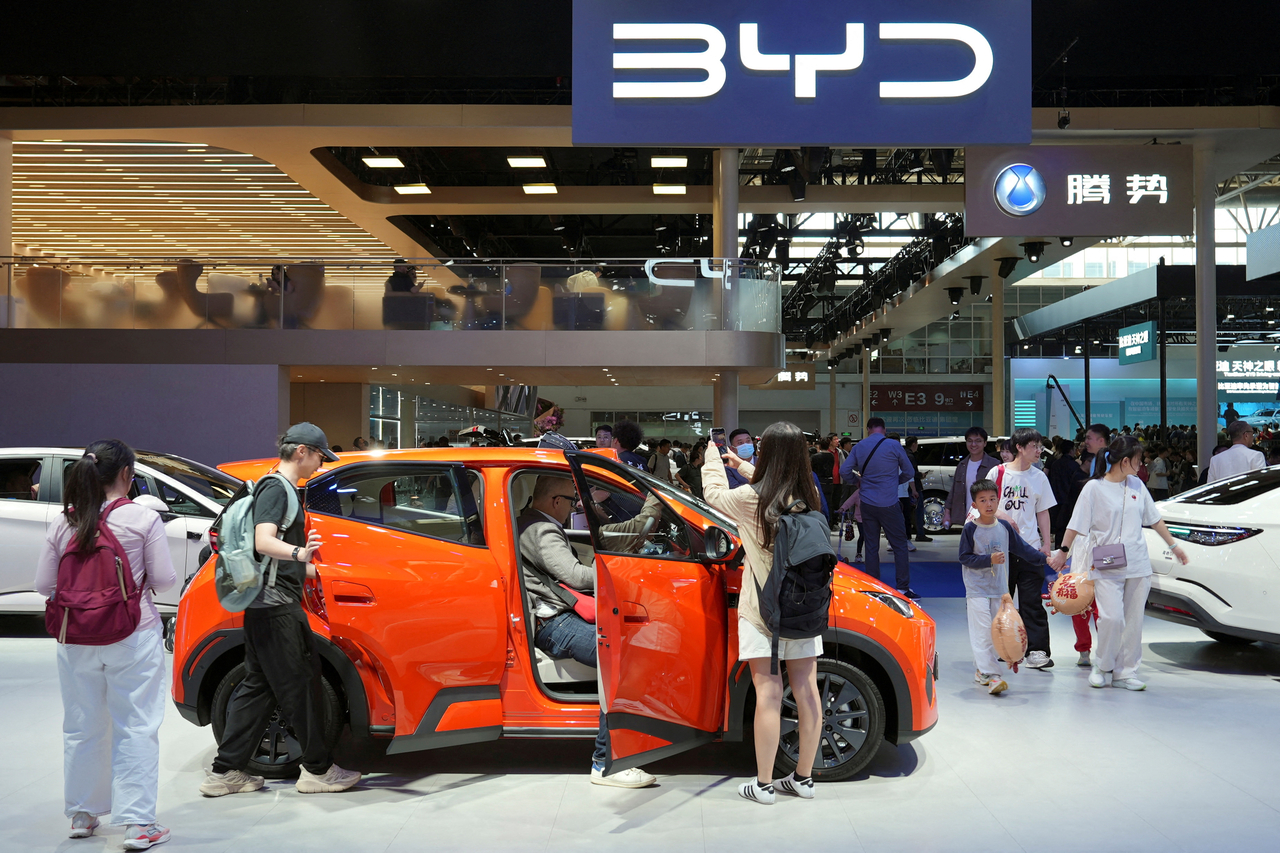
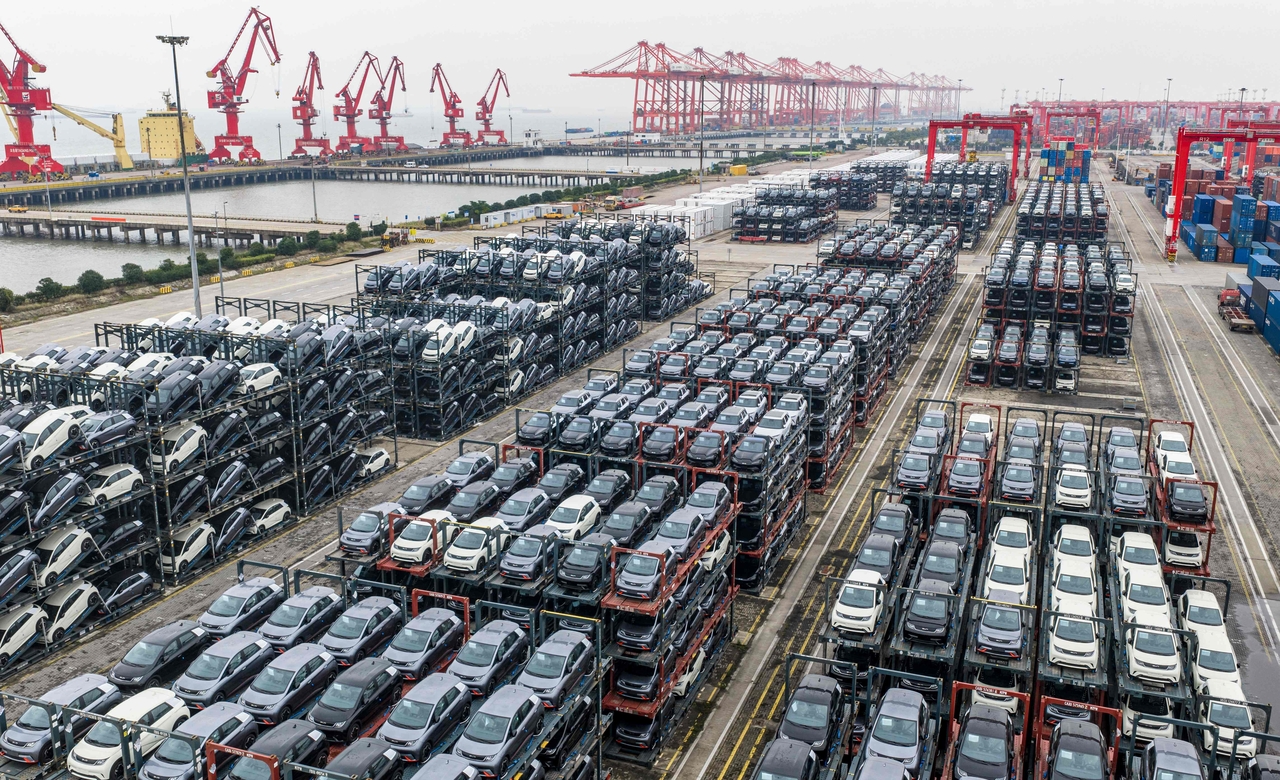
The driving force behind the earnings surge is Chinese automakers. According to the China Association of Automobile Manufacturers, China exported about 8.205 million vehicles in the first nine months of this year, up 65.8 percent from the same period last year — already surpassing last year's full-year total of about 7.098 million units in just nine months. The association forecasts exports will exceed 10 million vehicles for the full year.
The export surge has fueled rapidly growing demand for car-carrying vessels. On top of that, a significant number of ships bound for Europe have been rerouting around the southern tip of Africa to avoid the Red Sea, extending voyage times. New vessel deliveries offer little near-term relief: industry sources say that even if orders were placed today, new ships would not be delivered until 2031 at the earliest.
The resulting freight-rate increases from the supply shortage are flowing directly into Hyundai Glovis's results. Third-quarter maritime revenue rose 37.1 percent year-on-year to 1.81 trillion won, while operating profit climbed 16.6 percent to 227.9 billion won. Within that, pure car and truck carrier revenue jumped 38.5 percent to 1.37 trillion won.
Non-affiliate revenue — cargo from customers outside the Hyundai Motor Group — has been growing particularly fast, surpassing 700 billion won to set an all-time record. Chinese shipments have also expanded sharply. According to Hyundai Glovis, the company holds around a 12 percent share of seaborne vehicle exports from China, and its quarterly volumes from the country have grown from 120,000 to 130,000 units last year to 150,000 to 180,000 units this year.
Hyundai Motor sales fall for 13th straight month — but non-affiliate cargo fills the gap
The key to profitability lies in contract structure. Cargo from Hyundai Motor and Kia is handled under five-year long-term contracts at fixed base rates. Chinese customers, by contrast, operate on spot contracts or agreements of no more than one year, meaning freight rates reset with market conditions — and right now, that works strongly in Hyundai Glovis's favor.
During its third-quarter earnings call, Hyundai Glovis said: "Because Chinese customers sign contracts of at most one year, current market rates are inevitably reflected in unit prices. There is a significant gap between long-term and spot contract rates, and this has contributed greatly to the recent improvement in car-carrier profitability."
The company expects this high-margin contract structure to persist for now. "Even if we wanted to offer more capacity to Chinese customers, space is consistently running short, making it difficult to lock in large volumes under long-term contracts," it said.
Meanwhile, volumes from within the group have been declining. Hyundai Motor sold 329,773 vehicles in October, down 6.3 percent from a year earlier — the 13th consecutive month of year-on-year declines since October last year. Cumulative sales from January through October fell 6.9 percent to about 3.219 million units. Kia posted a 5.1 percent increase over the same period to about 2.77 million units, but combined sales for the two automakers slipped 1.7 percent to about 5.989 million units.
Non-affiliate customers are filling the void. The share of car-carrier revenue derived from customers outside the Hyundai Motor Group has consistently exceeded 50 percent since the second quarter of last year. In effect, the group's logistics arm is hauling Chinese vehicles that compete directly with Hyundai and Kia in overseas markets — and posting record earnings in the process.
Securing large vessels ahead of rivals — aiming to lead the market
Hyundai Glovis plans to sustain its sales growth by accelerating fleet expansion. In the fourth quarter, the company will take delivery of four ultra-large car carriers with a capacity of 10,800 units each, including one already received in October. Ten more large vessels with a capacity of around 10,000 units are scheduled for delivery in 2027. As of the third quarter, the company operated a fleet equivalent to 106 vessels on a 6,500-CEU basis.
Executive Vice President and Chief Financial Officer Yoo Byung-gap said the timing had worked in the company's favor. "At a time when demand for finished-vehicle exports from the Far East — led by China — was surging, our fleet expansion through long-term charter contracts for new vessels allowed us to respond to rising transport demand at exactly the right moment," he said.
The company said it sees little risk of oversupply even as new vessels are delivered in succession. Chief Executive Lee Gyu-bok said: "The sharp surge in Chinese finished-vehicle exports this year was something nobody anticipated when new vessel orders were placed last year. Even after all the new ships are delivered in 2028 and 2029, we see absolutely no cause for concern about oversupply."
With most competitors' new vessels not due until 2028 or later, Hyundai Glovis intends to lock in capacity before rivals can. Lee said: "We are the first carrier to receive large vessels in a market where ships are in short supply. We are considering deploying every new vessel we receive as quickly as possible, securing as much charter tonnage as comes to market, and ultimately taking a role in setting freight rates in the spot market."
Risks remain, however. The EU's Industrial Acceleration Act could restrict exports of Chinese-made eco-friendly vehicles to Europe. The company said it does not expect a severe impact: "It will be difficult for Chinese manufacturers to rapidly scale up local production in Europe, so finished-vehicle exports will continue in parallel. Even if volumes to Europe were to fall by an extreme 50 percent, the overall effect on us would be only around 3 percent — not significant," it said.

eyre@heraldcorp.com