Forum with seven semiconductor firms hears concerns over working-hour rules during intensive R&D periods
Kim Young-hoon says workers must 'stay healthy and receive fair compensation'; employee input to follow
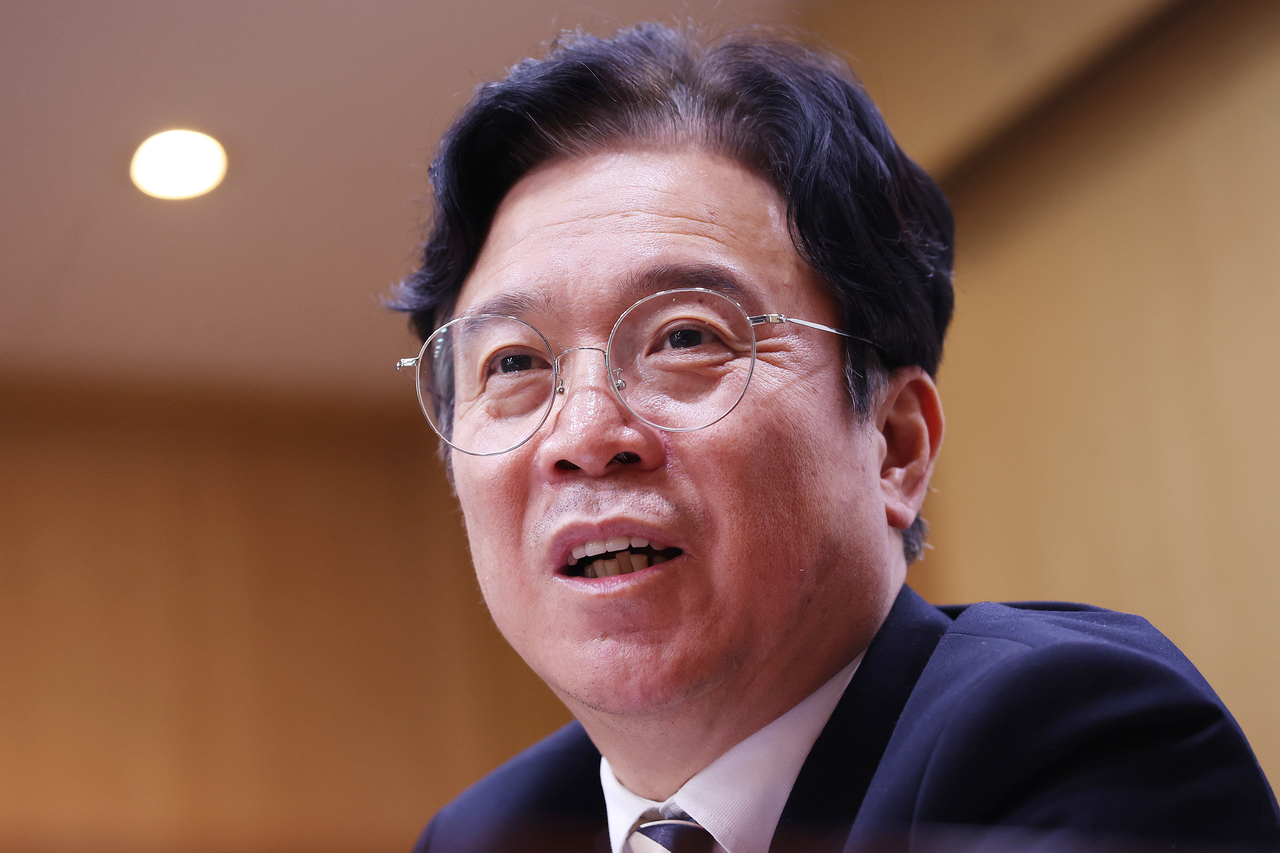
Minister of Employment and Labor Kim Young-hoon met with seven semiconductor companies, including Samsung Electronics and SK hynix, on Friday to examine how working hours are being managed at research and development sites.
The semiconductor industry has consistently called for more flexible working-hour arrangements to allow intensive R&D pushes during critical periods. The government plans to use the feedback gathered Friday as reference material for labor-management-government social dialogue related to the mega-special zone initiative. Kim said the ministry would also seek input from semiconductor workers, in addition to the companies.
The Ministry of Employment and Labor held the meeting at Switch22 in Yeouido, Seoul, with representatives from the Korea Semiconductor Industry Association and semiconductor firms, to hear how companies are using the current working-hour system and what difficulties they face in doing so. Participants included Samsung Electronics, SK hynix, Wonik IPS, Dongjin Semichem, Fine Semitech, Mico Ceramics and LOT Vacuum. The Ministry of Trade, Industry and Resources also attended.
The forum followed a request by President Lee Jae Myung at the Regulatory Rationalization Committee on Oct. 23, when he asked officials to fully discuss ways to ease the difficulties semiconductor companies face in applying working-hour rules. The industry has consistently argued that, as global technology competition intensifies, it needs greater flexibility in managing working hours during periods of concentrated R&D activity.
Kim identified two key challenges for the semiconductor industry: sustaining the innovation needed to maintain a competitive edge in global markets, and creating quality jobs. He said the industry's growth must translate into opportunities for the more than 200,000 people already working in the sector as well as for young job seekers.
Kim said that crafting effective improvements to the working-hour system requires first understanding how R&D work actually operates and what obstacles exist under the current rules. He added that any reform must also address how to ensure research staff can work in good health and receive fair compensation. Top talent, he said, can only deliver strong R&D results when they are able to work freely and creatively in a healthy environment.
The government is conducting what it calls a "single-issue social dialogue" on the mega-special zone legislation, bringing together labor, management and relevant ministries to discuss ways to strengthen the competitiveness of advanced industries while fostering a healthy and sustainable work environment. The ministry plans to bring the working-hour cases and industry concerns heard Friday into that dialogue.
"The government will listen not only to industry today but also to the voices of semiconductor workers," Kim said. "We will provide full support so that reasonable solutions can be discussed based on diverse on-the-ground perspectives."
fact0514@heraldcorp.com