Facebook post: 'I'm curious what he'll even say'
'Talking about dialogue on TV isn't dialogue — it's self-promotion'
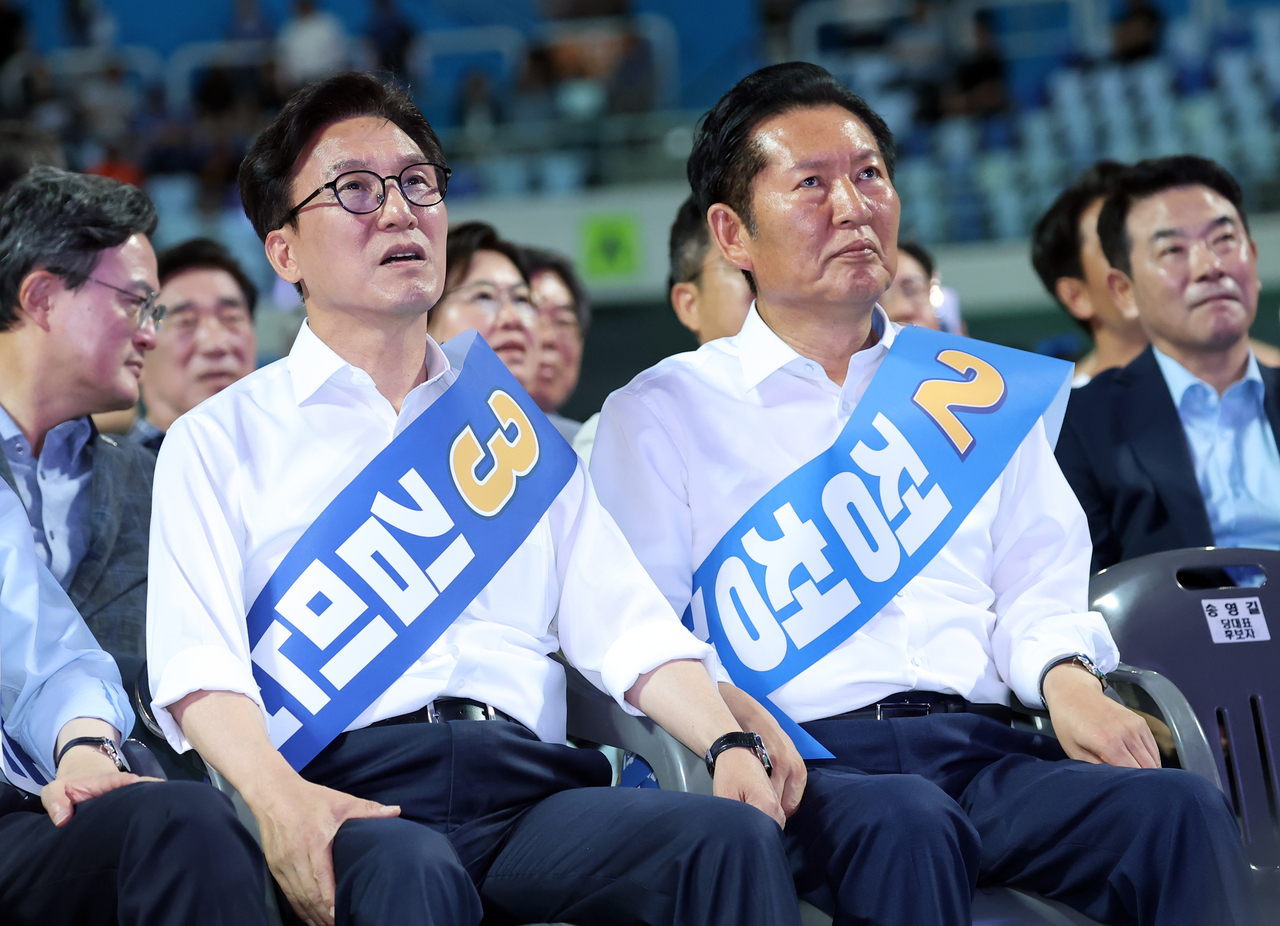
Jung Chung-rae, former leader of the Democratic Party of Korea, expressed displeasure Thursday over party leader Kim Min-seok's handling of allegations that Shincheonji members joined the party en masse.
In a Facebook post, Jung said Kim had not called him even once since the party convention, but added he would not avoid a conversation if Kim sought one. "Talking about wanting dialogue while going on broadcasts and making a big fuss first — isn't that self-promotion?" Jung wrote. "He hasn't called me once since the party convention, but if he insists on reaching out, I have no intention of avoiding it. I'm curious what he'll even say."
The remarks were a pointed rebuke of Kim, who appeared earlier that day on the party's YouTube program "Minty 07" and suggested he was working to meet with Jung to find a resolution to the Shincheonji allegations.
Kim, for his part, said he believed meeting and talking things through was the right approach. "I think it's a good idea to sit down and resolve this through dialogue," Kim said. "That's what I intend to do, and I'm making efforts toward that. It may not all come together right away, but I'm trying, and I will keep working to resolve this from that angle."
Jung then posted again on Facebook, invoking what he called three principles of a proper apology — state specifically what was done wrong, say it directly to those who were harmed, and clearly commit to preventing a recurrence — before concluding: "First, apologize properly."
"Think about how the victims feel, not how the perpetrator sees it," Jung said. "It is not just Jung Chung-rae who was directly harmed — countless party members and supporters are victims too."
Jung also pushed back on the framing that the matter was something the two men could settle between themselves. "This is not an assault that broke out between Kim Min-seok and Jung Chung-rae over drinks," he said. "This is not something the two of us can just meet and sort out. Is it because this political operation succeeded that we're now hearing talk of apologies and dialogue?"
"The victims are still in pain," Jung added. "The mockery and disparagement of victims continues to this day. Some lawmakers are even leading the charge to muddy the waters. How can anyone glorify and praise an apology for wrongdoing? Can a single word of apology for destroying the party really be called a decision that saves the nation?"
Jung also effectively rejected calls from senior party figures urging the two to meet and resolve the matter, saying that pressuring victims to reach a settlement amounted to a second act of harm. "What matters most are the real victims — the party members," he said.
"Whether they forgive or not depends entirely on the attitude of the perpetrator," Jung added. "I come after that."
shindw@heraldcorp.com