Rogoff cautions against spending semiconductor windfall too quickly
Urges fiscal restraint as volatility looms
Generational divide seen as biggest budget pressure
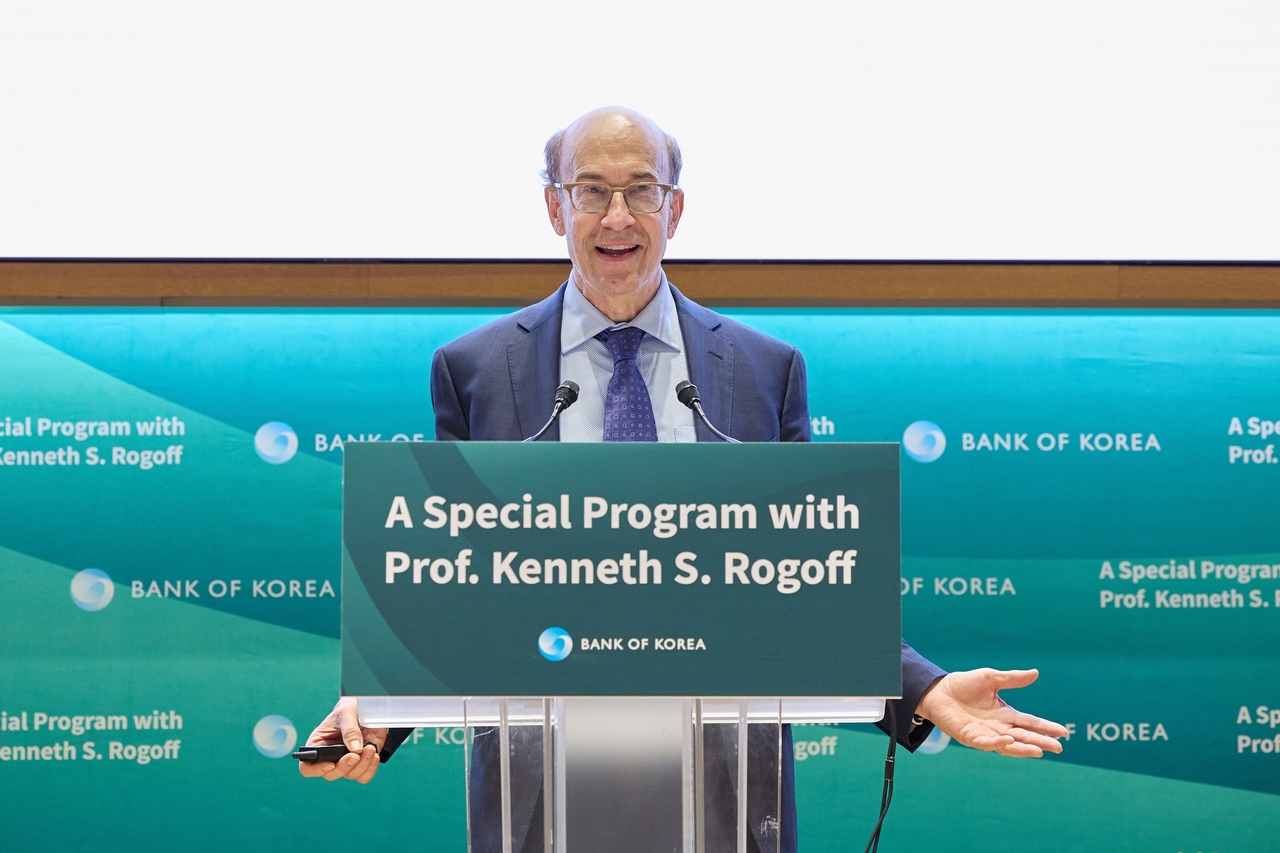
Harvard University professor Kenneth Rogoff has warned that South Korea would face severe pain if the AI bubble bursts, urging the country to preserve fiscal space rather than quickly spending the windfall from its semiconductor boom.
Speaking at a panel discussion during a seminar for eminent foreign scholars hosted by the Bank of Korea in Jung-gu, Seoul on Thursday, Rogoff said the AI bubble will eventually burst and the fallout will be very painful. "I just don't know when," he said. "It could be after prices triple again."
Rogoff said South Korea has benefited enormously — "almost like a suburb of Silicon Valley" — and that such a position is far better than the alternative. But he cautioned that the country must be clear-eyed about how quickly it can spend the money coming in.
On fiscal management during a boom, Rogoff said some countries that have collected large tax revenues from rising profits and prices may not be adequately prepared for a reversal. "Research consistently shows that countries with relatively low public debt cope better when something like this hits," he said. He added that governments cannot keep expanding spending every time conditions improve. "Volatility is going to be very high," he said.
Rogoff identified generational conflict as the single greatest fiscal pressure facing South Korea and other countries in the years ahead. "I don't know the Korean numbers specifically, but in general, older generations hold a large share of wealth and housing, and they are not as exposed to the threat from AI as younger people are," he said. "How to divide between the older generation that worked hard and built a great country, and the younger generation that needs hope — that will be the biggest fiscal pressure."
Rogoff offered a positive assessment of the government's push to internationalize the won. "The won is not a global currency, but internationalization can bring many advantages," he said. "My understanding is that the Bank of Korea is moving in that direction, and I think that is very wise." He added that it would allow significant cost savings and a degree of self-protection, and that modern technology has made the process far cheaper than it once was.
On South Korea's position amid US-China tensions, Rogoff said the country faces a difficult balancing act not only over which currency to use but also between two competing AI standards camps. He illustrated the dilemma with a question: "What do you do when your parents are fighting?"
Rogoff rebuffed claims by Tesla CEO Elon Musk and others that AI would usher in such abundance that inflation would cease to be a concern. "Musk is an incredible visionary and genius, but on inflation and macroeconomics, to put it generously, he has not studied it properly," Rogoff said. "Real estate will not become abundant, and resources like minerals will actually become more expensive because of AI."
Rogoff is an American macroeconomist widely regarded as a leading authority on international finance, exchange rates, sovereign debt and monetary policy. He built his reputation by drawing on 800 years of global financial crisis history to warn in advance of the 2008 global financial crisis, the European debt crisis and China's real estate downturn.
kimstar@heraldcorp.com