Active local government participation and stronger national budget and technology support to focus national capacity on converting affected areas to 'clean zones'
The government will concentrate support on converting lightly affected areas into "clean zones" as part of an early-response drive against pine wilt disease, prioritizing regions where damage remains limited as the best strategy to halt further spread.
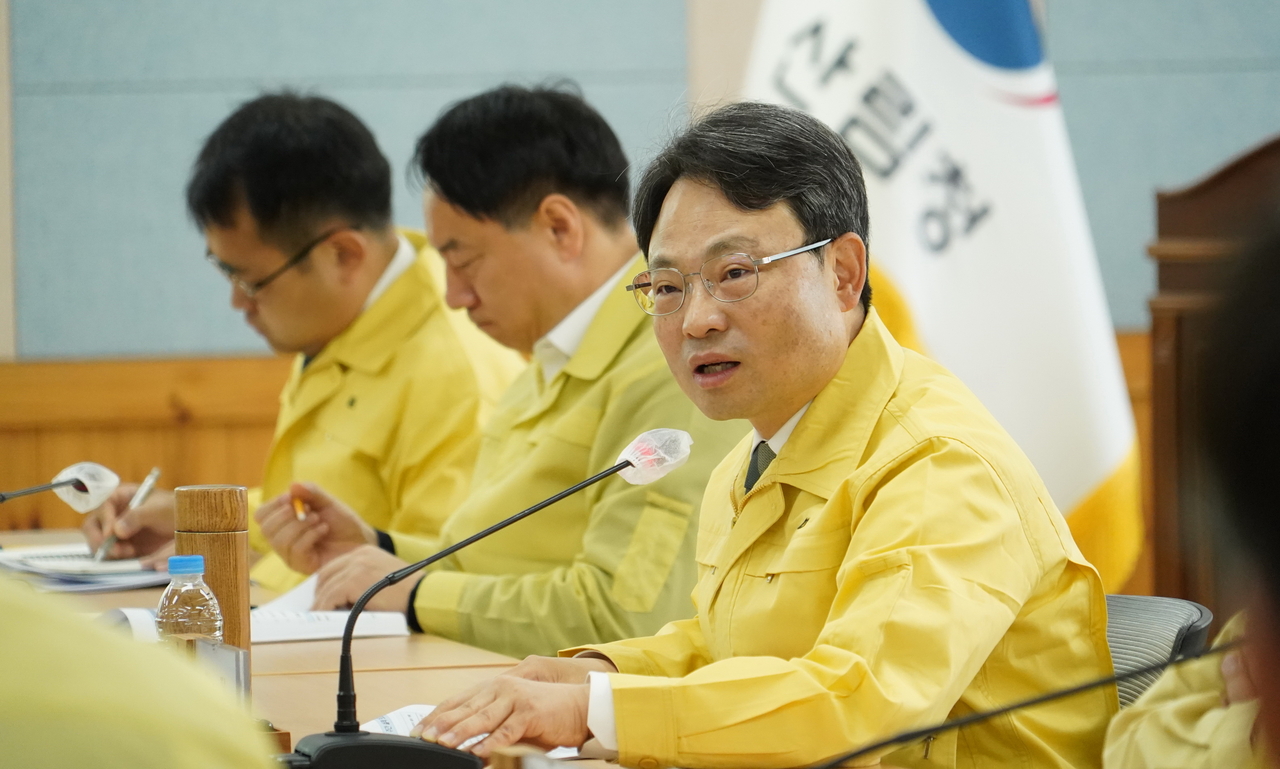
The Korea Forest Service said Thursday it held a situation management meeting of the National Pine Wilt Disease Control Response Unit at the Government Daejeon Complex to discuss intensive support and management measures aimed at achieving early clean-zone conversion in areas with minor pine wilt damage.
The meeting reviewed control progress and key field response results reported by regional supervisors of the National Pine Wilt Disease Control Response Unit over the past two weeks, and discussed ways to strengthen intensive support and on-site inspections to improve control outcomes in lightly affected areas.
The unit visited 18 areas over the past two weeks, including sites targeted for clean-zone conversion, conducting interviews with local government heads, inspecting pine wilt control sites and gathering feedback on field challenges. The meeting focused on improvement needs identified during those visits and on tailored support plans for each region.
The Korea Forest Service also reviewed plans to expand the list of areas targeted for clean-zone conversion based on input from local governments, and discussed national-level support measures — including budget and technology support, regional supervisor field inspections and intensive management of areas with insufficient control — to drive tangible results. The agency plans to strengthen implementation oversight by having regional supervisors monitor surveillance and control progress, and by analyzing the causes of shortfalls in underperforming areas to develop corrective measures.
The Korea Forest Service said it will work closely with local governments to enhance customized support for each clean-zone target area, converting lightly affected regions first to preemptively block the spread of pine wilt disease.
"It is crucial to respond aggressively to pine wilt disease while damage is still limited," Korea Forest Service Commissioner Park Eun-sik said. "We will do our utmost to ensure that the expansion of clean-zone target areas translates into real control results through active participation by local governments, national budget and technology support, and thorough on-site inspections."
kwonhl@heraldcorp.com