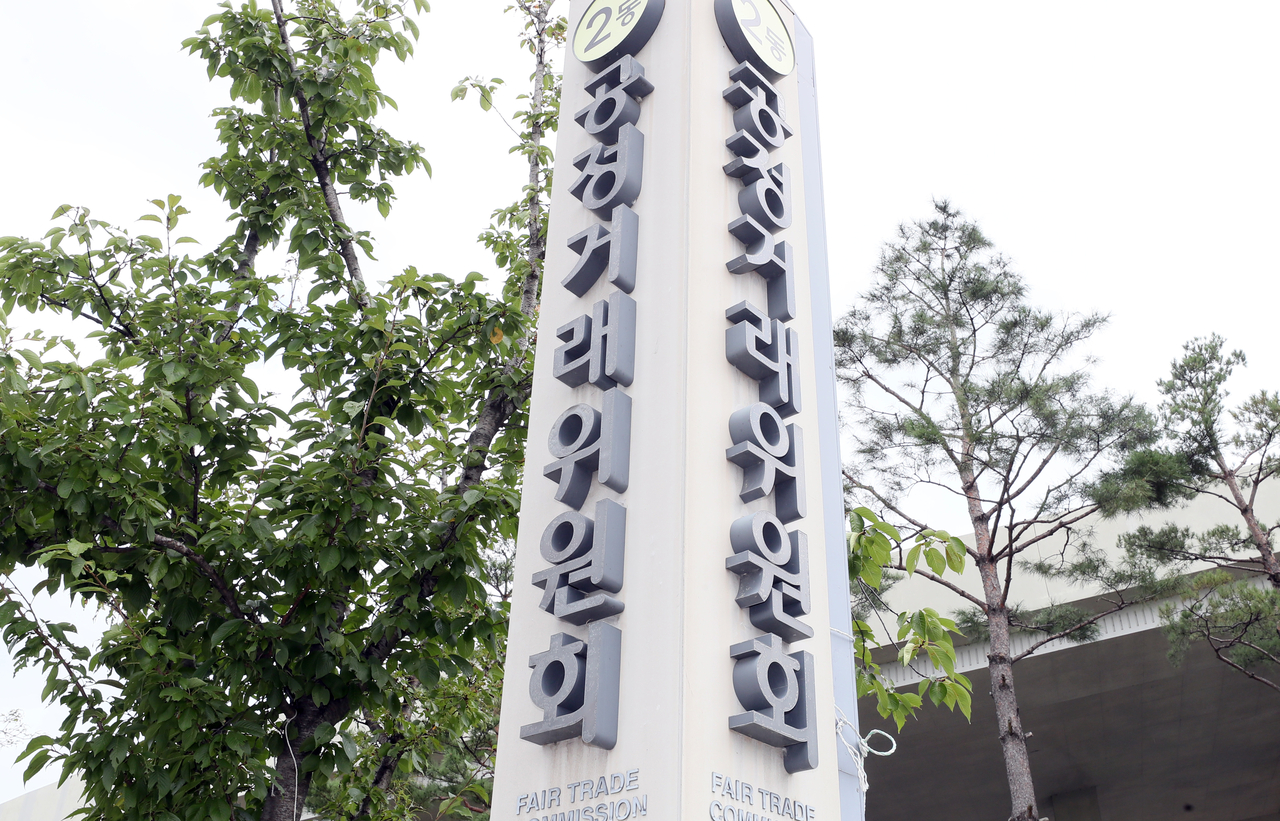
The Korea Fair Trade Commission has levied record fines on 15 securities firms and banks over alleged collusion in government bond auctions, putting the financial investment industry on high alert. With fines against securities firms alone reaching around 1.38 trillion won ($1.03 billion), companies are weighing the merits of legal challenges against the potential hit to their earnings. The industry is also warning that sweeping sanctions against primary dealers — the institutions that underwrite and trade treasury bonds — could undermine future auction competition and market-making functions.
According to the financial investment industry Thursday, the targeted securities firms are reviewing the Fair Trade Commission's collusion findings and the basis for its fine calculations as they discuss their options. Meritz Securities publicly announced Wednesday that it would pursue administrative litigation, and other fined firms are also considering legal action. The companies said they plan to mount a formal response once they receive official notification from the Fair Trade Commission.
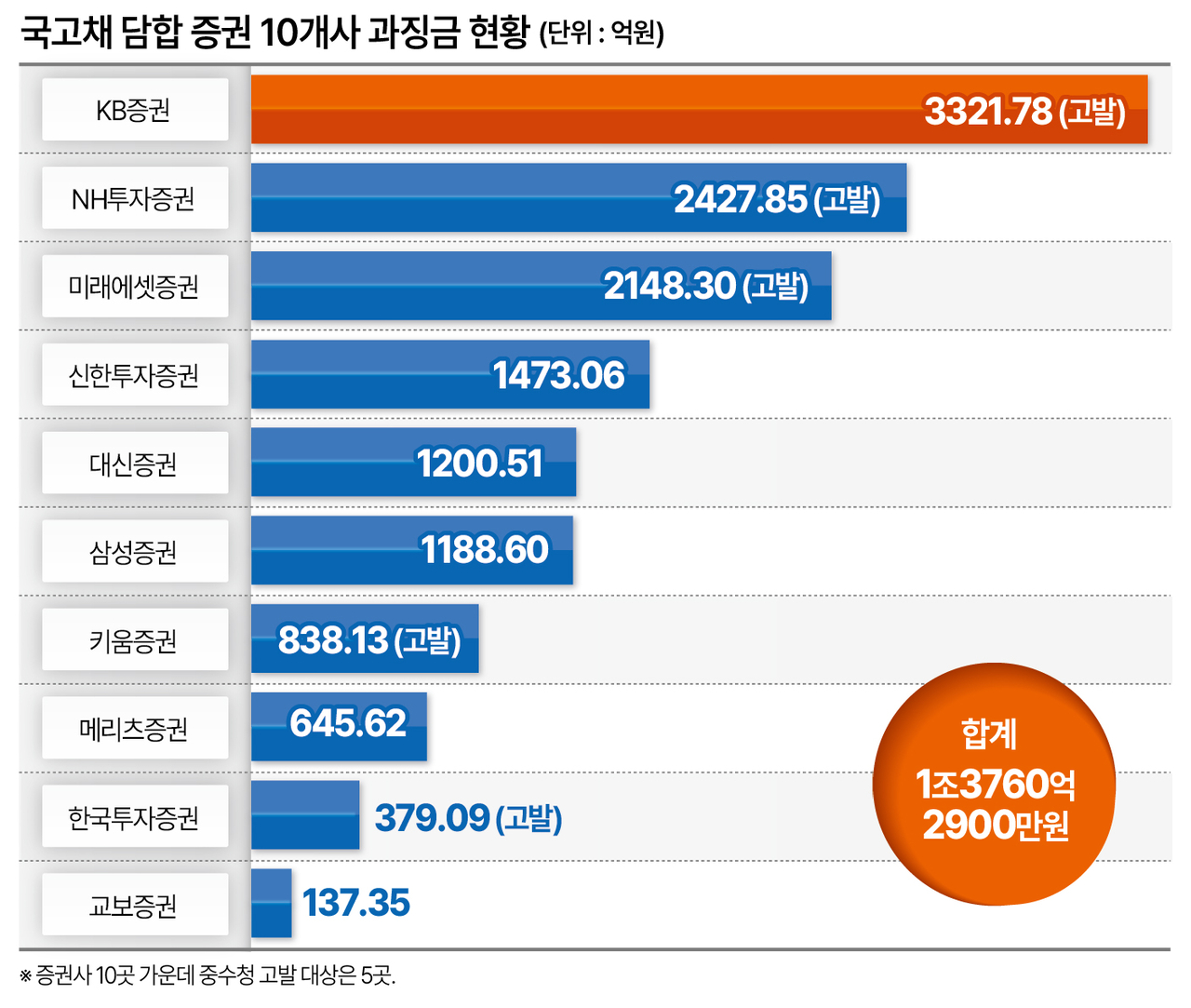
The Fair Trade Commission decided Wednesday to issue corrective orders and impose a combined fine of 1.63 trillion won on 15 primary dealers found to have pre-agreed on bid rates and volumes, or exchanged related information, during competitive government bond auctions. Ten of the 15 are securities firms: Mirae Asset, NH, KB Securities, Kiwoom, Korea Investment, Kyobo, Daeshin, Meritz Securities, Samsung and Shinhan Investment. Their combined fines total 1.38 trillion won, or about 85 percent of the overall amount. The commission also referred five of the ten securities firms — Mirae Asset, NH, KB Securities, Kiwoom and Korea Investment — to the Serious Crimes Investigation Agency. Regulators concluded that the firms had artificially inflated winning bid rates, increasing the government's cost of raising funds.
Within and beyond the industry, concern is growing that the sanctions could do more than burden individual firms — they could chill the broader domestic bond market. The worry centers on the impact that large-scale penalties against primary dealers may have on the issuance and distribution of treasury bonds. South Korean government bonds were only added to the World Government Bond Index in April, raising hopes that they would attract foreign investment inflows, and voices in the industry now warn that the sanctions could damage South Korea's international creditworthiness.
The Korea Financial Investment Association also expressed regret over what it called excessive sanctions, warning that the measures could strain government financing and financial market stability. The association said it would support member firms if administrative litigation moves forward.
"Enormous fines ranging from hundreds of billions to trillions of won per firm, along with referrals to the Serious Crimes Investigation Agency, could severely restrict the liquidity of securities firms, suppress their core business activities and ultimately set back the global competitiveness of the capital markets, including by disrupting new licensing," the association said. "We plan to actively support the industry in demonstrating the problems with these sanctions and the irrationality of the fine calculations through lawful procedures such as administrative litigation."
The scale of the fines has left the industry with little choice but to consider legal action. "Given how large the fines are, companies will have no option but to review their response," one industry official said. "There would also be pressure on management, since accepting the fines without taking any action — even when litigation could reduce them — could raise questions about their judgment."
The impact of the record fines on securities firms' earnings is already becoming visible. KB Securities, which received the largest fine among the ten firms, immediately restated its third-quarter results to reflect the penalty. The 332.18 billion won fine turned its previously reported third-quarter net profit into a net loss. Other securities firms whose fines exceed their quarterly profit are also expected to assess how and when to account for the penalties and what the financial fallout will be.
Banks hit with fines of around 250 billion won over the treasury bond auction collusion are also deliberating over whether to pursue legal action. The Fair Trade Commission imposed a combined 250.55 billion won in fines Wednesday on five banks: Industrial Bank of Korea, Korea Development Bank, Hana Bank, NH NongHyup Bank and KB Kookmin Bank.
The fines came in lower than what the industry had anticipated during the investigation phase, but disagreements over the collusion findings and the methodology used to calculate the penalties remain. Financial supervisory authorities are monitoring the impact on bank soundness but believe the fines will not place an immediate significant burden on capital ratios.
Banks maintain that the routine exchange of information to gauge market rates and bond demand cannot be treated the same as ordinary bid-rigging. There is also significant disagreement over the basis for calculating the fines. The Fair Trade Commission treated the winning bid amounts for treasury bonds as the relevant sales figure, but banks argue that bond purchase prices and actual profits must be distinguished.
Among the banks, Industrial Bank of Korea received the largest fine at 135.84 billion won, followed by Korea Development Bank at 62.31 billion won. Both banks were also referred for criminal prosecution. Hana Bank was fined 25.46 billion won, NH NongHyup Bank 23 billion won and KB Kookmin Bank 3.92 billion won.
The Financial Supervisory Service has been examining the effect of the fines on the banks' financial soundness and capital ratios. A lump-sum payment of a large fine could affect capital ratios by forcing loss recognition. However, regulators said the combined 250 billion won in fines across the five banks is not large enough to raise immediate concerns about their financial health.
kacew@heraldcorp.com
forest@heraldcorp.com
hyuk@heraldcorp.com