Mayor Oh Se-hoon's claim that no public funds were used draws scrutiny as city records show 28.7 billion won invested; commuter ridership falls to 2.1% while leisure and tourism use reaches 95.8%
Only 2.1 percent of Han River ferry passengers use the service for commuting, despite the project having been promoted as a daily transit option, according to data presented at a Seoul Metropolitan Council audit. The finding — alongside a separate survey showing 95.8 percent of riders board for leisure or tourism — emerged as a central point of contention at the council's administrative audit, where Mayor Oh Se-hoon's past claim that no public funds had been spent on the ferry also came under fire.
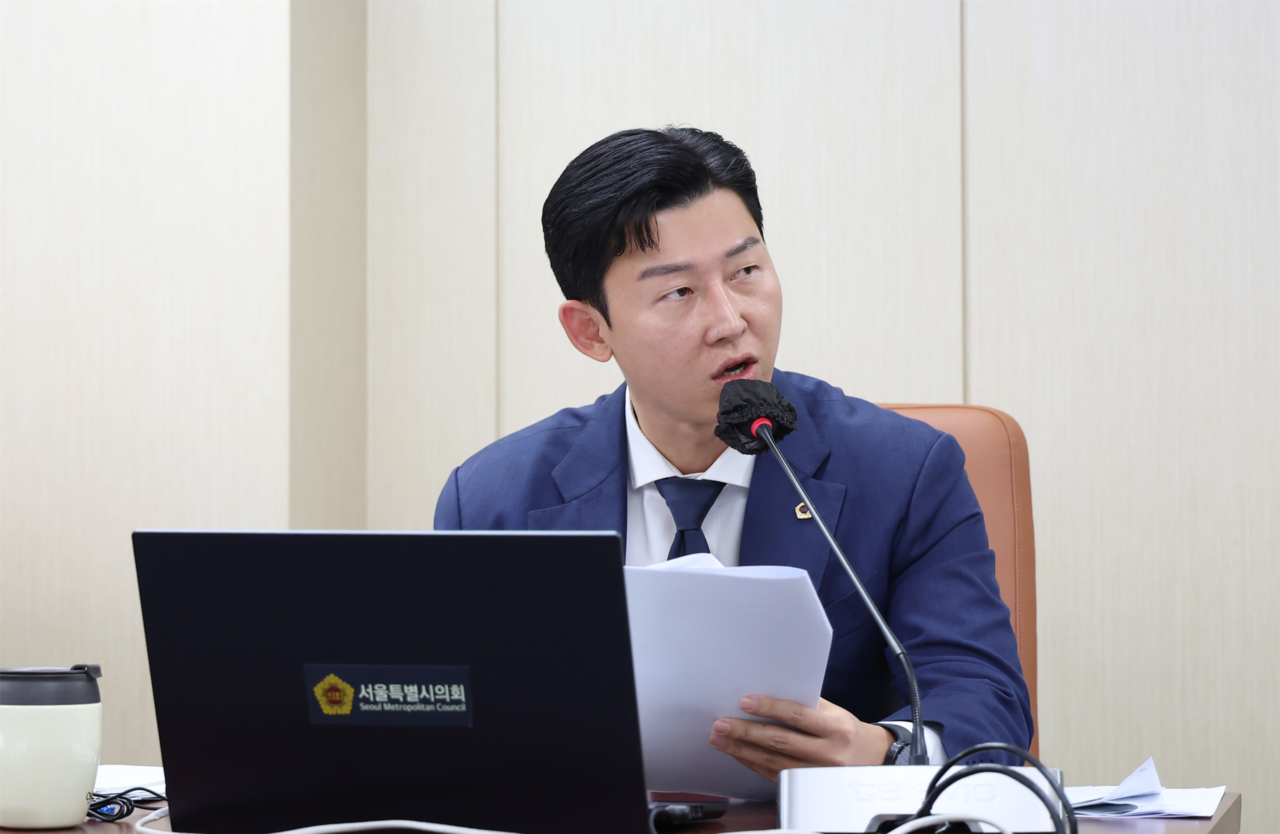
Democratic Party of Korea council member Chae Woo-jin, who represents Mapo District Ward 3, raised the issues Monday at the administrative audit of the Future Han River Bureau during the 340th regular session. Chae played a video clip of Oh's public remarks on the ferry and called on the Seoul Metropolitan Government to give citizens an accurate account of the project's finances and operational performance.
The remarks at issue were made by Oh at a Yonsei University lecture in September last year, when the mayor said the Han River ferry "was not built with tax money" and that "no citizens' taxes were used."
City records presented by Chae, however, show that as of September last year the Seoul Metropolitan Government had officially acknowledged investing 28.7 billion won ($21.4 million) in the ferry project. Chae said that while capital contributions to the operating company and infrastructure spending on ferry terminals differ in nature, the fact that public funds were committed to the project is beyond dispute.
Chae said the city needed to explain clearly the distinction between its equity stake in the operating company and the infrastructure budget, arguing that describing the project as entirely free of public money — without disclosing how costs were financed — could mislead citizens about its fiscal structure.
"It is wrong to say not a single won of public money went in while ignoring the fact that public funds were used," Chae said. "The city must correct the factual record on the mayor's remarks and give a responsible explanation so citizens can understand the project's true financial structure."
How passengers actually use the ferry was another major issue. Five rounds of rider surveys conducted by the city showed the share of commuters fell from 9.3 percent in September last year to 2.1 percent in an August survey by the Seoul Institute.
In that same August survey, leisure and tourism trips accounted for 95.8 percent of rides. Even allowing for differences in survey timing and respondent composition, the most recent data show the ferry is used far more as a tourism and leisure vessel than as an everyday commuter service.
Chae also recalled that Oh had previously dismissed as "fake news" the characterization of the ferry as a tourism and city-branding exercise rather than a transit solution.
"The actual ridership surveys show that tourism and leisure use is overwhelmingly dominant," Chae said. "Isn't what the mayor once called fake news now turning out to be the real story?"
Gaps between the original operating plan and what was actually delivered were also raised.
The Han River ferry had been scheduled to launch in October 2024, but service did not begin until September 2025 — roughly a year behind schedule. Key performance targets the city had announced, including an average cruising speed of 17 knots, 15-minute headways during peak commuting hours, and 68 daily sailings on weekdays, were also not met as originally envisioned, Chae said.
Delays in vessel delivery, repeated service suspensions and resumptions, and safety incidents have further fueled questions about the project's operational stability and long-term viability.
Chae drew a line at criticizing the ferry's tourism and leisure function in itself. However, if a project presented to citizens as a commuter service is in practice used primarily for tourism, the policy objectives and performance benchmarks should be revisited to reflect that reality, Chae said.
Chae particularly called for an objective assessment of whether the key targets — cruising speed, service frequency and number of daily sailings — had been met, and for a comprehensive public disclosure of actual ridership purposes and public spending.
"This is not about unconditionally rejecting the Han River ferry project — it is about asking how much of what was originally promised to citizens has actually been delivered," Chae said. "Rather than rushing to defend the mayor's remarks, the Seoul Metropolitan Government should explain the project's true state with objective data and figures."
7toy7@heraldcorp.com