Purchases of dried rice to begin Thursday, with bulk, eco-friendly and flour rice also included
An interim payment of 60,000 won ($45) per 40 kilograms will be issued immediately after purchase to ease the financial burden on farming households
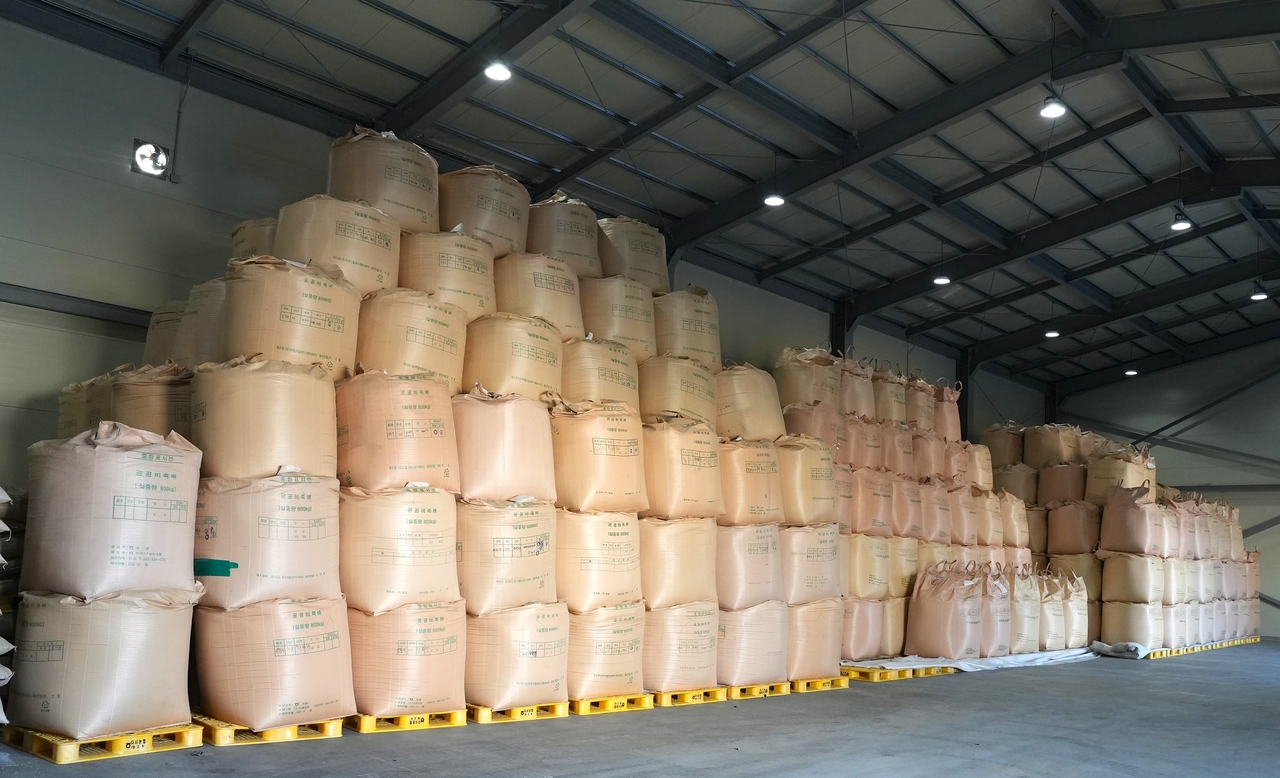
Naju is moving ahead with purchases of public reserve rice from the 2026 crop year, launching dried-rice procurement and issuing interim payments to help stabilize farm household finances.
According to Naju, purchases of dried rice will begin Thursday and continue through the end of December, with all categories of 2026 public reserve rice to be procured in sequence.
This year's total purchase volume for Naju stands at 8,075 tons, down 1,012 tons, or 11.1 percent, from last year's 9,087 tons. By category, the breakdown is 3,597 tons of bulk rice, 3,224 tons of dried rice, 392 tons of eco-friendly rice and 862 tons of flour rice.
Bulk rice purchases have been under way since October at five rice drying and storage facilities operated by the Naju Agricultural Cooperative Rice Joint Business Corporation, as well as at the Yeoju Nongsan rice processing complex and the Naju Pyeongyadongang rice processing complex.
Dried rice will be purchased sequentially at designated collection points in each township and neighborhood from Thursday through the end of December. Eco-friendly rice and flour rice will also be procured through year-end according to their respective schedules.
The eligible varieties for general public reserve rice purchases are Sindongjin and Saecheongmu. Farmers are urged to take particular care to ensure no other varieties are mixed in with the designated types.
With the public reserve rice variety certification system in effect, farmers are advised to confirm in advance that their rice meets the eligible variety requirements and to manage their harvesting, drying and storage processes carefully to prevent cross-contamination with other varieties.
To ease the financial pressure on farming households during the harvest season, an interim payment of 60,000 won per 40 kilograms of rough rice will be issued immediately after purchase. This year's interim payment represents a 50 percent increase from last year's 40,000 won, and is expected to help farmers secure operating funds and reduce their financial burden during the harvest period.
The final purchase price will be determined at year-end based on the national average farmgate rice price from October through December, converted to a rough-rice equivalent, with the interim payment factored into the final settlement.
Naju said it will maintain close coordination with townships, agricultural cooperatives and other relevant agencies to ensure smooth procurement, and will actively inform farmers of key details including purchase schedules, delivery procedures and variety certification requirements.
"I am deeply grateful to all the farmers who worked so hard despite the difficult conditions brought on by climate change and rising production costs," Naju Mayor Yun Byeong-tae said. "We will work closely with relevant agencies to ensure the public reserve rice purchases proceed without a hitch, and will continue our efforts to secure stable sales channels and income for our farmers."
kkm9971@heraldcorp.com