Park Chan-dae to make case for Incheon lines at Ministry of Land public hearing
Projects include GTX-D Y-line, GTX-E, Daejang-Hongdae extension to Cheongna and more
Plan will set rail investment priorities for 2026–2035; public survey open through Friday
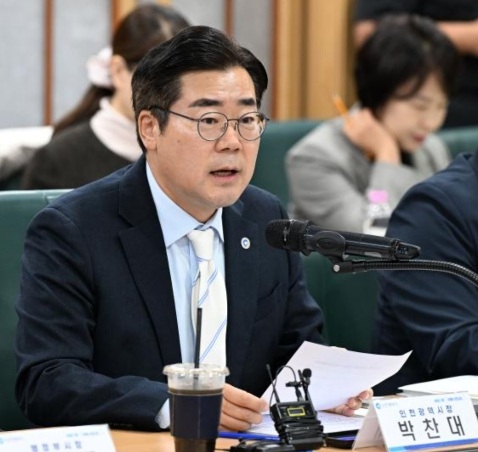
Incheon Mayor Park Chan-dae will personally make the case for the city's key rail projects to be included in the Fifth National Railway Network Construction Plan, which will set the direction of national rail expansion over the next decade.
The strategy is to press the government on the need for the projects by highlighting local sentiment that Incheon, despite being part of the greater metropolitan area, has been left behind in metropolitan transport infrastructure and rail investment.
Park is scheduled to attend a public hearing hosted by the Ministry of Land, Infrastructure and Transport on Friday at the Jeonmun Construction Hall in Seoul, where he will present the case for five rail projects the city has proposed for inclusion in the Fifth National Railway Network Construction Plan (2026–2035).
The Ministry of Land, Infrastructure and Transport organized the event ahead of finalizing and announcing the fifth plan, to gather input from local governments, rail experts and the general public.
The program begins with a presentation by the Korea Transport Institute, followed by statements from local governments, expert discussions and a public comment session.
At the hearing, Incheon plans to open with a video featuring local transport conditions and resident interviews to illustrate the need for expanded rail infrastructure, after which Park will personally address the government and request that the projects be included in the plan.
The five projects the city is pushing for inclusion are the GTX-D Y-line, the GTX-E line, an extension of the Daejang-Hongdae line to Cheongna, an extension of the Incheon-originating KTX to Incheon International Airport and the Incheon New Port line.
The city says these projects would not only improve metropolitan transport access for Incheon residents but also strengthen national logistics competitiveness centered on the airport and seaport.
Incheon particularly intends to stress that regulations tied to the greater metropolitan area designation, combined with a Seoul-centric approach to transport infrastructure investment, have long constrained the city's development.
Park plans to argue at the hearing that Incheon has faced an imbalance in which it bears the burden of metropolitan-area regulations while transport networks and investment remain concentrated in Seoul. He will call for all five projects to be included in the national plan, citing their potential to improve commuting conditions for residents and strengthen connectivity within the national transport and logistics system.
The city also views public participation as important, given that the national railway network plan is a long-term statutory plan that will determine rail investment priorities for the next decade.
To that end, a preliminary survey by the Ministry of Land, Infrastructure and Transport is open through Friday. Residents can submit their opinions by scanning QR codes posted on the Incheon city and ministry websites, as well as through the integrated app Korail+.
On the day of the event, the public can also participate in real time through the comment section of the ministry's official YouTube livestream.
The city said it will continue consultations with the ministry and other relevant agencies and rail-related bodies to strengthen its push for the five projects to be reflected in the national plan.
gilbert@heraldcorp.com