Cha Kwang-ryul delivers keynote at congress of 50-year-old international society in Busan, drawing collaboration inquiries from researchers worldwide; presentation covers donor screening, cell procurement and ovarian aging research
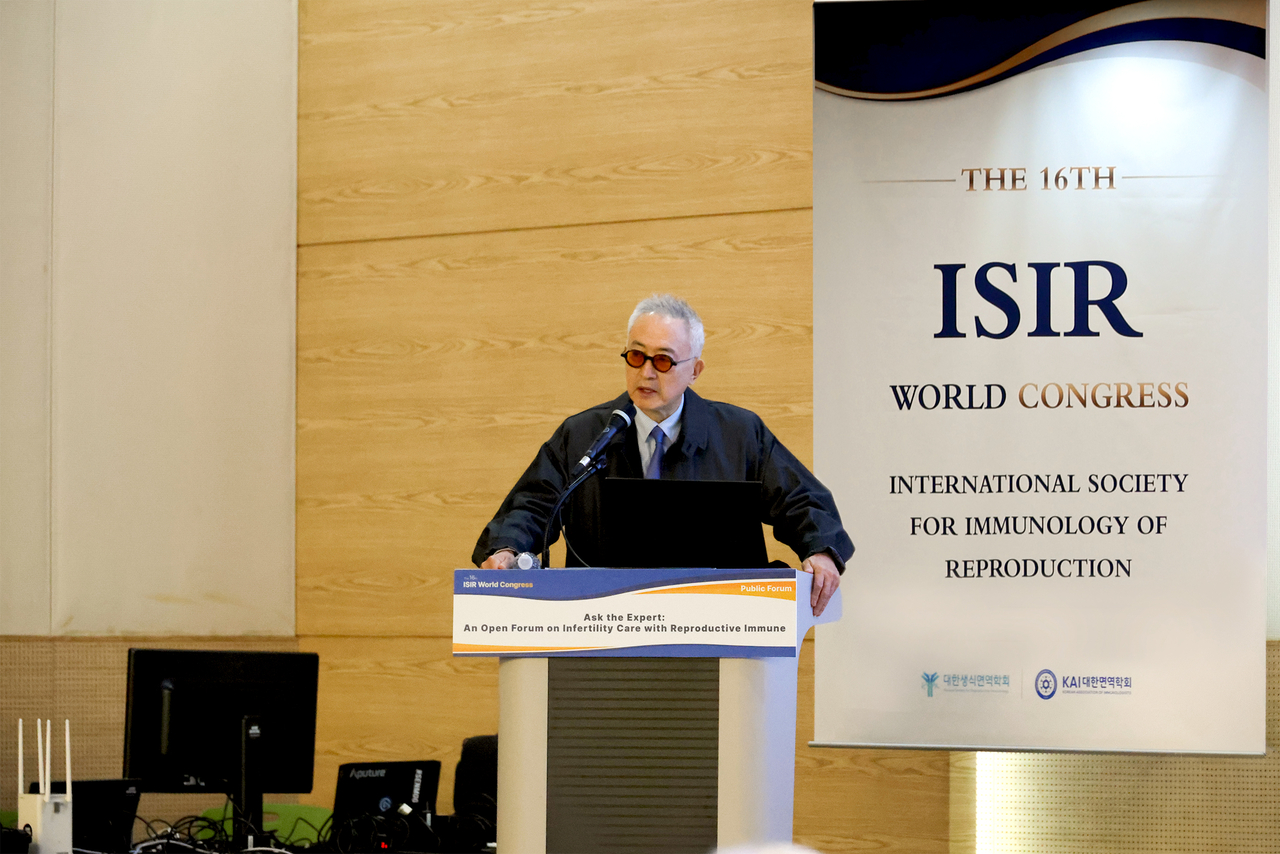
Cha Kwang-ryul, director of the Global Research Institute at Cha Hospital and Cha Biogroup, laid out a vision for treating intractable diseases and extending healthy lifespan using K-Cell technology in a keynote address at the 16th World Congress of the International Society for Immunology of Reproduction, held at Bexco in Busan from Thursday to Sunday. The lecture drew an audience of 400 and generated a wave of collaboration inquiries from researchers around the world.
The International Society for Immunology of Reproduction (ISIR), founded in 1975, is a leading international academic body in the field of reproductive immunology. Robert Edwards, who received the Nobel Prize in Physiology or Medicine for developing in vitro fertilization technology, was among its co-founders. The society serves as a forum where clinicians and researchers from around the world share findings on the interplay between the immune system and reproductive processes, including infertility, implantation and the maintenance of pregnancy.
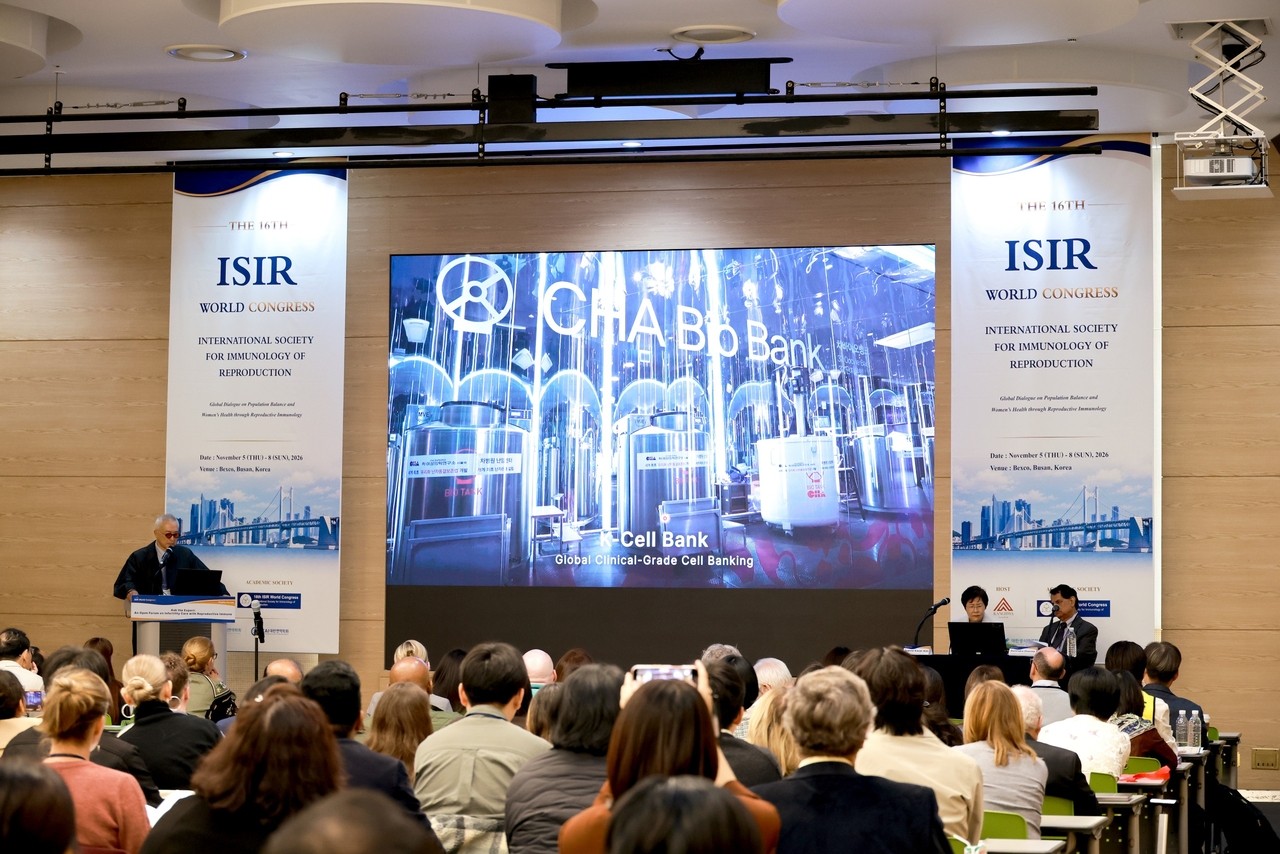
Since last year, Cha has been delivering lectures on K-Cell and longevity at academic conferences, universities and companies both in South Korea and abroad, promoting the country's stem cell and regenerative medicine research capabilities and its vision for future medicine. At this congress, Cha presented a concrete strategy for securing K-Cell resources and explored their potential applications in ovarian aging research for an audience of reproductive immunology specialists worldwide.
In the lecture "Longevity & Reproductive Aging Using K-Cells," Cha identified the development of treatments for intractable diseases as K-Cell's primary goal. The plan calls for securing cells with the functional qualities required for each specific disease and applying them to treatment development, then expanding that work into longevity and life-extension research targeting aging.
To that end, Cha outlined a detailed method for selecting donors whose cells are suited to therapeutic purposes. On top of standard eligibility assessments — including medical history reviews and infectious disease testing — the approach involves a comprehensive evaluation of the donor's age, clinical characteristics, three-generation family history and whole-genome sequencing data. The strategy is to analyze genetic variants associated with health maintenance as well as those that elevate disease risk, assess cell function, and thereby secure K-Cell resources suited to developing treatments for specific diseases.
Cha also introduced methods of genetic modification and somatic cell nuclear transfer technology for obtaining superior stem cells. Somatic cell nuclear transfer is a technique in which the nucleus of a selected somatic cell is transplanted into an enucleated egg to produce embryonic stem cells. Cha presented an approach linking donor selection through to stem cell production to secure cell resources tailored to specific therapeutic purposes.
Cha highlighted ovarian aging as a key area of research for longevity and life extension. Drawing on findings that women who reach menopause later tend to have greater longevity prospects, Cha said slowing ovarian aging could serve as an important research strategy for extending healthy lifespan and overall lifespan in women. Cha framed ovarian aging not merely as a matter of pregnancy and childbirth, but as a challenge connected to women's health and longevity across their entire lives.
Cha also presented research Cha Hospital has accumulated in egg freezing and stem cell work, and shared the current status of a clinical study at Bundang Cha Hospital using umbilical cord-derived mesenchymal stem cells to treat premature ovarian insufficiency. Through this, Cha outlined the direction and future tasks of cell therapy research aimed at restoring ovarian function.
Cha also introduced a strategy linking K-Cell procurement, production and clinical development around CGB (Cell Gene Bioplatform), a cell and gene therapy platform set to open in early next year. The plan involves building a cell bank of diverse stem cells and immune cells, then using AI to recommend and match cells suited to specific diseases and required functions, supplying them to researchers, hospitals and biotech companies worldwide.
Cha Hospital and Cha Biogroup said they will continue to promote K-Cell's research direction and potential through international academic forums, prioritizing the development of treatments for intractable diseases while expanding into longevity and life-extension research.
kty@heraldcorp.com