Government, financial sector and labor groups sign MOU to expand inclusive finance
Work history, employment and industrial accident insurance records to factor into credit assessments
Alternative credit evaluation plan due this year; specialized financial products to launch in 2027
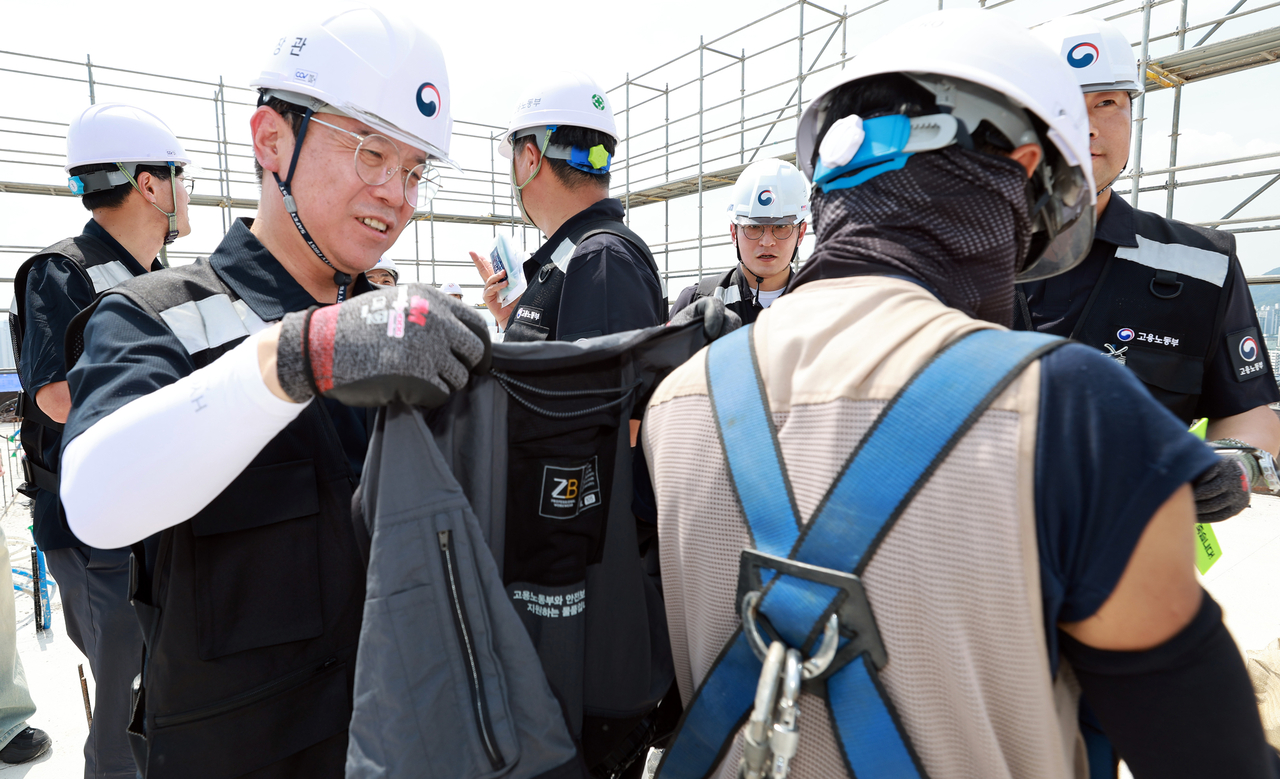
Construction workers, delivery drivers and other platform workers, as well as freelancers, will soon be able to secure bank loans based on their work history.
The government is moving to incorporate workers' employment records and skill levels into credit assessments — a shift away from a system that has penalized those without a regular monthly salary. An alternative credit evaluation framework is to be finalized this year, with tailored financial products set to launch in 2027.
South Korea's Ministry of Employment and Labor, the Financial Services Commission and the Financial Supervisory Service announced Wednesday that they would sign a memorandum of understanding on inclusive finance for construction workers and labor service providers with the Korea Federation of Banks, Korea Credit Information Services, the Korea Workers' Compensation and Welfare Service, the Construction Workers Mutual Aid Association and labor organizations at the Construction Workers Mutual Aid Association in Jung-gu, Seoul.
The MOU is designed to improve financial access for construction workers and labor service providers, including platform workers and freelancers. These workers earn income through active economic participation, but irregular income patterns and diverse employment arrangements have long made it difficult for them to pass credit assessments and loan reviews at financial institutions.
Retirement allowance, employment insurance records to count toward credit scores; skill ratings also under review
Even skilled workers with years of experience on construction sites have struggled to demonstrate repayment capacity to lenders when they cannot produce regular pay stubs or stable employment contracts. Platform workers and freelancers have faced similar barriers, as the timing and scale of their income tend to be unpredictable.
To address this, the government will build an alternative credit evaluation system that draws on actual work history rather than relying solely on conventional financial transaction records.
The core of the new approach involves using non-financial data held by the Construction Workers Mutual Aid Association and the Korea Workers' Compensation and Welfare Service. Eligible data include construction workers' retirement allowance contribution records and skill-rating information, as well as employment and industrial accident insurance records and activity histories for labor service providers. A construction worker who has consistently accumulated retirement allowance contributions over many years on site, for example, could have that record recognized as evidence of steady economic activity. Skill ratings for construction workers are also being considered as an indicator of proficiency.
The government plans to pursue cooperation among relevant agencies to ensure that work histories are reasonably reflected in lenders' loan reviews. The specific evaluation criteria and methods for using the data, however, will be determined in the alternative credit evaluation plan to be developed going forward.
Tailored financial products due in 2027; debt adjustment and financial counseling to be strengthened
New financial products will also be developed. Using work history data provided by the Construction Workers Mutual Aid Association and the Korea Workers' Compensation and Welfare Service, the government plans to launch financial products in 2027 tailored to the income characteristics of construction workers and labor service providers.
Separately, financial regulators will finalize an "individual alternative credit evaluation plan" this year that incorporates alternative data such as work history as a positive factor in credit assessments.
Beyond loan support, debt adjustment and financial counseling services will also be strengthened. Lenders' in-house debt restructuring programs will be linked with those of related agencies, including the Credit Recovery Committee, to help financially vulnerable workers get back on their feet. Financial counseling and education will be expanded to reduce difficulties workers encounter when using financial services.
Labor organizations will also take part in operating the system. The Federation of Korean Trade Unions' Korean Construction Workers' Federation, the Korean Confederation of Trade Unions' National Construction Industry Workers' Federation, the Korea Platform Freelancer Workers' Mutual Aid Association and the labor mutual aid alliance Pulbbang will inform their members about available financial support programs and relay workers' financial grievances from the field to the government and financial institutions.
The MOU is also notable for bringing together the Ministry of Employment and Labor, financial policy and supervisory authorities, the financial sector and labor groups under one framework. The initiative is intended to reduce financial blind spots created by different employment arrangements by linking it to the government's three major projects covering residential support, employment and grassroots finance.
"The way a person works should not determine their access to financial services," Employment and Labor Minister Kim Young-hoon said. "I hope this creates an inclusive finance environment in which the work and service records of construction workers and labor service providers are fairly recognized in the financial sector."
fact0514@heraldcorp.com