'Some Seoul lawmakers losing composure over excessive fear'
'Focus should be on stabilizing jeonse and monthly rent market'
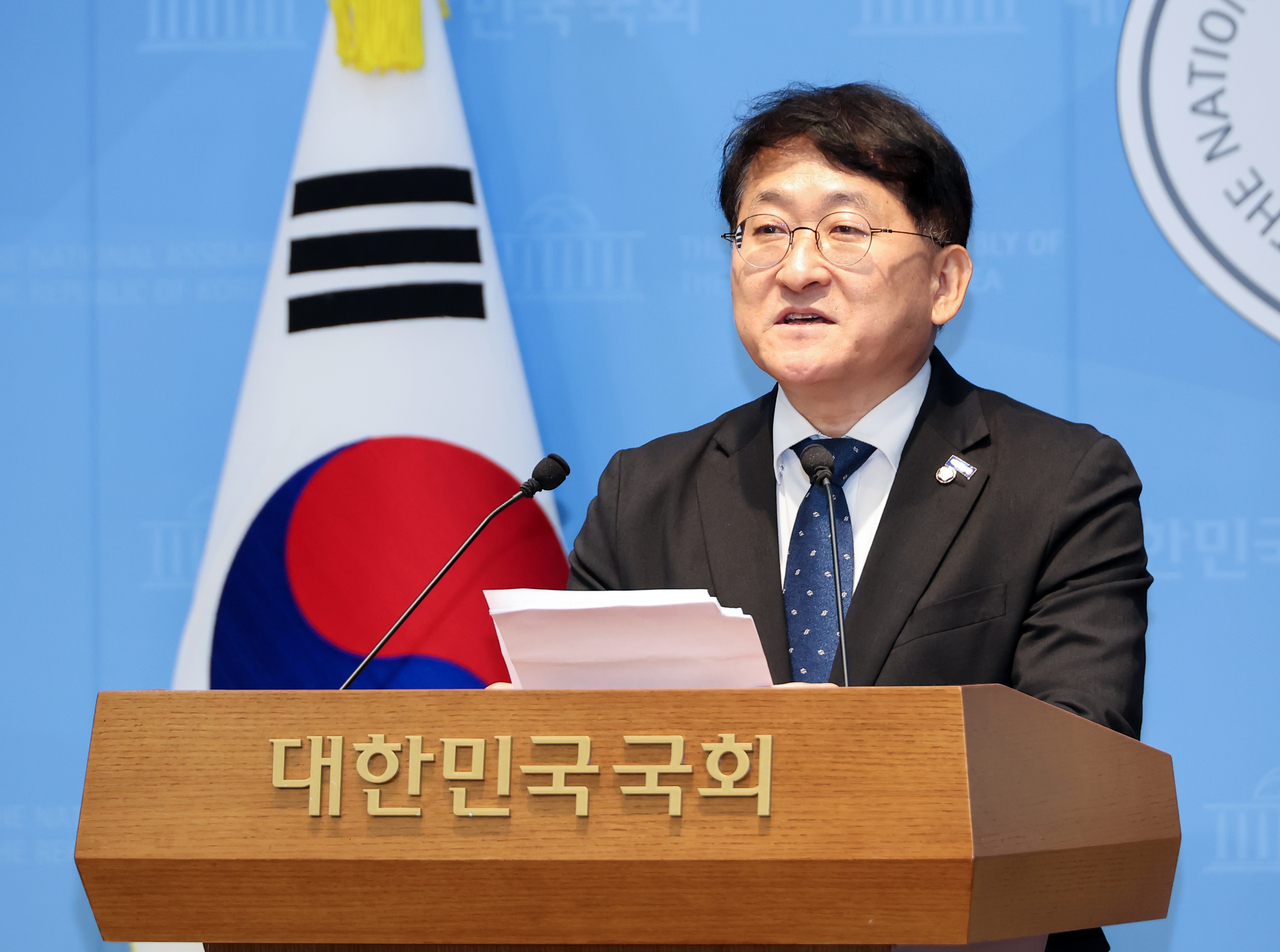
Rebuilding Korea Party lawmaker Cha Gyu-geun on Wednesday criticized calls by some Democratic Party of Korea lawmakers to ease the comprehensive real estate tax on non-resident single-homeowners, saying the push was "anti-Lee Jae Myung" and amounted to "obstructing the success of the Lee Jae Myung administration."
Speaking on CBS Radio's "Park Sung-tae's News Show," Cha said President Lee Jae Myung had been "pushing hard for tax reform with a strong commitment to normalizing the real estate market." Cha warned that easing property taxes while prices in the three Gangnam districts were showing signs of downward stabilization could send the wrong signal — that "holding out will pay off again."
Cha added that regional-led growth centered on five major hubs and three special zones was one of the Lee administration's core policies, and that the Democratic Party lawmakers' push would also "undermine the administration's key policy of regional-led growth" by disrupting the downward stabilization of Seoul's real estate market.
Asked directly whether he considered the Democratic Party lawmakers pushing for the tax cut to be "anti-Lee Jae Myung," Cha said: "In effect, it obstructs the success of President Lee Jae Myung, who is working tirelessly for real estate normalization — so I think it can, in effect, be considered anti-Lee Jae Myung."
Some Democratic Party lawmakers have recently argued that the basic deduction threshold for the comprehensive real estate tax on non-resident single-homeowners should be raised from the government's proposed 1.2 billion won ($893,000) to 1.4 billion won — the same level applied to resident single-homeowners.
Cha said he was "clearly opposed," adding that "even thinking about it coolly, it offers absolutely no electoral benefit."
Cha said about 47,000 people nationwide would actually pay less tax under the proposed change compared with the government plan, with 95 percent of them owning homes in Seoul and 74 percent in the three Gangnam districts — representing one forty-sixth of the 2.16 million households in Seoul that do not own a home.
"That is one person actively filing complaints versus 46 non-homeowning ordinary citizens living paycheck to paycheck with no time to file complaints," Cha said. "Catering to one complaint will cost us the goodwill of 46 people."
Cha said some Democratic Party lawmakers representing Seoul districts were "gripped by excessive fear and losing their composure," and warned that those who had trusted the Lee administration's real estate normalization policy and the president's strong resolve "may go beyond disappointment to outright anger" over the party's current moves.
Cha said the right approach over the medium to long term was to sustain the downward stabilization trend and separately prepare policy for the jeonse and monthly rent market. Raising the deduction threshold — which had already been lowered from 1.2 billion won to 900 million won out of concern and then raised back to 1.2 billion won — to 1.4 billion won would, Cha said, "run directly counter to the Democratic Party's platform as the party of the middle class and ordinary people."
Cha also expressed concern about the approach of taxing resident and non-resident single-homeowners differently, saying from the outset he had worried about such targeted taxation. Splitting the two categories, Cha said, risked destabilizing the jeonse and monthly rent market.
"I think the solution is to keep the current approach of not distinguishing between residents and non-residents and maintain the 1.2 billion won threshold," Cha said.
Cha warned that raising the non-resident threshold to 1.4 billion won, as some Democratic Party lawmakers proposed, would inevitably prompt calls to raise the resident threshold from 1.4 billion won to 1.6 billion won and then 1.8 billion won. "If this vicious cycle continues, the journey toward real estate normalization will face serious setbacks," Cha said.
Cha said the government and ruling party should focus on stabilizing the jeonse and monthly rent market rather than easing the comprehensive real estate tax.
"What the government and ruling party need to focus on now is not demands to ease the comprehensive real estate tax, but strong and proactive measures to address instability in the jeonse and monthly rent market," Cha said, citing options such as extending the mutual-benefit lease system, introducing lease-impact assessments for redevelopment projects to minimize market disruption in nearby areas, and accelerating the supply of public rental housing.
Cha also said that expanding housing supply alone would have limits as long as the population continued to concentrate in Seoul, and that demand needed to be dispersed at a fundamental level.
Cha called for swift passage of a special law on the administrative capital, and said relocating institutions such as the Supreme Court and the Constitutional Court — which he argued faced no constitutional barrier to moving out of Seoul — to other regions, while building public housing for young people and non-homeowners on the vacated site in Seocho-dong, would send a powerful signal of a housing paradigm shift to the market.
thanks@heraldcorp.com