Special vehicle sales up 44% year-on-year
Annual sales figure already exceeded
Gwangju Hanam factory bus line to be converted to second military vehicle line
Lineup to expand through large standard vehicle by 2029
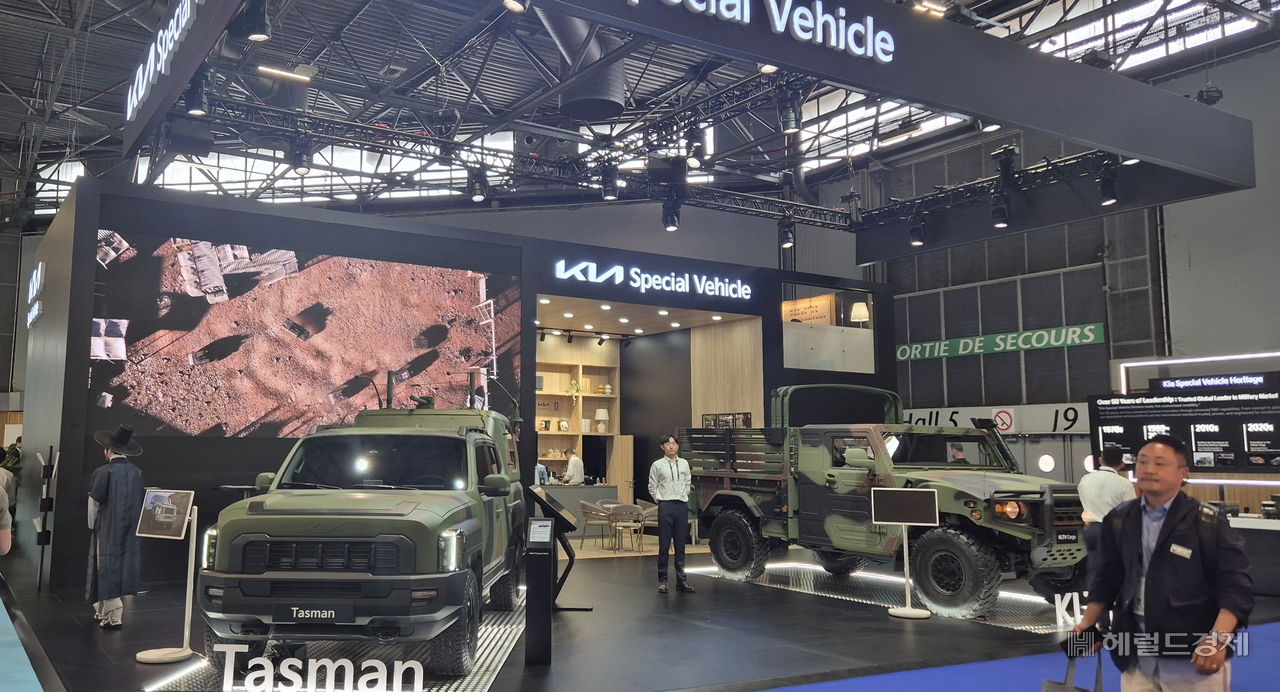
Kia's special vehicle sales are climbing sharply, accelerating a broader overhaul of its military vehicle production system. Having surpassed last year's full-year sales total in just 10 months, the automaker plans to convert the bus production line at its Gwangju Hanam factory into a dedicated military vehicle line and introduce three new military vehicle and derivative models in stages through 2029. The company aims to expand its lineup beyond its current small tactical vehicle focus to include a Tasman-based multipurpose vehicle and a large transport vehicle.
Kia's special vehicle sales from January through October reached 6,311 units, up 43.5 percent from the same period last year, according to industry sources Wednesday. The figure has already surpassed last year's full-year total of 5,789 units and also exceeds the 6,122 units sold throughout 2024.
Overseas sales particularly drove the growth. International special vehicle sales jumped 73.5 percent year-on-year to 5,017 units in the first 10 months of the year, while domestic military vehicle sales fell 14.1 percent to 1,294 units. Overseas markets accounted for roughly 80 percent of total special vehicle sales.
Kia is restructuring its Gwangju Hanam factory into a dedicated military vehicle production base in line with its special vehicle business expansion. Last month, the company and its union agreed through the labor-management employment stability committee to end large bus production at the plant and focus on military vehicle manufacturing.
Under the plan, the existing military vehicle line will be retained as Line 1, while the bus production line will be converted into military Line 2. The factory previously produced both military trucks and buses but will now concentrate solely on military vehicles.
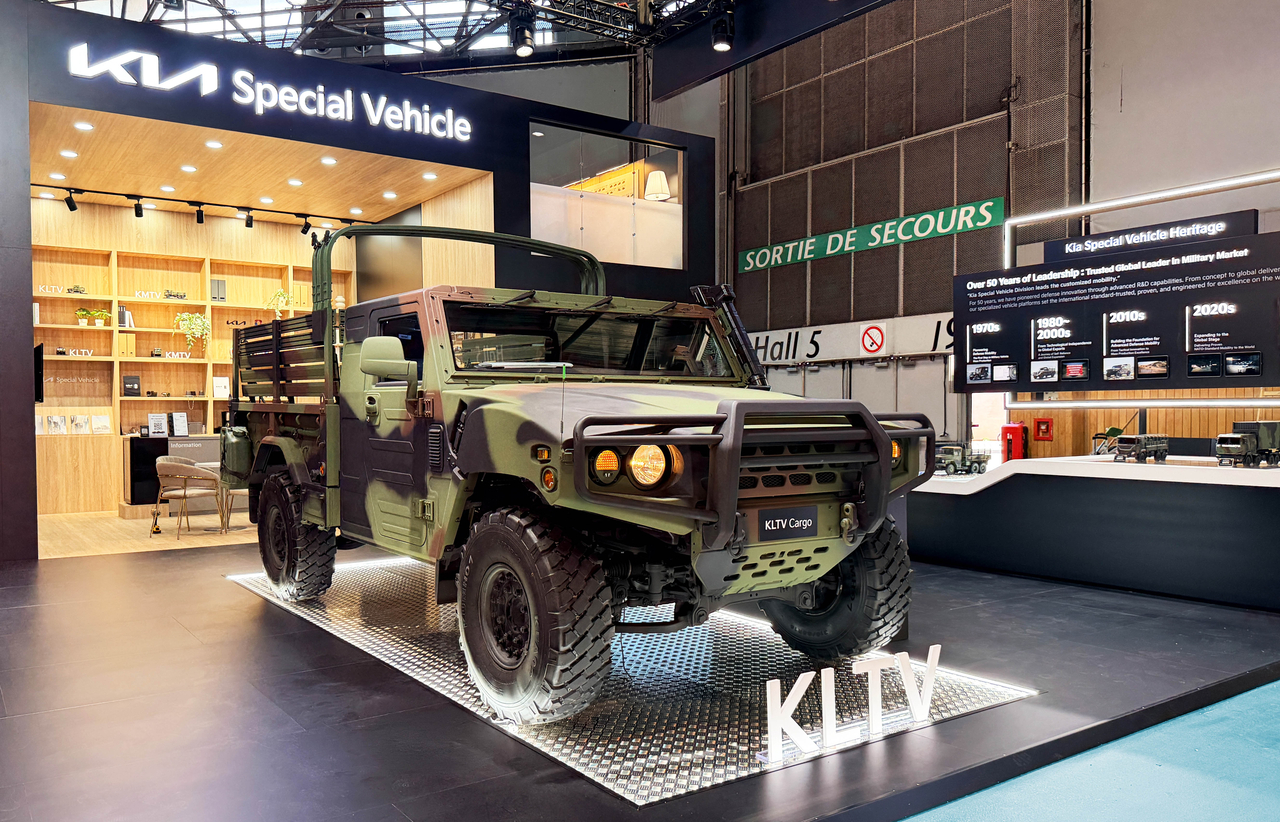
The first model to enter production will be the small tactical vehicle cargo variant, with mass production scheduled to begin in the fourth quarter of next year. A derivative of the small tactical vehicle series Kia already produces, the cargo variant is designed for freight transport rather than troop movement. It features a raised air intake for enhanced river-crossing capability and an engine cooling system that allows operation in desert and mountainous terrain.
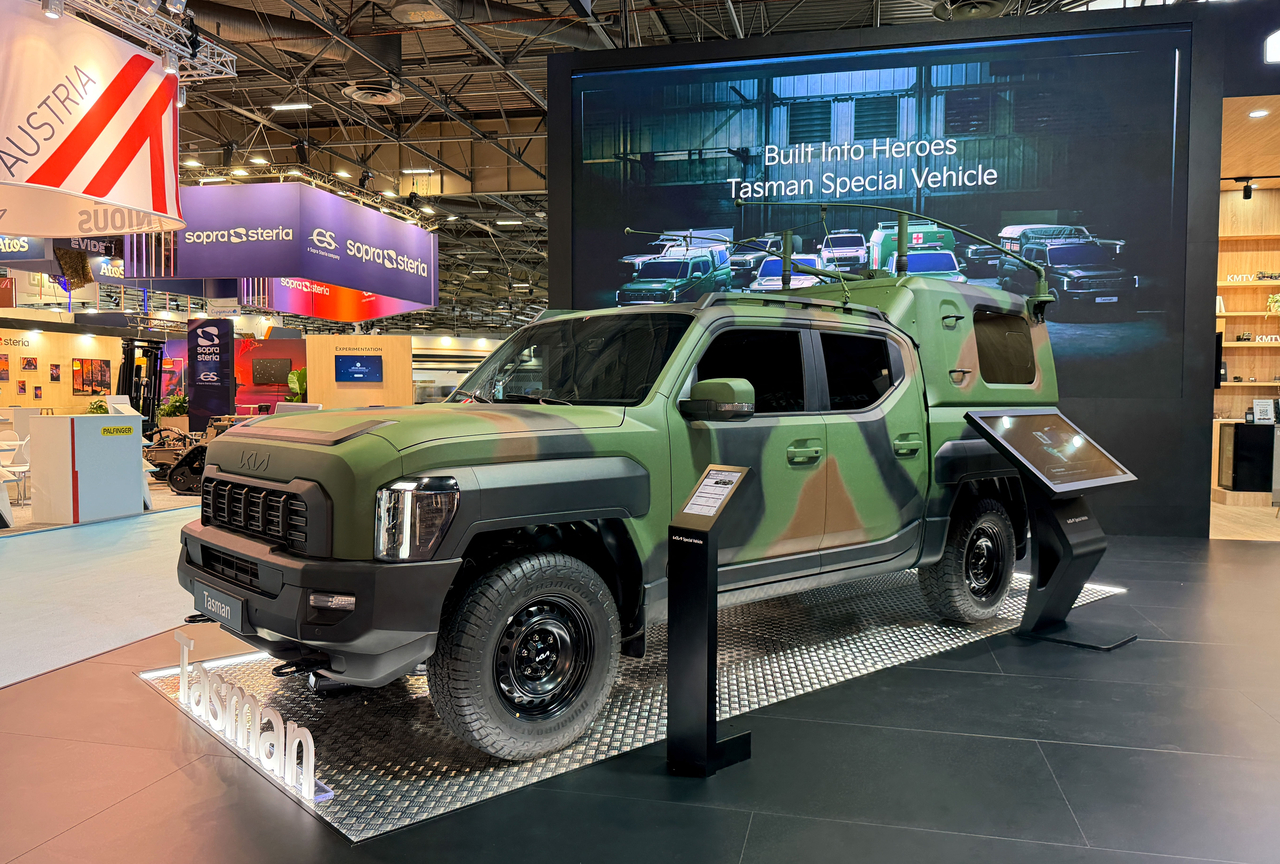
Then in the fourth quarter of 2028, Kia plans to begin mass production of a small multipurpose vehicle based on its Tasman pickup truck. The company has been supplying the South Korean military with a Tasman-based command vehicle since last year and is also developing a range of derivative models for cargo transport and special equipment mounting.
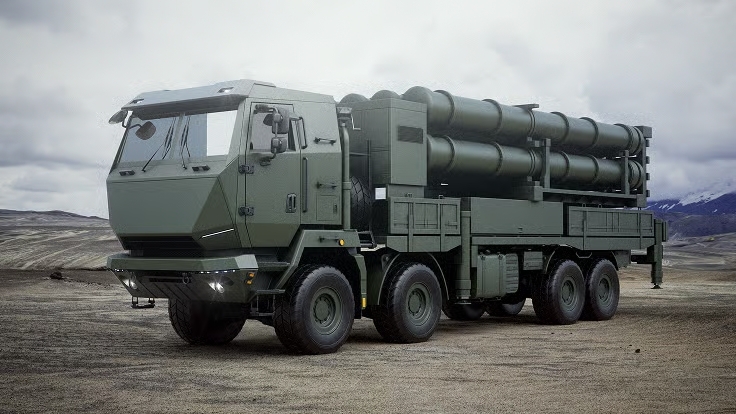
Mass production of a large standard vehicle is set to begin in the second quarter of 2029, extending Kia's military vehicle range beyond its existing small tactical and medium standard vehicles to include a large-class model. Kia unveiled a scale model of the large standard vehicle — designed for heavy cargo transport — at Seoul ADEX 2025 last year and also showcased it at the Eurosatory 2026 defense exhibition in France this year.
Kia appears to have concluded that growth prospects in the large bus market are limited and has placed its bet on the military vehicle segment, where demand is expected to expand. The Hanam factory produces roughly 1,400 large buses a year, relying entirely on the domestic market with no exports. Even a temporary demand boost from COVID-19 has not brightened the long-term market outlook, and the plant faces additional investment burdens to upgrade aging equipment and meet new regulations. Military vehicles, by contrast, are expected to see sustained demand growth driven by global security instability and rising geopolitical risks.
The Hanam factory restructuring is part of a broader investment plan covering Kia's entire Gwangju production complex. Last month, Kia and its union agreed to invest more than 1 trillion won ($738 million) across Gwangju Plant 3 and the Hanam factory and to overhaul their production systems. Gwangju Plant 3, which currently produces Bongo trucks, is set to begin mass production of the EV7 — a midsize electric SUV — from 2029. The plan calls for a parallel production setup running both the Bongo truck and the electric SUV, with annual production capacity restructured to around 120,000 units.
To support the transition, Kia will build a new paint shop to replace the aging facility and upgrade production equipment. The overhaul at Gwangju Plant 3 will be the most sweeping since 2004, marking 22 years since the last major production restructuring. At Gwangju Plant 2, mass production of the fully redesigned Sportage is set to begin in July next year, with a trial production run starting in December to prepare for the new model's full rollout. As the Hanam factory ends bus production and transitions into a dedicated military vehicle plant, it will take on a redefined role within the Gwangju production complex — with plans to expand into overseas markets beyond domestic sales.
kwater@heraldcorp.com