Pianist publishes first memoir Nov. 20; 'Baek Kun-woo and Young Friends' concert set for Dec. 2 at Seoul Arts Center
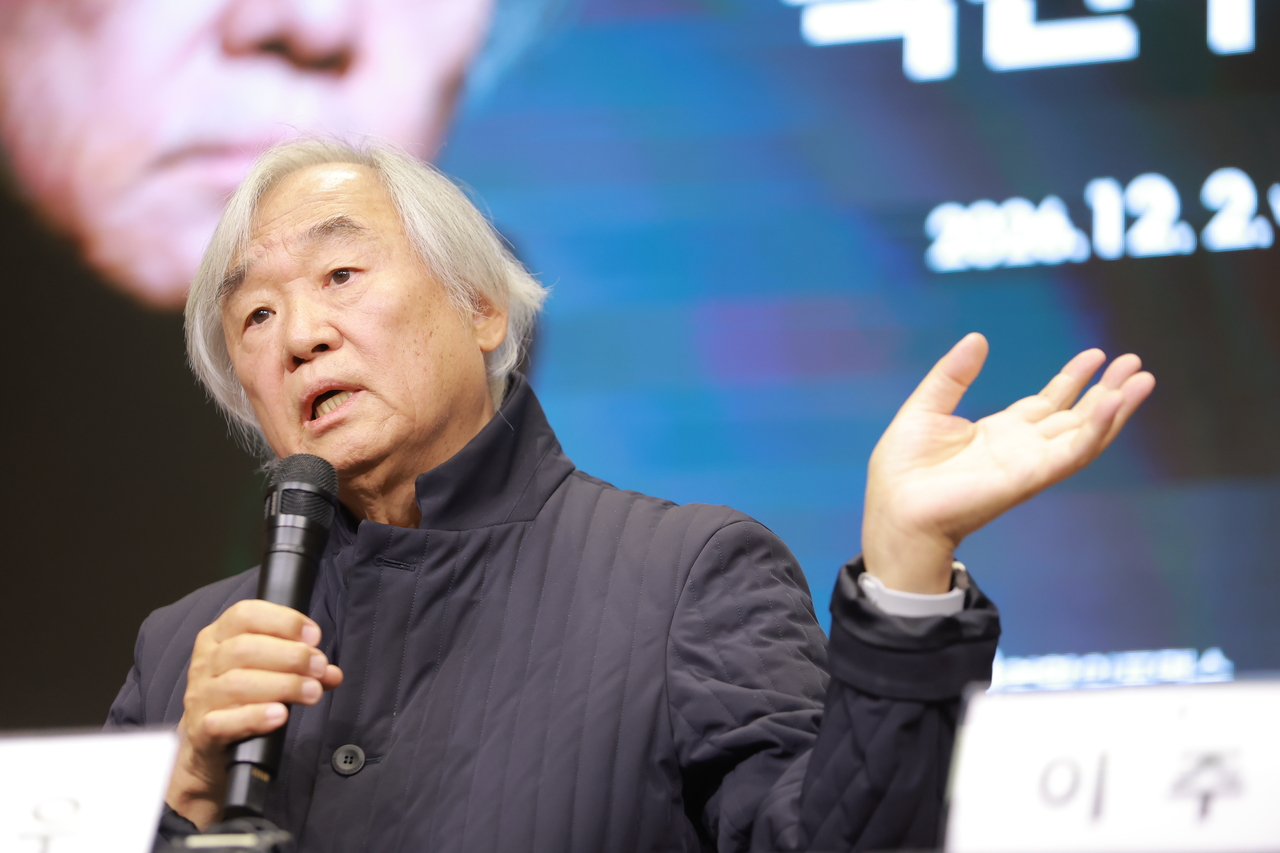
"When I look back at everything, I was really lucky."
The road was anything but smooth. At 15, Baek crossed to the United States alone, only to find that a Korean passport opened almost no doors. The walls of the Cold War blocked even the Eastern European stages that had already sent him invitations. In July 1977, he and his wife, the late actress Yun Jeong-hee, narrowly escaped a North Korean kidnapping attempt near Zagreb, Yugoslavia. Yet the 80-year-old pianist looks back on seven decades and calls them fortunate.
Baek Kun-woo (80) sat down with reporters ahead of the publication of his memoir, "Baek Kun-woo: My Story," and reflected on a life full of moments he described as both deeply grateful and deeply regretful. "Each experience feels like it helped shape who I am," he said.
The journey of the pianist often called "a seeker at the keyboard" began at age 10, when he performed Grieg's Piano Concerto with the Navy Symphony Orchestra — now the Seoul Metropolitan Symphony Orchestra — in 1956. Marking the 70th anniversary of that debut this year, he picked up a pen for the first time in his life. "People in Korea don't really know what my 65 years abroad were like," Baek said. "In a way, that life is my history — and Korea's history — and I thought it might be of some help to the next generation." The book is scheduled for release Nov. 20.
A pianist from 'a country that didn't exist' — when Carnegie Hall was his classroom
"When I went abroad, Korea was a country that didn't exist. The idea of playing Western classical music from a place like that was, frankly, nearly impossible."
Even planning a concert tour was a struggle — a Korean passport alone would not get him a visa. He had to present his US permanent residency card just to board a plane. He loved Tchaikovsky and Rachmaninoff deeply, yet their homeland was off-limits to him. The doors to Eastern European stages did not open until 1989 and 1990, after the 1988 Seoul Olympics.
The shadow of Korea's division stretched far beyond the concert hall. In July 1977, Baek and Yun accepted what appeared to be a performance invitation from a man posing as a wealthy Swiss patron and traveled to the area near Zagreb, Yugoslavia, only to escape a North Korean abduction attempt at the last moment. The episode looms so large in his memory that the memoir devotes an entire chapter to it.
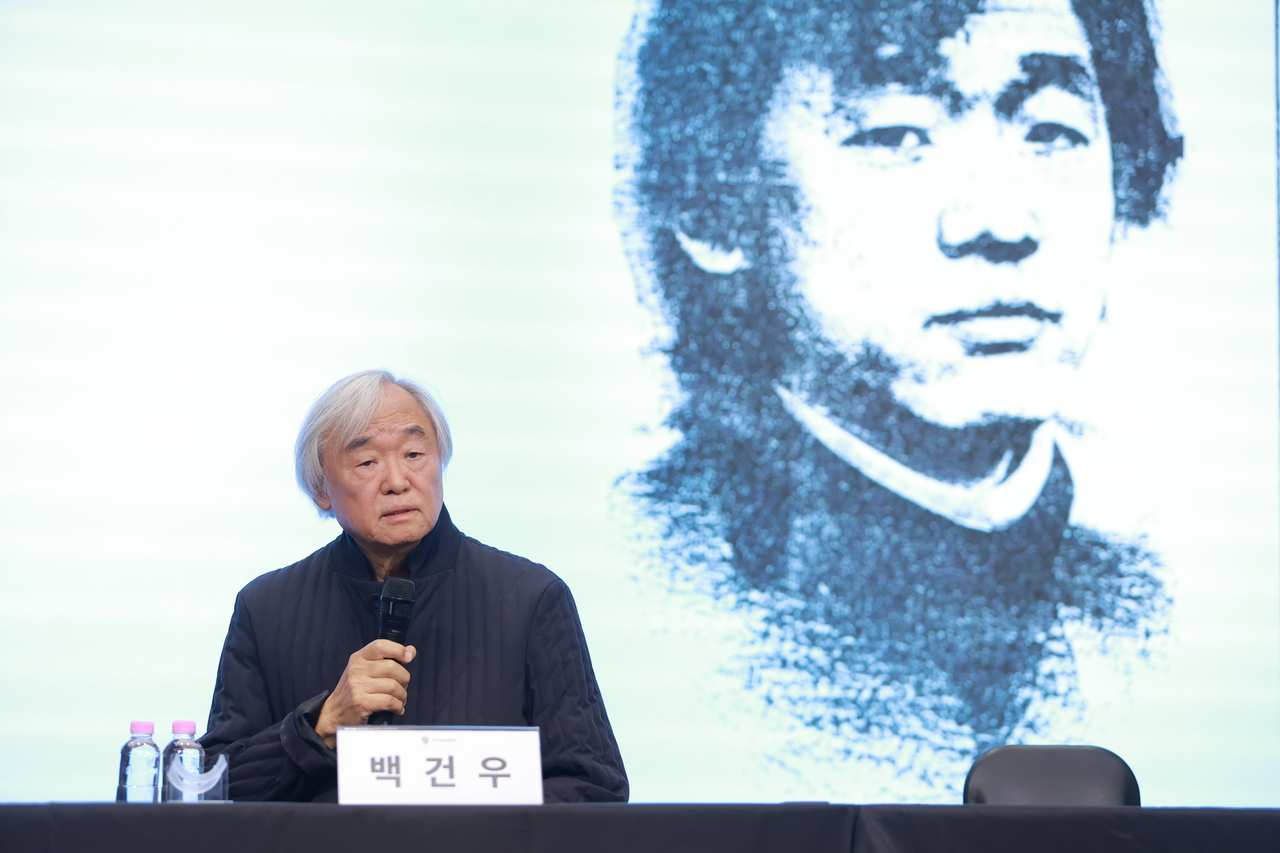
After 65 years abroad, Baek never changed his citizenship. "Getting American citizenship would have made everything much easier," he acknowledged, "but I have never felt like a citizen of any country other than Korea."
New York in the 1960s overflowed with musical richness. Vladimir Horowitz performed at Carnegie Hall; Leonard Bernstein held concerts at Lincoln Center almost every night. Baek counts those years among his greatest strokes of luck.
"There has never been another period in history like New York in the 1960s," he said. "Studying there meant something beyond Juilliard — it meant being able to witness those concerts in person."
The single most memorable day was May 9, 1965, when Horowitz returned to Carnegie Hall after a 12-year absence from the stage. Having given up on finding a ticket, Baek was having lunch at a friend's apartment when a call came in saying one seat was still available. He ran straight to the hall. Scriabin's Piano Sonata No. 9, the "Black Mass," heard that afternoon seized the 19-year-old completely. "I played nothing but Scriabin for three or four years," Baek recalled. "I was so deeply absorbed that even my touch at the piano changed — I had to force myself to stop."
Those years eventually bore fruit in a Scriabin recording that won France's Diapason d'Or in 1992. "That powerful impact became a decisive turning point in my life," he said.
The Spoleto Festival in Italy was another experience that "influenced me for the rest of my life." At the festival founded by composer Gian Carlo Menotti, Baek — not yet 20 — met film director Luchino Visconti, John Cage and Steve Reich. "I could feel the moment when the world's art was being created, all in one place," he recalled. "I would run into artists on the street, share a meal and exchange ideas."
'Young Friends' concert — 'The world of music is wider than you think'
Passing something on to the next generation had long been a task Baek kept putting off. "Until now, I was so busy with my own concerts that I had no time to look after younger musicians," he said. But it was not simply a matter of time. He had always wrestled with the question of whether music could truly be taught.
"Music is ultimately something you have to find for yourself."
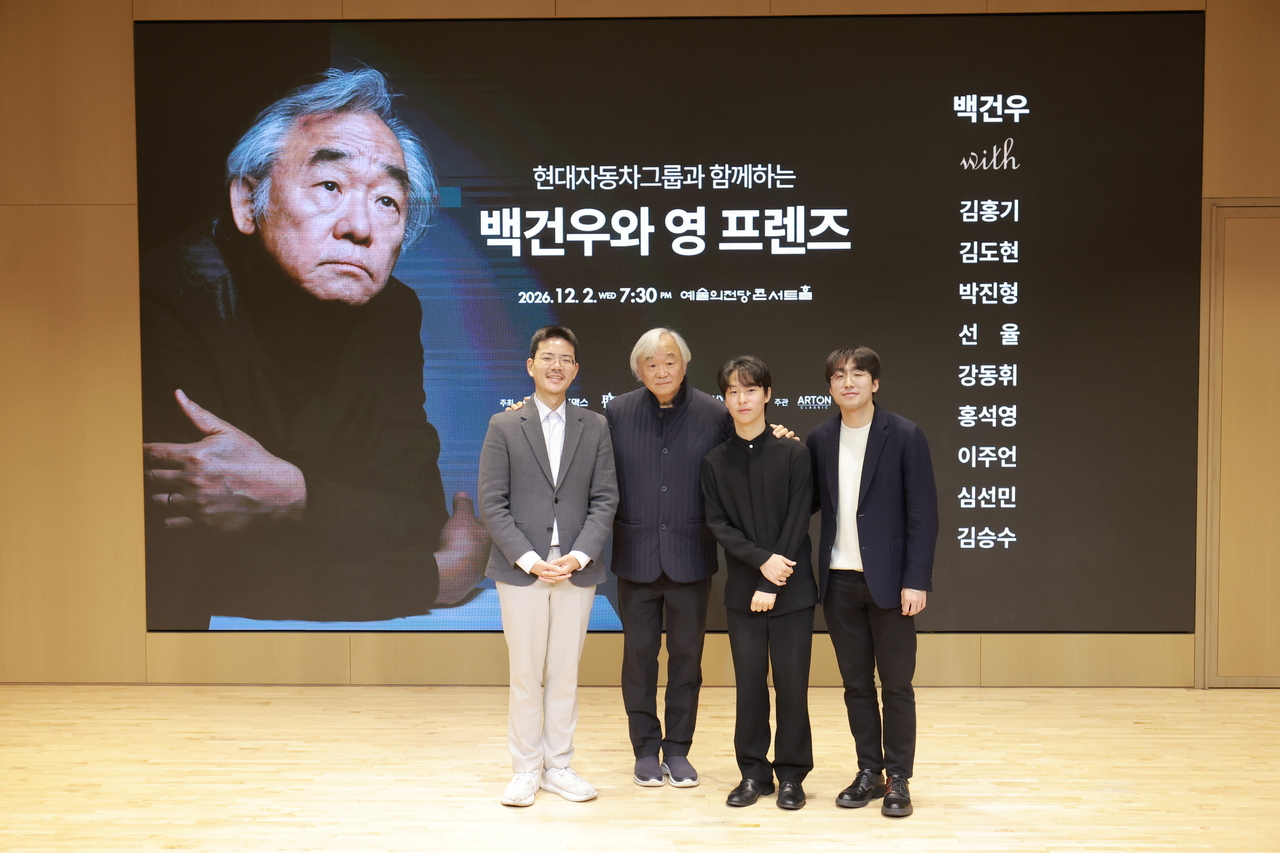
Watching younger musicians up close, the master pianist found his way. After adjudicating competitions and talking with young performers, he would often find them in tears before him — moments that brought back memories of his own Juilliard teacher, Rosina Lhévinne. "How you are living right now, what your relationship with your parents and society looks like — all of that comes through in the music," he said. "Music is not something you can master simply by reading the score."
In Paris in 2021, his bond with younger musicians deepened when Baek took his place at one of four pianos alongside Kim Hong-ki, Kim Do-hyun and Park Jin-hyung. Pianist Kim Do-hyun said Baek had been "the musician I have admired most my whole life — I cried listening to his music even as a child." Recalling the drive back after a late-night rehearsal at a piano factory on the outskirts of Paris, Kim said, "It felt like he was holding me in a warm embrace. I thought: a warm person makes music, and this is the energy that comes from it." Kim added that Baek noticed "the shape of a leaf he would have walked past, the form of a stone, children playing — he takes it all in." An offhand piece of advice Baek gave Kim — who was agonizing over which edition of a Schubert score to use — still stays with Kim: "You have to make your own edition."
Kim Hong-ki said the Paris stage taught him to listen in a new way. Pianists are accustomed to listening alone, but performing among four pianos brought the realization that "you have to listen to the others more to find the balance." Baek has long emphasized that "listening is even more important than playing." Lee Ju-eon, a 15-year-old who took second place at the Yun Isang International Music Competition on Saturday, said of Baek: "He has an insight into what state of mind the composer was in when writing a piece, and he expresses it in his own way." When someone in the room began drawing distinctions between masters, mid-career artists and newcomers, Baek laughed and said, "To me, they all look the same."
That Paris stage comes to Korea five years later. On Dec. 2, Baek will perform "Baek Kun-woo and Young Friends" at the Seoul Arts Center Concert Hall with the three pianists from Paris joined by four more, along with percussionists Shim Seon-min and Kim Seung-su.
The program opens with Simeon ten Holt's minimalist work "Canto Ostinato." The choice was inspired by a memory of Friedrich Gulda's Paris recital in the 1970s, when Gulda walked onto a darkened stage — the audience still finding their seats — wearing a flat cap and slipped into a Bach chorale without announcement. "He broke the convention of a big opening and a big finish in his own way," Baek said. "I wanted to say that classical music can be something different." The concert continues with the overture to Mozart's "The Magic Flute," the second and fifth movements of Berlioz's "Symphonie fantastique," George Crumb's "Music for a Summer Evening," and closes with Ravel's "Daphnis et Chloé" Suite No. 2 — a work Baek loves so deeply he says he "resents never having become a conductor."
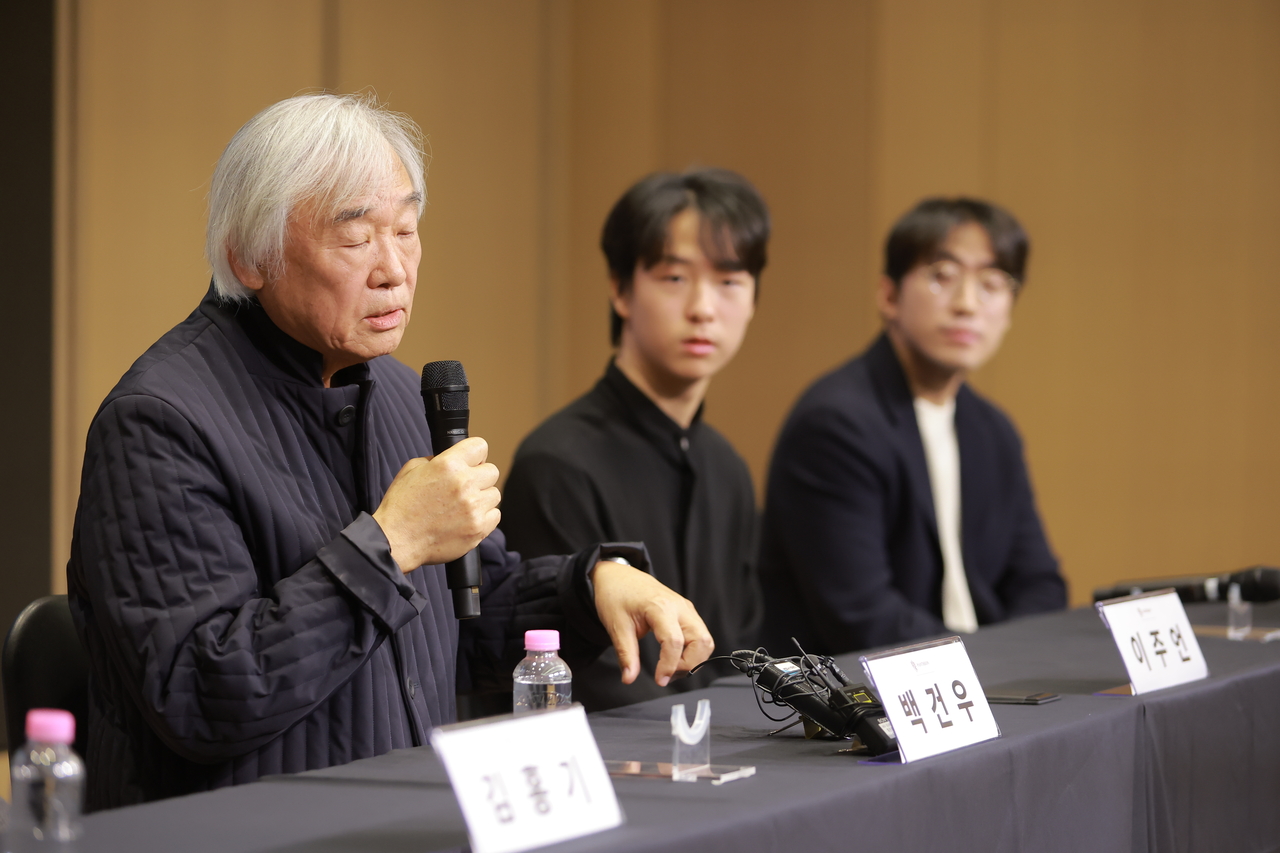
Reflecting on 70 years since his debut, Baek said, "There is no retirement in art. Whether it is music or painting, it goes on as long as the passion is there. Stopping at some point seems strange to me." At the instrument, he has never let go of a seeker's curiosity. "No matter how old you get, there is always music that suits your age," he said. "The problem is not exploring and just clinging to the same repertoire." It is also why he "strongly recommends" contemporary music to young performers.
"How thrilling it is to bring into the world, with your own hands, a piece that has never once been heard on this earth."
Baek's gaze toward the next generation extends to the parents who stand beside young musicians. The final chapter of his memoir is addressed to them. Raising the issue of suicide among young Koreans, Baek gently conveys his belief that parental understanding and warmth can be a powerful anchor for young people. "I wrote this chapter because I felt we need to understand each other a little more closely," he said. Having crossed to a foreign country alone at 15, Baek said he "lived carrying the heavy burden of having to solve unsolved problems on my own," adding, "A parent is your first and last teacher."
If you're thinking about self-harm or suicide, dial the Suicide Prevention Hotline at 109, available 24 hours a day, seven days a week. Please request a translator for English-language services.
It was a performance in New York by Yvonne Loriod — the pianist and wife of Olivier Messiaen — that first opened Baek's ears to Messiaen's world. In those days, such encounters depended on luck. In the YouTube era, every path leads to music.
Even so, Baek said, "I think our field of vision for encountering music is still far too narrow. I hope young musicians will look at the wider world and develop the ability to find the repertoire that suits them." That search, he insists, is something only they themselves can undertake. It is the same message he wants to leave with the young performers around him.
"I want to tell you: the world of music is far wider than you think."
shee@heraldcorp.com