Youth employment down 196,000; employment rate hits 6-year low at 42.9%
Accommodation and restaurant sector sheds 137,000 jobs; manufacturing also turns negative
Government to launch 'National Jobs Project' to improve employment for youth and middle-aged workers
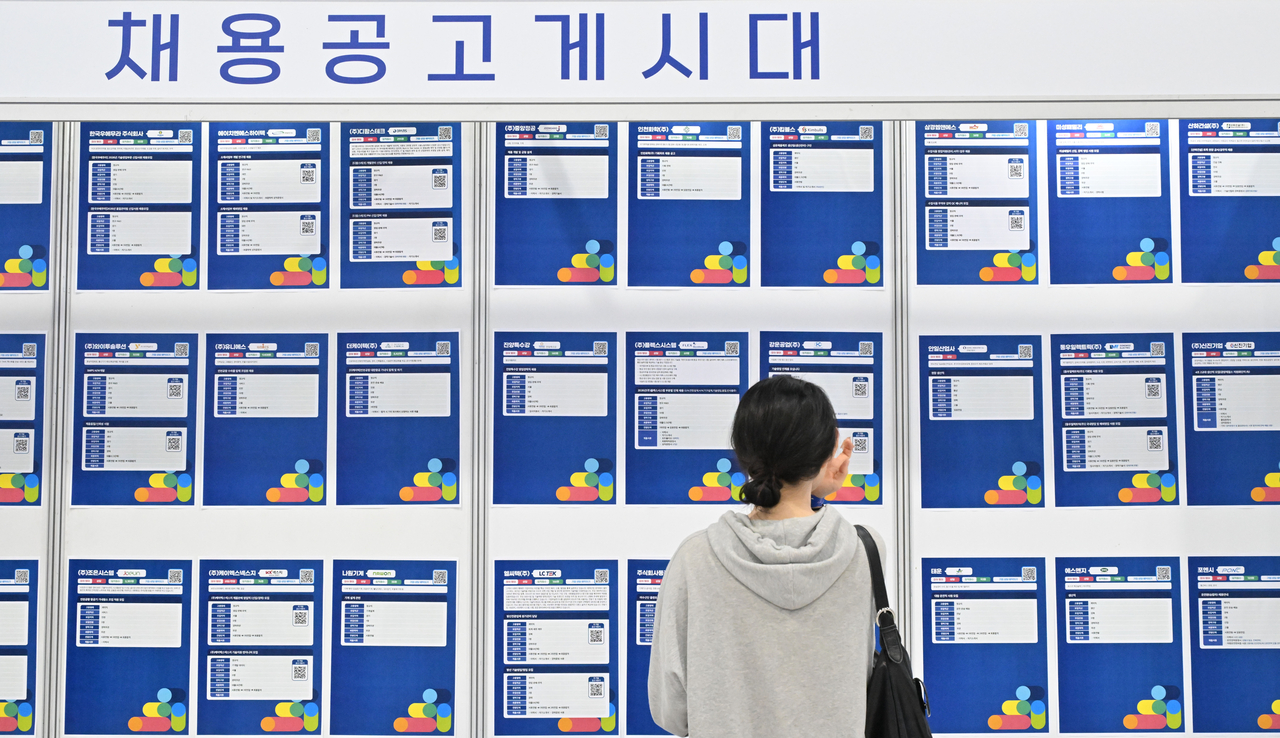
Total employment rose by 139,000 last month, extending a streak of gains to four consecutive months. But the youth segment continued to deteriorate — workers aged 15 to 29 fell by 196,000, marking 48 straight months of decline, and the youth employment rate dropped to its lowest level for any October in six years. The accommodation and restaurant sector posted its steepest job losses since the COVID-19 pandemic, while manufacturing employment, which had rebounded last month, turned negative again within a month.
According to the October 2026 employment survey released Wednesday by the Ministry of Statistics, the number of employed people aged 15 and older stood at about 29.179 million, up 139,000 from the same month last year. The monthly gain has held above 100,000 for four consecutive months, following increases of 108,000 in July, 184,000 in August and 113,000 in September. The employment rate for those aged 15 to 64 reached 70.4 percent, a record high for any October, though the overall employment rate for those 15 and older edged down 0.1 percentage point to 63.3 percent.
The chill in youth employment deepened. The number of employed people aged 15 to 29 fell 196,000 from a year earlier, extending the run of year-on-year declines to 48 months. The youth employment rate fell 1.7 percentage points to 42.9 percent, sliding for the 30th consecutive month. For the month of October, it was the lowest reading since 2020, when it stood at 42.3 percent.
Even under the broader 15-to-34 age bracket defined by the Special Act on Promoting Youth Employment — a measure the government began publishing separately in September — employment fell by 131,000 and the employment rate dropped 0.6 percentage point to 55.4 percent.
The weakness was especially pronounced in accommodation and restaurants, a sector that employs a large share of young workers. Employment in that industry fell 137,000 last month, the largest drop in five years and eight months, since February 2021. Analysts attributed the decline to a base effect from last year's livelihood-recovery consumer voucher program and sluggish business conditions. Manufacturing employment also fell by 7,000, reversing last month's rebound within a month, while construction shed 42,000 jobs, extending its losing streak to 30 consecutive months.
On the positive side, health and social welfare services added 249,000 workers, driving the overall employment gain. Transportation and warehousing added 48,000 jobs, and business facility management and support services grew by 37,000.
The total number of unemployed fell by 56,000 from a year earlier to 602,000. The unemployment rate dropped 0.2 percentage point to 2.0 percent. The economically inactive population rose by 179,000, though the number of people classified as "resting" — those neither working nor actively seeking work — declined by 69,000.
The government plans to develop a "National Jobs Project" aimed at improving employment conditions for youth, older workers and middle-aged people who have left the workforce early. The initiative will provide vocational training opportunities in response to the AI transformation and push direct job-creation programs through year-end to stabilize income for vulnerable groups during the winter months.
Kwon Dae-young, first vice minister of the Ministry of Economy and Finance, told a joint ministerial jobs task force meeting Wednesday that "employment is the most vital channel through which the warmth of export-driven economic growth flows into domestic demand and people's livelihoods," and identified improving job conditions for vulnerable groups as the top priority.
fact0514@heraldcorp.com