A freeze would widen the Korea-US rate gap further
Most Monetary Policy Board members back additional tightening
Inflation in the upper 2% range; GDP growth triple BOK's forecast
AI risk and stock market jitters complicate the picture
Semiconductor-driven growth slow to reach domestic demand
With both US employment and inflation data coming in above expectations, the likelihood of a Federal Reserve rate hike next month has risen sharply — with some even floating the possibility of a "big step" half-point increase. The stronger-than-expected US data is adding momentum to forecasts that the Bank of Korea will also raise its benchmark interest rate at its Nov. 26 policy meeting.
Headwinds remain, however. A pullback in AI investment sentiment has weighed on domestic equity markets, and a widening gap between semiconductor-driven income growth and private consumption poses a further complication. Voices of caution have also been heard within the BOK's Monetary Policy Board.
According to financial industry sources, the US consumer price index rose 0.4 percent in October from the previous month, beating the consensus forecast by 0.1 percentage point. Core CPI, which strips out food and energy, also came in 0.1 percentage point above expectations at 0.3 percent — its third consecutive monthly reading at that level since August. The labor market added to the tightening case: nonfarm payrolls expanded by 165,000 in October, nearly 2.8 times the consensus estimate.
Markets now treat a December Fed rate hike as a foregone conclusion, and a big-step increase is being discussed. The CME Group's FedWatch tool showed Tuesday (local time) that the probability of a December hike had jumped to 100 percent from 84 percent the previous day, a gain of 16 percentage points. The probability of a hold fell from 16 percent to zero, while the odds of a 25-basis-point increase rose from 84 percent to 90.8 percent and the odds of a 50-basis-point increase climbed from zero to 9.2 percent.
The prospect of further US tightening has given the BOK more room to raise rates at its Nov. 26 monetary policy direction meeting.
If the BOK holds at that meeting while the Fed raises rates next month, the Korea-US rate gap will widen again. A big-step Fed move would push the differential from the current upper-bound gap of 1 percentage point to 1.5 percentage points. With the won-dollar exchange rate already trading unsteadily in the low-to-mid 1,300 won range, a wider gap risks amplifying volatility further. The Korea-US rate differential is widely cited as a fundamental driver of upward pressure on the exchange rate.
As of 9 a.m. Wednesday, the won-dollar rate was trading at 1,342.7 won.
Domestic economic conditions also point toward tightening. Third-quarter GDP growth came in at 1 percent quarter-on-quarter, more than three times the BOK's August forecast of 0.3 percent. The current account surplus in September surpassed $60 billion for the first time in history. Inflation remains unsettled: the consumer price index rose at a rate in the upper 2 percent range in October, and core inflation, which tracks underlying price trends, has shown no sign of easing.
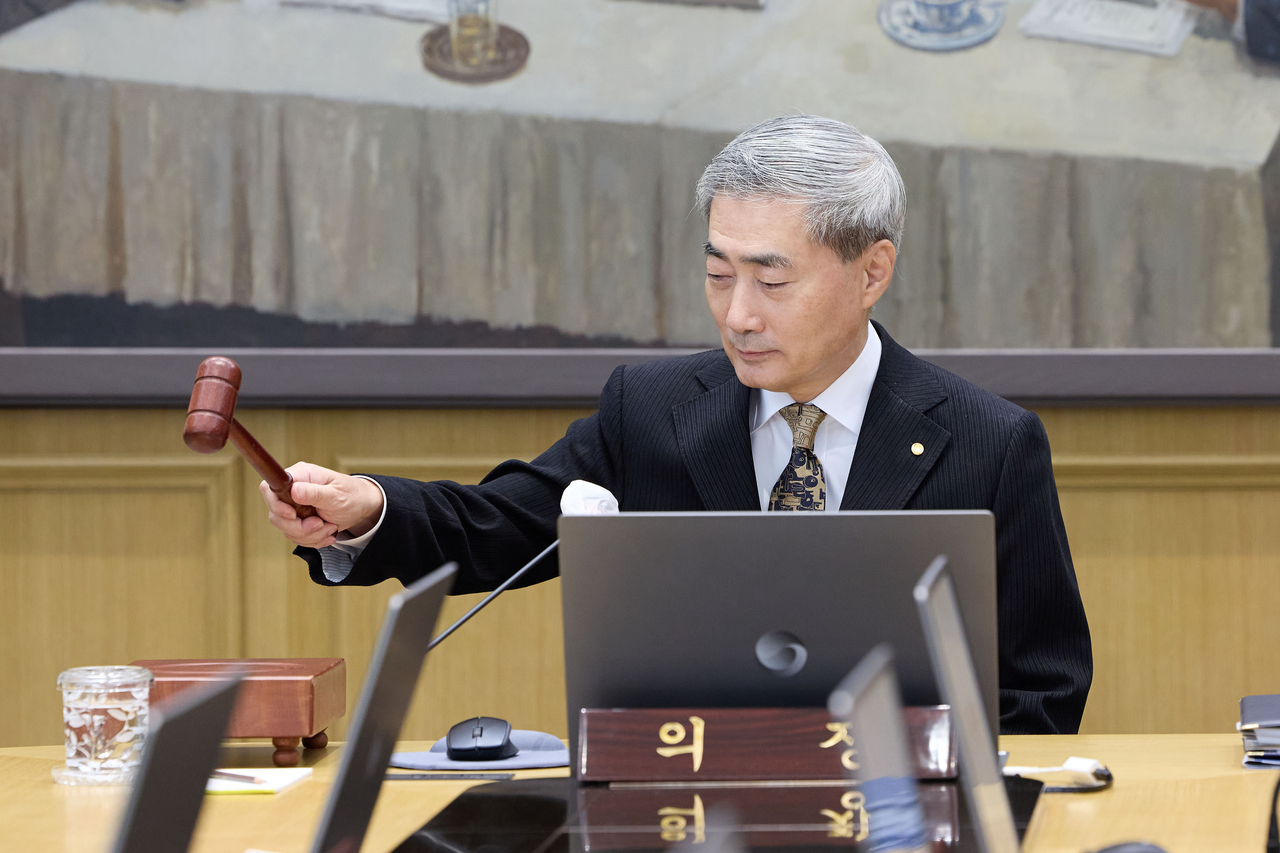
The minutes of the October Monetary Policy Board meeting, released by the BOK on Tuesday, show that a majority of board members — excluding the governor — agreed on the need for further tightening. One member said the board should "carefully examine the impact of past rate hikes on policy variables and the extent to which export-led growth is feeding through to domestic demand and demand-side price pressures, while also comprehensively considering developments in the Middle East, shifts in major economies' monetary policies, global financial market volatility and the effects of government economic policy, before deciding on the timing of any additional rate increase." Another member said it would be "better to monitor trends in inflation and financial stability conditions before deciding on the timing and pace of further hikes."
Arguments against a rate hike also exist. Chief among them is the growing concern over an "AI crisis" that has spread since the US midterm elections. Fears have emerged that if the Democratic Party tightens AI-related regulation, the earnings of domestic chipmakers such as Samsung Electronics and SK hynix could take a hit. For South Korea, where the economy is heavily dependent on semiconductors, the concern is that the country's growth trajectory itself could be destabilized. According to the Ministry of Trade, Industry and Resources, semiconductors accounted for 49.9 percent of total exports as of September.
A volatile stock market, rattled by deteriorating investment sentiment, is another constraint on tighter monetary policy. Kospi, which opened this month at 5,859.08 (based on closing prices), fell to 5,018.85 on Monday. It rebounded the following day but has continued to fluctuate in the low-to-mid 5,000 range. If shrinking equity assets depress private consumption, the side effects of a rate hike could become more pronounced. BOK Governor Shin Hyun-song said at a press briefing last month that he believed "a slight, temporary consumption adjustment may be occurring as a result of the stock market correction."
Caution is also being voiced within the Monetary Policy Board itself. At last month's meeting, two of the six board members — excluding the governor — said the monetary policy direction warranted careful review. The slow trickle-down of the semiconductor boom to the broader domestic economy is another obstacle: private consumption fell in the third quarter for the first time in four years. One board member said that "while nominal income in our economy is growing significantly, the pass-through to private consumption and employment remains gradual."
kimstar@heraldcorp.com