22 community service centers and the main district office — 23 sites in all — begin full operation this month, linked to the nation's first smart district chief system; building layouts, facility photos, repair histories and aging data are now centralized to sharpen budget planning and inter-agency collaboration
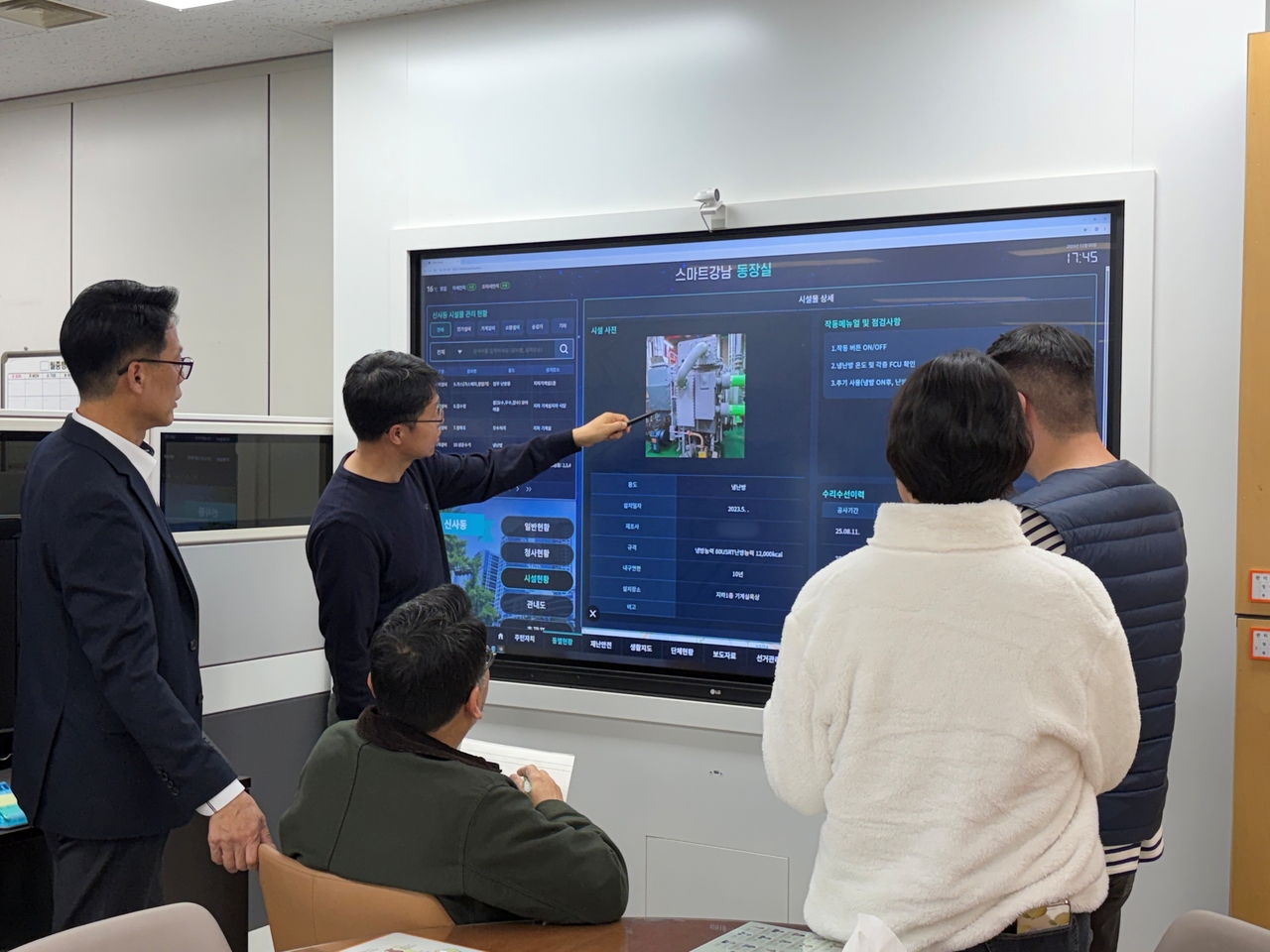
Seoul's Gangnam-gu is overhauling the way it manages its community service center buildings by deploying digital technology. The district plans to build a unified system covering everything from building conditions and facility floor plans to renovation and repair histories, with the goal of making public facility management faster and more efficient.
Gangnam-gu has introduced a facility management system linked to "Smart Gangnam District Chief," the nation's first digital dashboard of its kind, and will begin full operation this month across 23 sites — 22 community service centers and the residents' autonomy division at the main district office.
Until now, facility-related data for community service center buildings was scattered across the district office's residents' autonomy division, individual community service centers and the Gangnam Cultural Foundation, the contracted management agency. That fragmentation made it difficult to get a comprehensive picture of facility conditions and maintenance histories, and hampered rapid responses when breakdowns or repair needs arose.
To address the problem, the district tapped the existing infrastructure of Smart Gangnam District Chief — a digital status-board system it built in 2023 as the first of its kind in the country. By consolidating facility information that had been dispersed across agencies, it created a shared management framework accessible to the main district office, community service centers and the contracted agency alike.
The new system holds building status data, facility photographs, floor plans, and renovation and repair histories for each community service center, along with details on each facility's purpose, installation location, service life, inspection items, staffing and emergency contact information. Maintenance data for individual facilities has been digitized so that staff can search for what they need and check detailed conditions at a glance.
Particularly notable is that the main district office's coordinating division can now conduct integrated inspections of facility conditions and maintenance status across all 22 community service center buildings. By comparing and analyzing the aging levels and repair histories of facilities in each neighborhood, the district can proactively identify equipment due for inspection and set repair priorities in a systematic way.
The Gangnam Cultural Foundation and individual community service centers can also use the same data to carry out facility inspections, submit repair requests and confirm the results of follow-up action. Stronger information sharing and operational collaboration among agencies is expected to reduce administrative inefficiencies in the facility management process.
The district plans to use the facility management data accumulated through the system as an objective basis for future budget planning, and to apply it to the efficient allocation of funds for aging facility upgrades and routine maintenance.
"With this system now in operation, the community service center administration, the coordinating division and the contracted agency can all respond quickly based on a single unified dataset," Gangnam-gu District Mayor Kim Hyun-ki said. "We will continue to expand smart administration powered by advanced digital technology to improve the efficiency of neighborhood-level services and ensure that residents can use public facilities safely and conveniently."
seouldream01@heraldcorp.com