Youth employment rate at 42.9%, down 1.7 percentage points from a year earlier
Accommodation and restaurant sector sheds 137,000 jobs; manufacturing and construction also decline
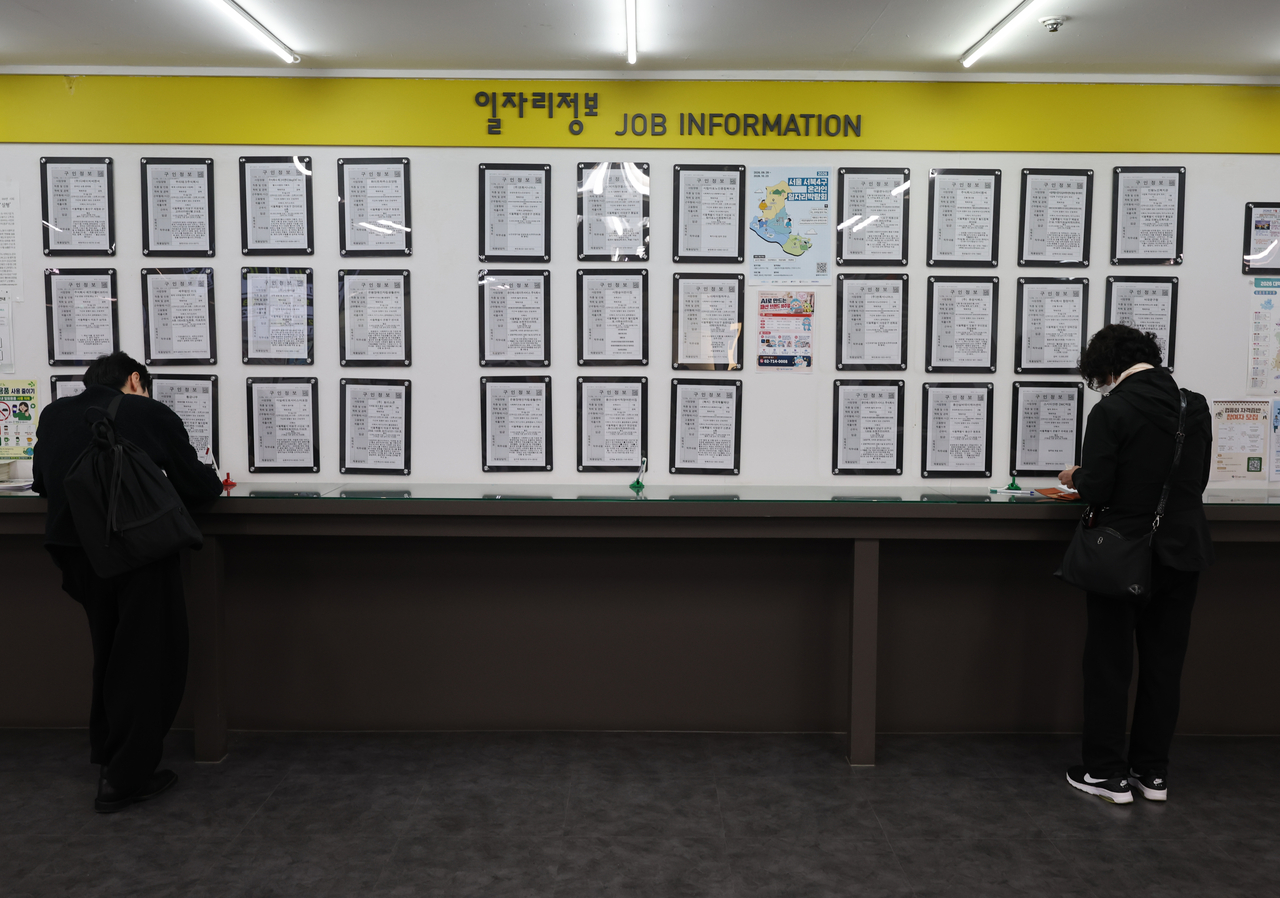
The number of employed young people between the ages of 15 and 29 fell for the 48th consecutive month in October, even as total employment rose by 139,000 from a year earlier. Excluding workers aged 65 and older, overall employment actually declined.
Manufacturing employment, which had returned to growth in September for the first time in 27 months, reversed course within a month. The broader employment recovery has yet to reach young workers or major industries.
According to the October employment survey released Wednesday by the Ministry of Statistics, total employment last month stood at about 29.179 million, up 139,000 from the same month a year earlier. The gain was larger than the 113,000 increase recorded in September. However, seasonally adjusted employment came to about 28.934 million, down 50,000 from the previous month.
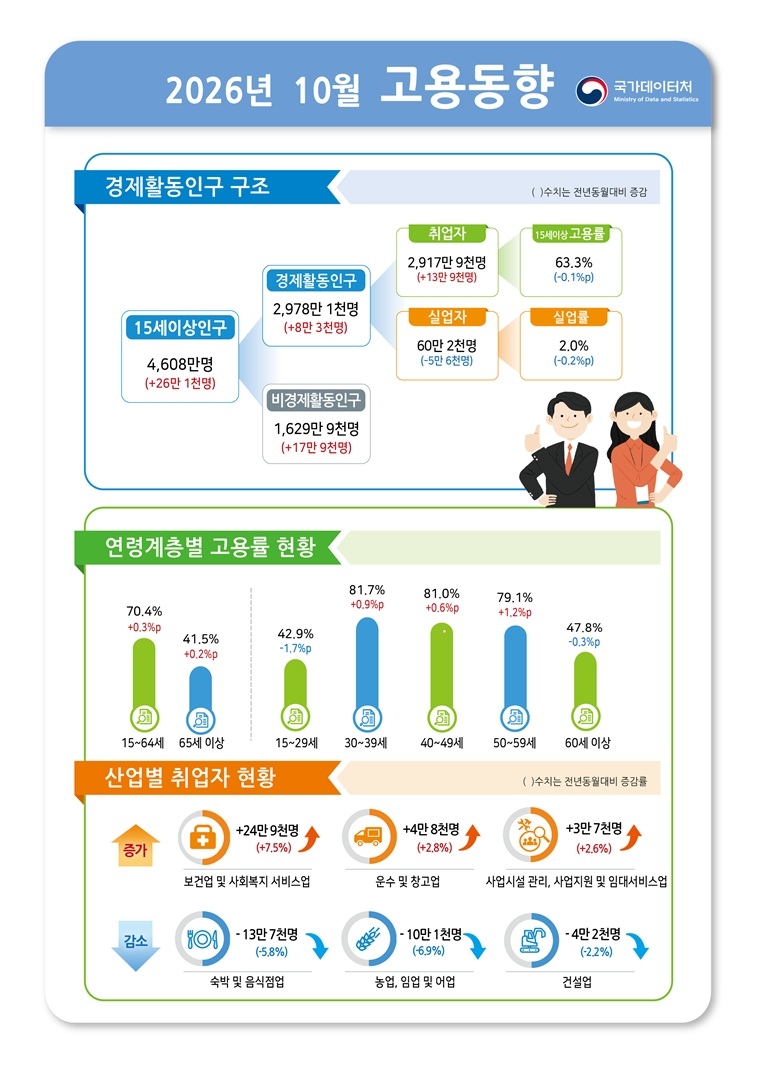
Youth employment stood at about 3.325 million, down 196,000 from a year earlier — a 48th consecutive monthly decline stretching back to November 2022. The pace of decline also accelerated, widening from 143,000 in August and 147,000 in September. The youth employment rate fell 1.7 percentage points year on year to 42.9 percent, marking 30 consecutive months of decline. The youth population shrank by 141,000 over the same period, yet the drop in employed young people was even steeper.
The slump was most pronounced among people in their early 20s just entering the workforce. Employment among those aged 20 to 24 fell by 120,000 to 880,000, pushing the employment rate down 3.6 percentage points to 40.0 percent — a steeper drop than the 2.7-percentage-point decline in September. Among those aged 25 to 29, employment fell by 84,000 and the employment rate slipped 0.5 percentage points to 71.0 percent.
Broadening the definition of youth to include those up to age 34 showed no improvement. Employment among those aged 15 to 34 — a category the Ministry of Statistics began publishing separately in September — totaled about 6.323 million last month, down 131,000 from a year earlier. That decline was 33,000 wider than the 98,000 drop recorded in September. The employment rate for this group fell 0.6 percentage points to 55.4 percent, exceeding September's 0.4-percentage-point decline.
Job gains were concentrated among older workers. Employment among those aged 65 and older rose by 255,000, far outpacing the overall increase. By contrast, employment among those aged 15 to 64 fell by 117,000. The population in that age group shrank by 308,000, however, pushing the employment rate up 0.3 percentage points to 70.4 percent — a case where a faster population decline lifted the rate even as the number of employed people fell.
By industry, manufacturing shed 7,000 jobs after gaining 16,000 in September, its first increase in 27 months, failing to sustain that rebound. Construction employment fell by 42,000, extending its streak of consecutive monthly declines to 30 months. The accommodation and restaurant sector lost 137,000 jobs, a wider drop than the 97,000 decline in September. Agriculture, forestry and fishing also shed 101,000 jobs.
On the positive side, health care and social welfare services added 249,000 jobs. Transportation and warehousing gained 48,000, while business facility management, support services and rental services added 37,000. By employment type, the number of regular wage workers rose by 287,000, but temporary workers and daily workers fell by 107,000 and 53,000, respectively.
The overall unemployment rate edged down 0.2 percentage points to 2.0 percent. The youth unemployment rate also dipped 0.1 percentage points to 5.2 percent, but the extended youth unemployment rate — which factors in potential economic activity — rose 0.4 percentage points to 15.1 percent. The number of young people classified as "resting," meaning neither employed nor actively seeking work, fell by 38,000 to 371,000.
fact0514@heraldcorp.com