Budget rises 11.92% from a year earlier; social welfare accounts for 59% of total spending
Traffic, urban development get 32 billion won; local economy 17.8 billion won; education and culture 99.2 billion won
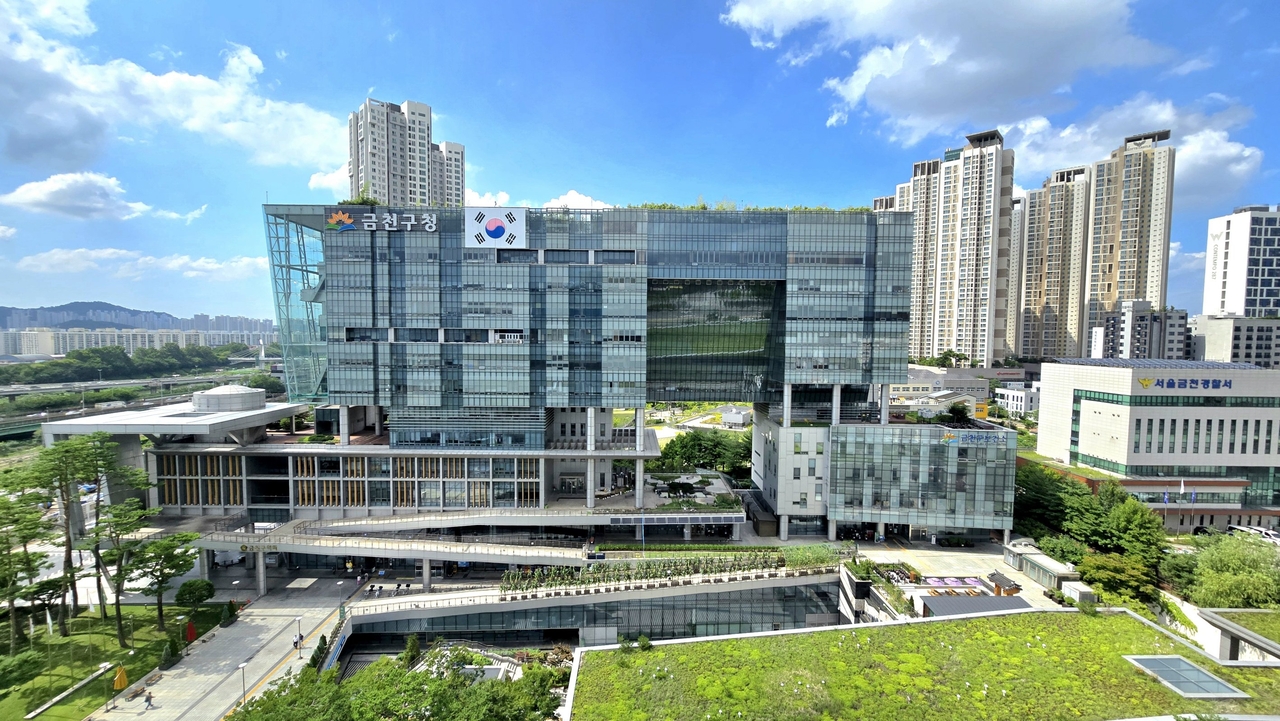
Seoul's Geumcheon-gu has drawn up an 840.6 billion won ($620 million) budget for 2027 — the first full-year spending plan under its current district administration.
The figure represents an 11.92% increase from the previous year, with investment focused on welfare and public safety alongside expanded spending on traffic, urban development, the local economy, and education and culture.
Geumcheon-gu submitted the 840.6 billion won budget proposal to the district assembly Wednesday. It comprises 826.3 billion won in general accounts and 14.3 billion won in special accounts — an increase of 89.5 billion won from this year's original budget.
The proposal is the first full-year budget drafted since the current administration took office. The district has set three governing priorities — "Geumcheon as a city of the future," "Geumcheon as a city of vitality," and "Geumcheon as a city of education and culture" — and directed funding toward projects residents can feel in their daily lives.
Welfare commands the largest share of spending. The social welfare budget stands at 493.8 billion won, up 55.2 billion won from the previous year and equal to 59% of the total. An additional 20.5 billion won will go toward public safety, covering climate-disaster response and everyday hazard prevention.
Traffic and urban development, aimed at strengthening the district's competitiveness, receives 32 billion won. Key projects include improvements to the local bus network, upgrades to the traffic environment along Geumha-ro, and a revamp of the traffic system around the G-Valley export bridge area.
The budget also funds work on Geumcheon's long-term development strategy, "2050 Geumcheon Plan," a comprehensive blueprint covering residential, industrial, transportation and green-space needs. The district plans to accelerate development of a site vacated by a relocated Air Force unit and to operate a one-stop administrative center supporting redevelopment and reconstruction projects.
Local economic revitalization receives 17.8 billion won. To boost traditional markets, the district will spend 3.08 billion won building a customer parking lot at Bidangil Hyundai Market, 275 million won hosting the Geumcheon Market Festival, and 55 million won drawing up a master plan to revitalize the commercial district around traditional markets.
G-Valley activation projects also feature prominently. The district has set aside 1.76 billion won to create an attractive nighttime streetscape, 1.3 billion won to issue Geumcheon G-Valley local gift certificates, and 238 million won to support the competitiveness of small and medium-sized enterprises. The goal is to link the growth of neighborhood commercial districts and industrial complexes to local job creation and increased consumer spending.
Education and culture will receive 99.2 billion won. The budget includes 4.49 billion won for construction of the Geumcheon International Foreign Language Center, along with funding for future-skills education programs such as operating a public study cafe and hosting the Geumcheon Robot Olympiad.
To close childcare gaps, the district has allocated 423 million won for school-holiday gap care at elementary schools and will expand after-school program support. About 200 million won will go toward creating a "Golden Cultural Belt," and 331 million won toward building a Geumcheon History and Culture Center, as the district works to preserve local heritage and expand cultural infrastructure.
The district said the budget fulfills promises made to residents while laying the groundwork for the city's future growth.
"Although our fiscal room is not generous, we have focused on people's livelihoods and future investment — keeping our promises to residents and easing the inconveniences of daily life," District Mayor Choi Ki-chan said. "We will move forward together with our residents so that the numbers in this budget translate into real, tangible change in their everyday lives."
The 2027 budget proposal will go through deliberation and a vote by the district assembly before receiving final approval at a plenary session on Dec. 14.
seouldream01@heraldcorp.com