Rep. Heo Seong-mu flags 27% turnover rate within 5 years; staff leaving for National Health Insurance Service
Park Hong-keun to hold further talks with Finance and Labor ministries; Deputy PM Lee Hyeong-il pledges continued review
Only 1.69 billion won of 37.01 billion won budget increase request reflected in government plan; union warns of general strike Nov. 26
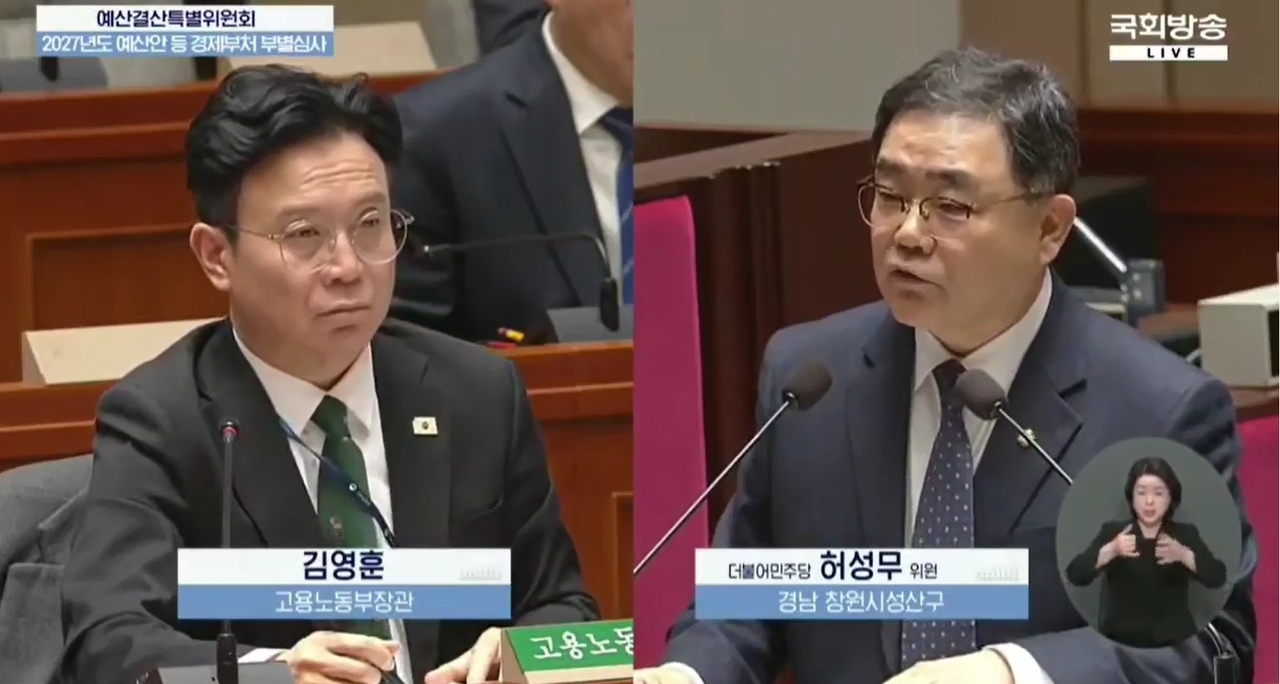
"I think there needs to be a drastic measure at some point."
Minister of Employment and Labor Kim Young-hoon made the remark Tuesday at the National Assembly's Budget and Accounts Special Committee, responding to a question from Rep. Heo Seong-mu of the Democratic Party of Korea about improving working conditions for employees of the Korea Workers' Compensation and Welfare Service.
Kim said he found it "deeply painful" that the pay and working conditions of employees at the agency — which handles key national policy tasks including industrial accident compensation and wage theft — lagged behind those at other public institutions. Kim attributed the widening pay gap partly to a 2008 staffing expansion that was not accompanied by adequate budget allocations.
According to the agency's union, the establishment of an occupational disease adjudication committee at that time added 71 positions, but because no separate personnel budget was set aside, the agency has been absorbing 6.43 billion won ($4.74 million) in labor costs from its existing budget.
Park Hong-keun pledges further talks; Lee Hyeong-il vows continued review
Minister of Planning and Budget Park Hong-keun said the government applies an additional wage increase of 0.5 percent for regular workers and 1.0 percent for public-service workers at low-wage public institutions, adding that next year's budget reflects those rates. On further measures to improve conditions at the agency, Park said he would "discuss it further" with the Ministry of Economy and Finance and the Ministry of Employment and Labor.
Deputy Prime Minister and Minister of Economy and Finance Lee Hyeong-il acknowledged that the agency's pay was lower than at other institutions but urged caution in making direct comparisons across organizations. Lee noted that the agency is classified as a low-wage public institution and therefore receives a differentiated total wage increase rate, adding that the government would "continue to look into" efforts on that front.
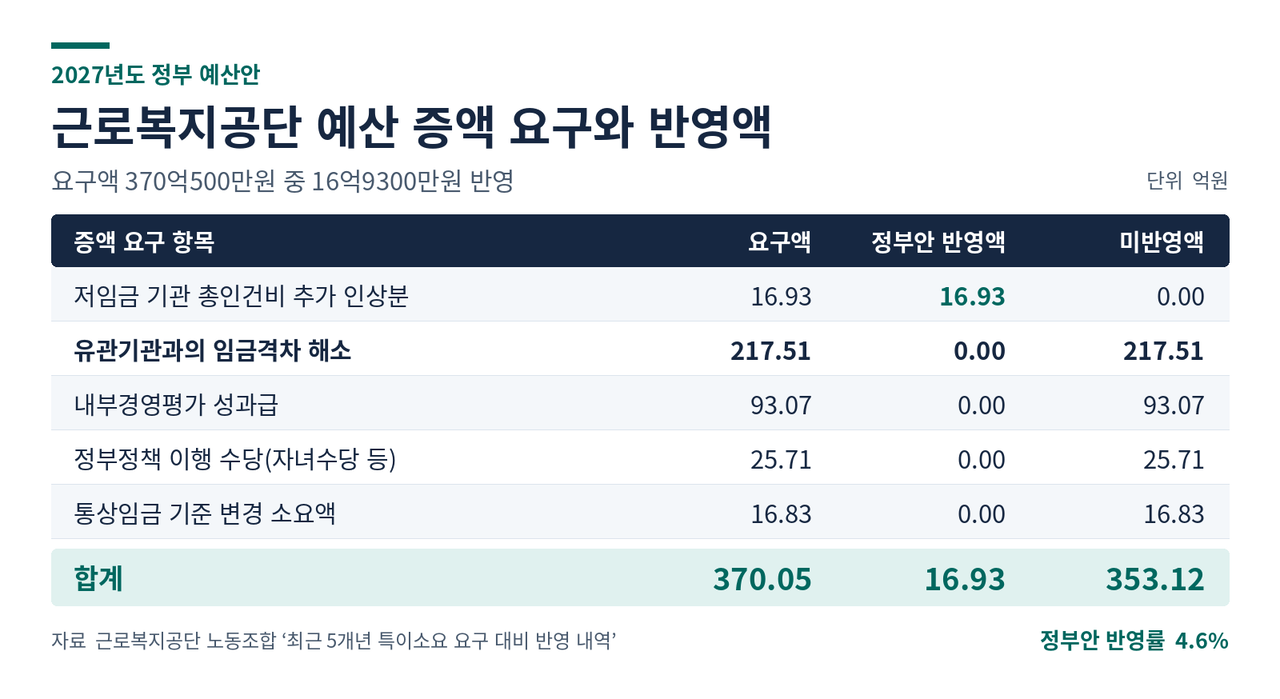
Of the 37.01 billion won the agency requested in additional budget for next year, the government plan reflects only 1.69 billion won — the 0.5 percent additional increase in total personnel costs, representing 4.6 percent of the request. A separate 21.75 billion won sought to close the pay gap with other institutions through measures such as long-service allowances and holiday bonuses was cut entirely.
The union is also pressing for a revision to this year's fund management plan, arguing that the additional increase was not reflected in the current budget either. The total funding the union is seeking to secure this year — covering personnel costs for newly added staff, shortfalls in performance bonuses, and payments arising from a court ruling on ordinary wages — amounts to 14.23 billion won.
Average pay 13.77 million won below National Pension Service when excluding doctors
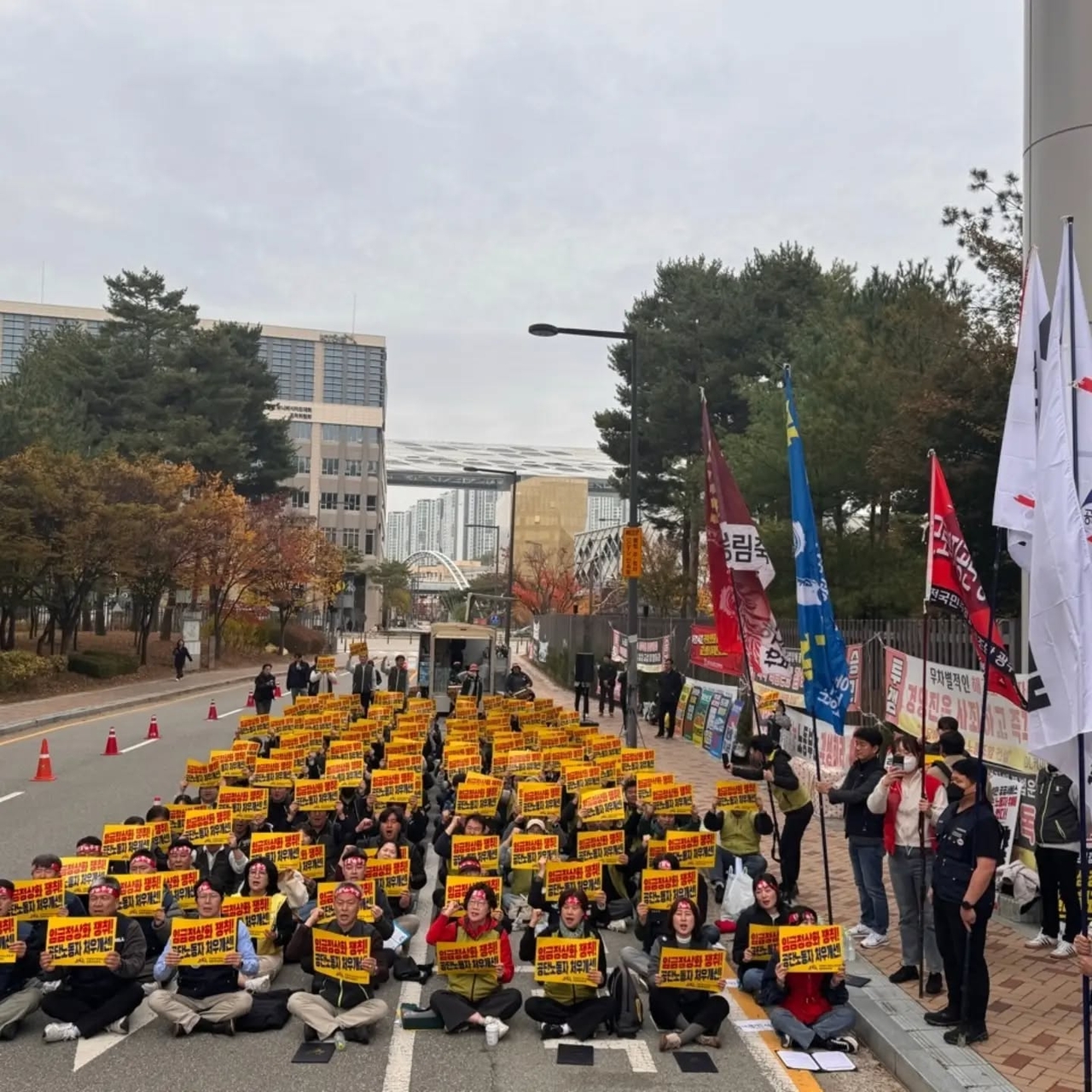
Rep. Heo said starting salaries and average pay at the agency were low, workloads had grown significantly over the past five years, and staffing had not kept pace. "The turnover rate within five years of joining reaches 27 percent," Heo said.
According to the agency's union, 855 of the people hired by the National Health Insurance Service between 2020 and 2024 had previously worked at the Korea Workers' Compensation and Welfare Service.
According to the Public Institution Management Information System Alio, the starting salary for new hires at the Korea Workers' Compensation and Welfare Service stood at 36.64 million won as of the 2025 fiscal year-end — 6.57 million won less than the National Health Insurance Service's 43.21 million won and 4.41 million won less than the National Pension Service's 41.05 million won. Average per-capita pay at the agency, excluding doctors, was 62.69 million won — 7.72 million won below the National Health Insurance Service and 13.77 million won below the National Pension Service.
The union said that of the 564 additional positions the agency requested to support a restructuring of the employment insurance income-based contribution system, only 100 were approved as net new hires in the government review, and 4.9 billion won in operating budget needed for premium billing notices and program guidance was cut entirely. For the small and medium-sized enterprise retirement pension fund program known as "Pureunssiaat," only 5 of the 185 requested positions were approved as net additions, the union said.
The union has announced warning strikes on Thursday and Nov. 17 to press its demands for pay parity and expanded staffing and budget. If the gap between labor and management cannot be narrowed, the union plans to launch a full general strike on Nov. 26 involving some 8,000 workers, including staff at affiliated industrial accident hospitals.
fact0514@heraldcorp.com