Low birth rate policy showcase held Tuesday
Seoul has invested 8.2 trillion won in anti-low-birth-rate measures since 2022
Third elected term to pursue 111 projects across 3 areas
Oh: 'Those who don't have children should feel they're missing out'
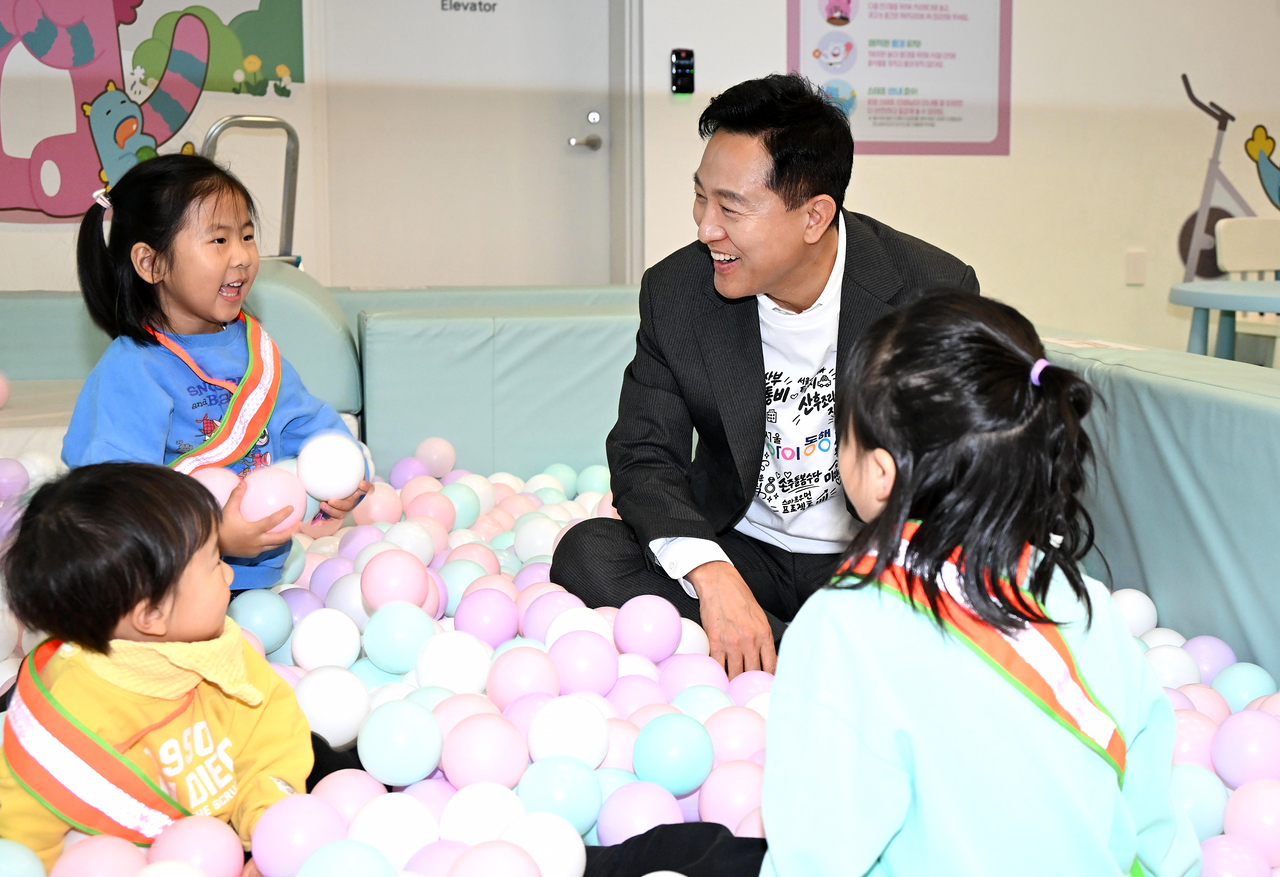
The Seoul Metropolitan Government will extend its low birth rate initiative — launched in 2022 — into a new phase called the Seoul Child-Accompaniment Project under the city's third elected term. Over the past four years, the program drew about 8.2 trillion won ($6.05 billion) in investment and benefited about 8 million people; the new phase will pursue 111 projects across three areas. Seoul Mayor Oh Se-hoon said he would expand the measures further, pledging "unwavering, all-out support so that people who choose not to have children will feel they are truly missing out."
The city held a policy showcase Tuesday morning at Seoul Gallery, with Mayor Oh and beneficiaries of fertility treatment, child-rearing and care programs in attendance. The city used the event to present the results of its low birth rate policies over the past four years alongside the vision for the new Seoul Child-Accompaniment Project.
The new project builds on two earlier initiatives — the Mom and Dad Happiness Project launched in 2022 and the Birth Cheering Seoul Project introduced in 2024 — and upgrades their goal from simply encouraging births to making Seoul "a city where it is good to raise children, and a Seoul where families are happy together."
In 2022, the city announced the Mom and Dad Happiness Project, which focused on easing the burden on caregivers and introduced programs such as Seoul-style kids cafes and a grandparent childcare allowance. In 2024, the Birth Cheering Seoul Project 1 and 2 broadened support to cover housing and work-life balance, launching new programs including the Mirinaezip affordable housing scheme and a subsidized wedding service.
Driven by these policies, the number of births and marriages in Seoul from January through August this year each rose 17.6 percent compared with the same period last year — the highest increase among all cities and provinces nationwide. The total fertility rate also exceeded government projections by a wide margin and rose for the third consecutive year.
The Seoul Child-Accompaniment Project for the third elected term aims to strengthen support for pregnancy and childbirth, expand care, play and learning environments suited to each stage of a child's development, and support families across all aspects of life — including marriage, housing and work-life balance. To that end, it is organized into three areas and nine strategic goals covering 111 detailed projects: Birth Support (21 projects), Childcare Support (58 projects) and Family Support (32 projects).
The Birth Support area focuses on reducing the financial burden families face during pregnancy and childbirth. Since 2023, the city has progressively eliminated income thresholds and per-procedure limits on its fertility treatment subsidy, and it plans to continue supporting couples who might otherwise abandon plans to conceive for financial reasons. The city is already easing costs through a pregnancy transportation allowance for expectant mothers and a Seoul-style postpartum care subsidy for new mothers, and it plans to refine the policies further this year by introducing differentiated support for families with multiple children.
The Childcare Support area centers on strengthening play, meal and care services for children's daily lives to support healthy development. The Seoul-style kids cafe program, which has surpassed a cumulative 2.52 million users, currently operates 240 locations across the city and will expand to 430 by 2030. In the first half of next year, the first Seoul Children's Imagination Land — a space where children can explore AI and future careers — will open in Gangbuk-gu, with plans to grow to at least eight locations by 2030.
The Family Support area aims to reduce the burdens families encounter as they form and raise children, covering everything from wedding preparation to housing stability and in-family care. To keep newlyweds from hesitating to start a family — or leaving Seoul — over housing concerns, the city has supplied a total of 7,108 units through the Mirinaezip program and plans to add 17,500 more by 2030. The housing cost subsidy for childless households that have given birth, which has supported a total of 2,582 households, has this year raised the jeonse deposit ceiling from 300 million won to 500 million won to reach more families.
At the event, Mayor Oh held a talk concert with participants including couples who received fertility treatment subsidies, families with multiple children who use Seoul-style kids cafes, dual-income parents who use Kium cafes, and grandparents caring for grandchildren.
"Seoul's birth rate is rising in numerical terms, but I think it needs to be twice what it is now," Oh said. "My goal is to expand the low birth rate measures we are already pursuing so that people feel they are losing out if they do not have children — and feel genuinely glad that they did."
He added that through the Seoul Child-Accompaniment Project, the city would "expand environments where children can run and play freely, and support parents in balancing work and child-rearing, so that children grow up happy and parents can raise them with peace of mind."
ikson@heraldcorp.com