Support budget for Seoul's 8 tourism zones falls 10.7% to 500 million won this year
Evaluation criteria weight business plans at 70 points, past performance at just 30
Two-year, 600 million won inter-zone program raises questions over continuity
Lawmaker calls for stay-and-spend tourism products linking Jamsil attractions to local commerce
'Festival headcounts matter less than local economic impact,' Kim says
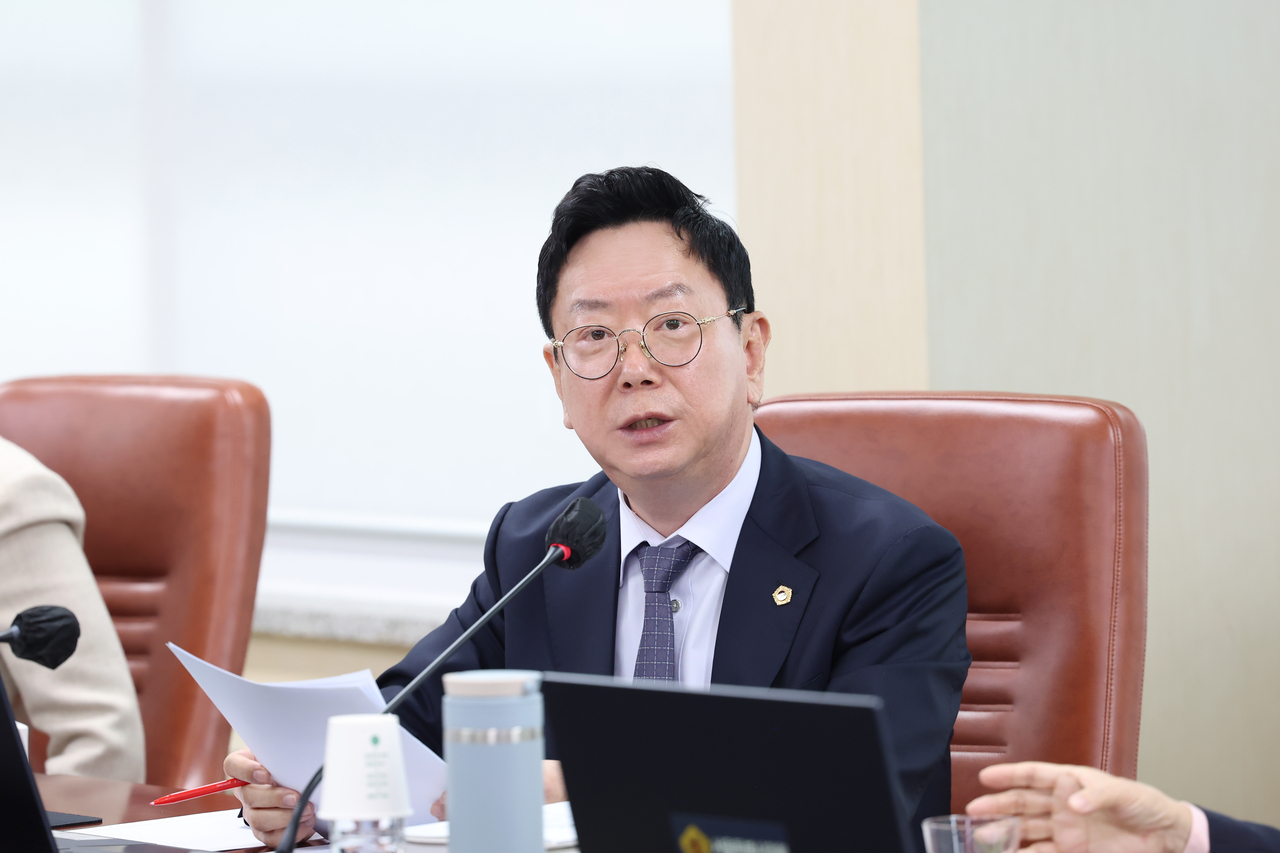
Even as Seoul sets its sights on drawing 30 million tourists a year, the budget for revitalizing the city's designated tourism zones has been cut and the system used to evaluate their performance falls short of measuring actual tourism outcomes, a city council member said Tuesday.
Kim Gwang-cheol, a People Power Party member of the Seoul Metropolitan Council representing Songpa District 2 and a member of its culture, sports and tourism committee, raised the concerns Monday at the tourism and sports bureau's administrative audit during the 340th regular session. Kim called on the city to overhaul its tourism zone policies so that visitor attraction translates into tangible benefits for local economies.
According to five years of tourism zone revitalization data Kim obtained from the Seoul Metropolitan Government, the city evaluates each zone's prior-year operating performance and current-year business plan, then allocates subsidies on a differentiated basis.
The support budget for Seoul's eight tourism zones fell from 560 million won ($413,000) last year to 500 million won this year — a drop of 60 million won, or 10.7 percent. The cut runs counter to the city's stated policy of expanding the tourism industry and boosting visitor numbers, effectively shrinking the fiscal base for the very local hubs meant to anchor that growth.
Kim said stable financial support is essential because tourism zones serve not only as magnets for foreign visitors but as key spaces connecting tourist spending to local commerce — accommodation, restaurants and shopping.
The head of the tourism and sports bureau acknowledged the need to increase the support budget but said the bureau had been unable to secure sufficient funds given the overall budget size and constraints on fiscal allocation across the bureau.
The more fundamental problem, Kim said, lies in the evaluation framework that determines how subsidies are distributed.
This year's evaluation criteria allocate 70 points to the current-year business plan and 30 points to the prior year's operating performance — a structure that awards more than twice as many points to future intentions as to demonstrated results.
Kim questioned whether such an approach can meaningfully assess the actual impact of tourism promotion efforts. Kim pressed the bureau on whether objective indicators of a zone's competitiveness — growth in foreign visitor numbers, tourist dwell time, tourism spending, local business sales and repeat-visit rates — are factored into the evaluation at all.
The bureau chief acknowledged that specific performance indicators such as tourist dwell time and tourism spending are not currently reflected in the evaluation.
Kim said a results-driven support framework is needed — one that assesses not only the quality of business plans but also actual outcomes such as visitor growth and increased spending, with those results feeding into the following year's subsidy allocations.
The continuity of inter-zone linkage programs also came under scrutiny.
The Seoul Metropolitan Government invested 300 million won in a 2023 inter-zone program linking tourism zones, then put another 300 million won the following year into a separate program connecting seven tourism zones across three geographic clusters — bringing the two-year total to 600 million won.
Kim said programs that connect tourism zones cannot drive sustained visitor movement and repeat visits if they remain one-off events. Kim also pressed the bureau on whether follow-up programs are planned and what has made it difficult to continue such initiatives.
The bureau chief explained that while the general tourism zone revitalization program is funded equally by the city and the relevant autonomous district, the inter-zone linkage programs are run directly by the city. The bureau chief said the need for sustained operation of such programs is recognized, but that budget review processes and competing fiscal priorities have made it difficult to keep them going.
Kim pointed to the Jamsil tourism zone as a concrete example of where improvement is needed.
Kim said the city should develop stay-and-spend tourism products that link Olympic Park and the cultural and tourism facilities around Jamsil to nearby restaurants, shopping venues and local businesses — drawing visitors to linger and spend rather than simply pass through.
Kim said each tourism zone should build on its distinctive assets while creating itineraries that connect to adjacent areas, and that the current model centered on one-time festivals should give way to sustainable, ongoing tourism programs.
To that end, Kim called on the city to manage evaluation scores and subsidy calculations for each tourism zone transparently and to introduce objective performance indicators covering tourist dwell time, spending and repeat-visit rates. Kim also urged the city to analyze the results of inter-zone linkage programs, develop follow-up initiatives, and establish medium- to long-term revitalization strategies that connect each zone's tourism assets to its surrounding commercial districts.
"Tourism zone revitalization programs must not become exercises in handing out ratings and distributing subsidies," Kim said. "They need to translate into tangible improvements in the tourism environment and into real benefits for local commerce — improvements that residents and visitors can actually feel."
Kim added that medium- to long-term revitalization strategies are needed to link the distinctive tourism assets of Jamsil and other zones to their surrounding commercial districts, and called on the city to reform its policies so that tourism zone support programs move beyond one-time events and make a genuine contribution to strengthening Seoul's tourism competitiveness and revitalizing local economies.
7toy7@heraldcorp.com