Employment insurance enrollment among workers under 30 falls for 50th consecutive month even as overall membership grows by 286,000; nearly 1 in 4 youth who re-enter workforce from inactivity land jobs outside their field of study
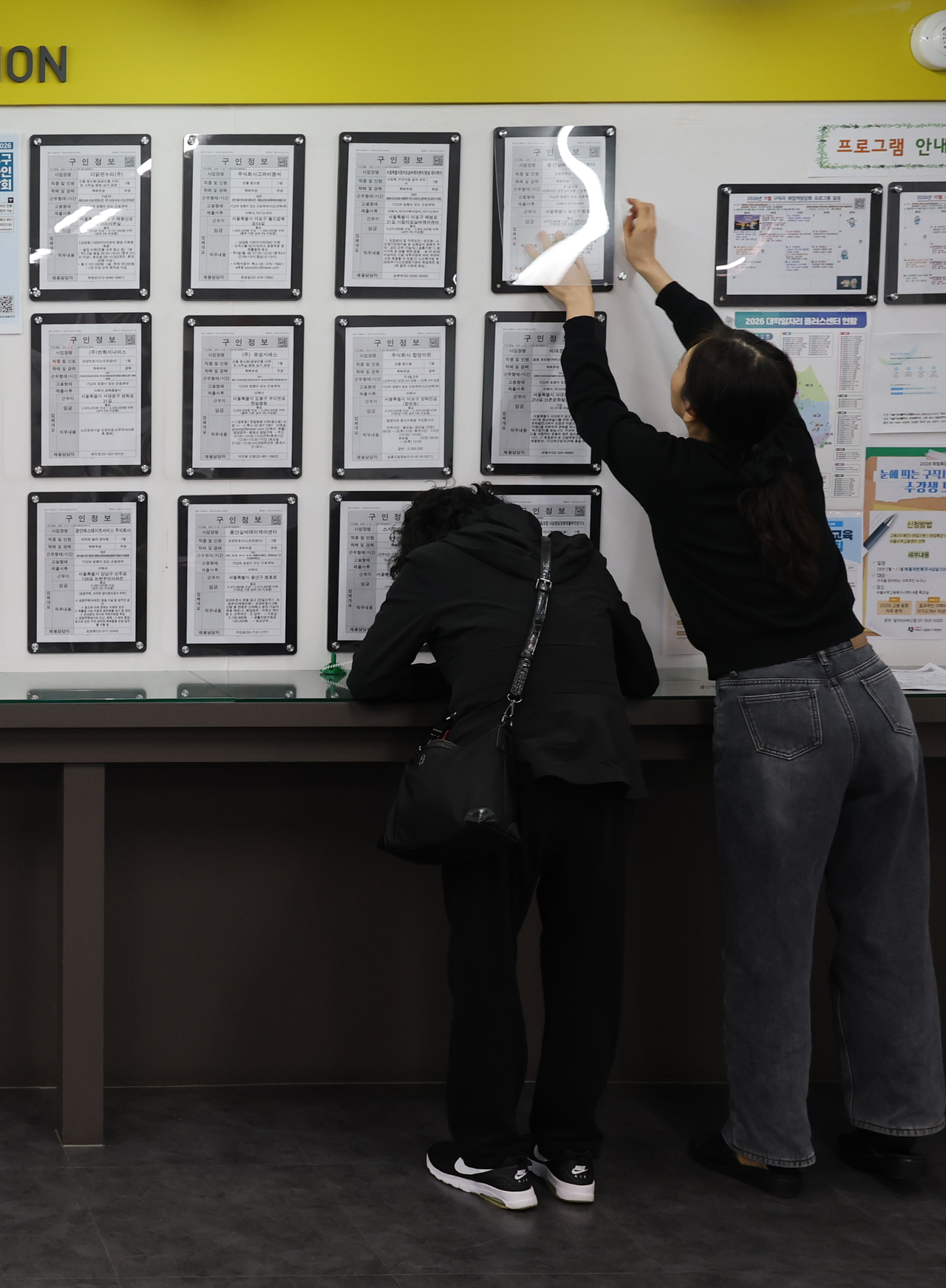
Manufacturing employment is recovering, led by the semiconductor sector, but young workers are being left behind. Even as overall employment insurance enrollment rises, the number of insured workers aged 29 and under has fallen for 50 consecutive months. For those who do find work after a period of inactivity, nearly one in four ends up in a job outside their field of study — a sign that the youth employment gap is widening in both quantity and quality.
According to the Ministry of Employment and Labor's October 2026 labor market report released Tuesday, total employment insurance enrollment stood at about 15.97 million at the end of last month, up 286,000, or 1.8 percent, from a year earlier. Workers aged 29 and under, however, numbered about 2.2 million — down 54,100, or 2.4 percent — marking 50 consecutive months of decline. Enrollment among workers aged 15 to 34 also fell by 15,100, extending its own losing streak to 32 months. Workers aged 60 and older accounted for roughly 71 percent of the overall gain, adding 204,200 to the rolls.
The youth employment slump is visible even in industries that are otherwise thriving. Total manufacturing enrollment last month reached about 3.86 million, up 14,100 from a year ago, with the semiconductor sector adding 7,900 workers and shipbuilding and other transport equipment manufacturing adding 7,300. Yet enrollment among workers under 30 in manufacturing fell by 18,000. Of the overall manufacturing gain, roughly 12,000 came from foreign workers enrolled under the Employment Permit System, leaving the net increase among other workers at just around 2,000.
The chill extends to the information and communications technology sector. Total ICT enrollment fell by 1,000 last month, but the under-30 segment dropped by 15,000. Analysts have raised the possibility that shifting demand for developers driven by the spread of AI, along with changes in corporate hiring practices, may be contributing factors. However, further analysis is needed to determine how much AI adoption has displaced new hiring of young workers.
The youth employment problem goes beyond headcounts. According to Employment Trends Brief No. 8 of 2026, recently published by the Korea Employment Information Service, 24.3 percent of young people who moved from inactivity — classified as "resting" — into employment experienced a mismatch between their major and their job. The skills mismatch rate for the same group stood at 22.8 percent. The findings are based on an analysis of youth labor market transitions using data from the Youth Panel Survey covering 2021 to 2024.
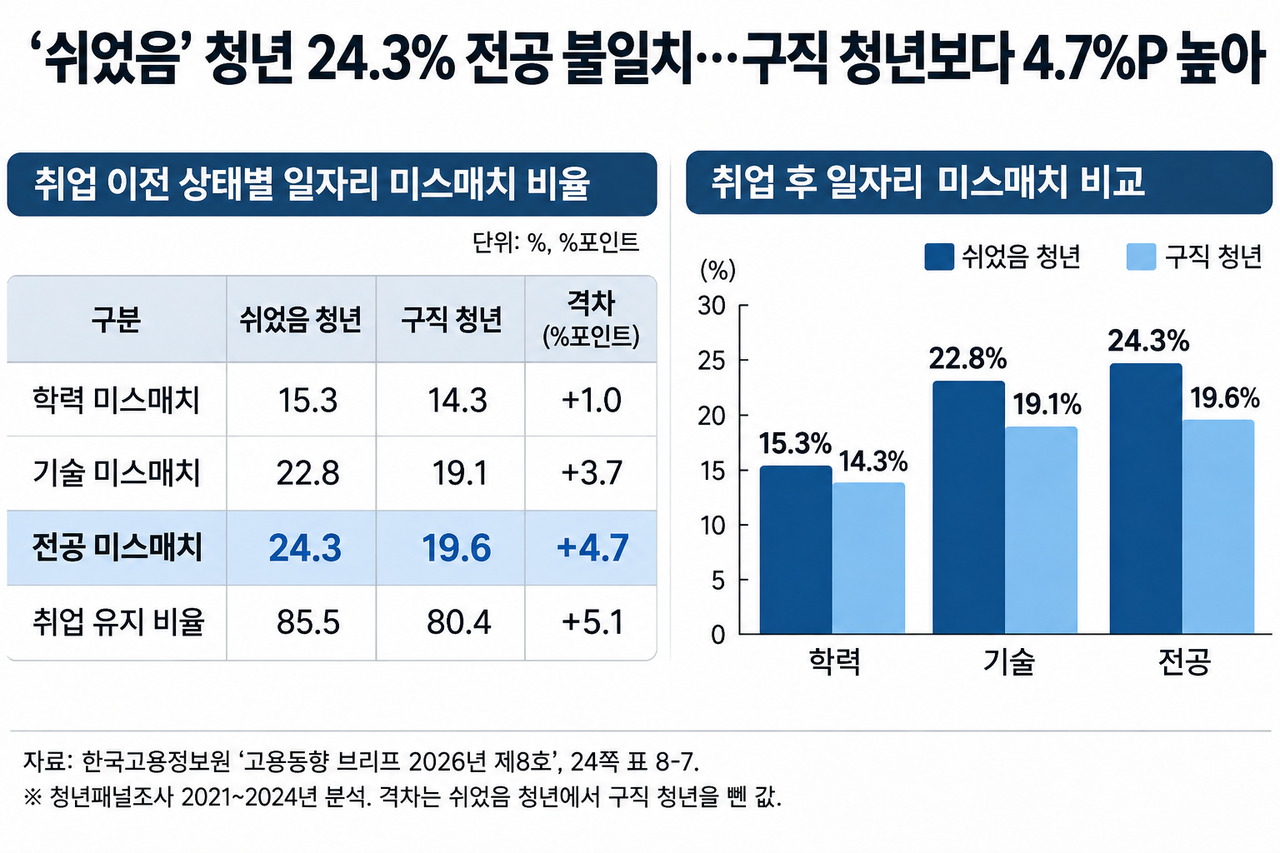
Among young people who found jobs while actively job-seeking, the major mismatch rate was 19.6 percent and the skills mismatch rate was 19.1 percent. Those who re-entered from inactivity were 4.7 percentage points more likely to end up in jobs outside their field of study and 3.7 percentage points more likely to be in jobs below their skill level than their job-seeking peers. The education-level mismatch rate among the inactive group was also higher, at 15.3 percent, compared with 14.3 percent for active job seekers.
On one measure, however, the inactive group fared better: job retention. Among young people who found work after a period of inactivity, 85.5 percent remained employed, compared with 80.4 percent of those who had been actively job-seeking. The report cautioned against viewing inactive youth simply as lacking the will to work, arguing they are better understood as young people still searching for the right fit.
A stark imbalance between employer demand and job seekers also stands out. In the first half of this year, the number of new job seekers registered on the government's Employment24 platform reached about 2.52 million — roughly 2.6 times the 979,000 new job openings posted. The gap was particularly pronounced in beauty, wedding and pet-care services, where new job seekers accounted for 19.3 percent of all registrations but new job openings made up only 3.3 percent. The report noted, however, that these figures cover all job seekers, not only youth.
Population decline is also a factor in the drop in youth enrollment. But young workers are losing ground even as overall manufacturing employment grows, and those who do find jobs after inactivity still face major and skills mismatches — pointing to a need to reassess the effectiveness of employment policy, analysts said. The Korea Employment Information Service recommended that support for young people entering the labor market combine career and major exploration, job-skills development, and targeted efforts to reduce employment mismatches.
fact0514@heraldcorp.com