Gerald Goh, Sygnum co-founder
'Future Finance Survey' of high-net-worth individuals
56% of respondents cite portfolio diversification as primary goal
Even a 5% digital asset allocation limits volatility increase, analysis shows
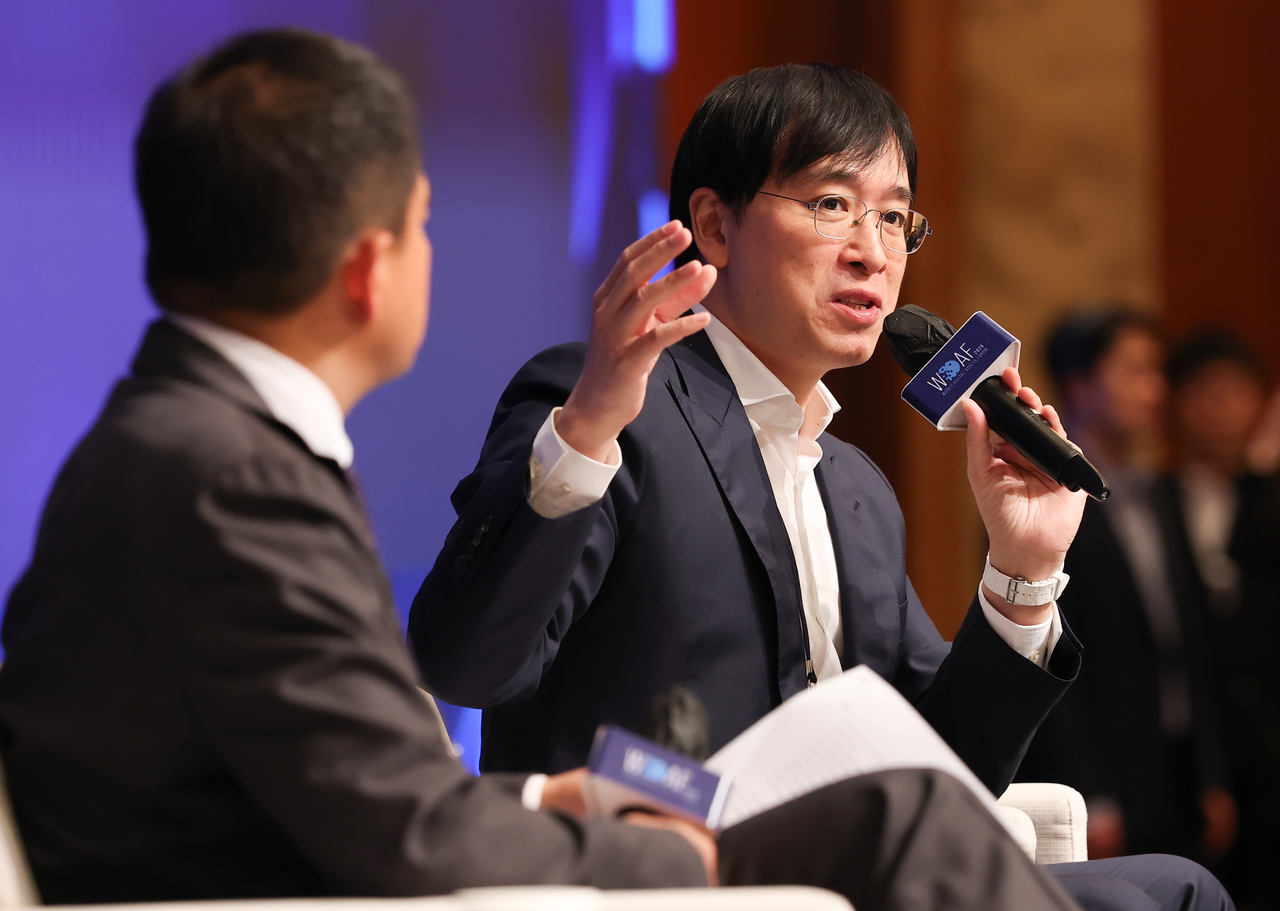
Allocating just 1 to 5 percent of a diversified investment portfolio to digital assets such as bitcoin can improve risk-adjusted returns over the medium to long term without a proportionate rise in volatility, according to an analysis presented at a major industry forum Monday.
Gerald Goh, co-founder and Asia-Pacific Chairman of Sygnum, made the case at the inaugural World Digital Assets Forum (WDAF), hosted by The Herald Business and The Korea Herald at Lotte Hotel Seoul in Sogong-dong. Speaking in a panel discussion on digital asset banking for private wealth, Goh outlined investment strategies and market outlooks for high-net-worth individuals and institutional investors. The session was moderated by Yoon Seung-jae, an attorney at Kim & Chang.
Sygnum is the world's first digital asset bank, having obtained a banking license from the Swiss Financial Market Supervisory Authority (FINMA) in August 2019. The bank currently serves more than 2,400 clients, primarily high-net-worth individuals and institutional customers, with assets under management exceeding $6 billion.
Asked about investment strategy amid growing uncertainty in the digital asset market, Goh said the current environment presents "a good opportunity to go back to basics." He said the most important principle is portfolio diversification, and that any strategy must start with a thorough understanding of a client's risk appetite, budget, investment horizon and capacity to absorb the volatility inherent in emerging asset classes.
"According to analysis by Sygnum and specialized research institutions, adding digital assets such as bitcoin at a 1 to 5 percent weighting to a diversified portfolio can lift overall returns while keeping the increase in volatility relatively contained," Goh said. He added that the Sharpe ratio — a measure of excess return per unit of risk — also improves under this allocation. The effect is premised on a medium-to-long-term investment horizon of three to five years.
Goh also highlighted the growing variety of ways to generate returns from digital assets. "There is no longer any need to rely solely on price appreciation," he said. Proof-of-stake tokens can generate yield through staking, he noted, while proof-of-work assets such as bitcoin offer additional avenues including basis arbitrage between spot and futures markets, cross-exchange arbitrage and lending.
Goh pointed to bitcoin's track record and diversification benefits as well. "Bitcoin has been the best-performing asset class in seven of the past 10 years," he said, adding that its correlation with equities over the past 12 months has ranged between 0.3 and 0.45 — lower than that of real estate or high-yield bonds. While greater institutional adoption has nudged its correlation with other assets somewhat higher, he said bitcoin still holds value as a diversification tool.
The investment motivations of high-net-worth individuals are also shifting. In a survey Sygnum conducted last year of 270 high-net-worth individuals across the Asia-Pacific region — including South Korea, Singapore and Hong Kong — 56 percent of respondents cited portfolio diversification and wealth preservation as their primary reasons for investing in digital assets. Seeking high investment returns ranked second.
"Clients no longer view digital assets as speculative instruments where they take on maximum risk in pursuit of 10x returns," Goh said. "Now they are thinking about how to allocate digital assets alongside other asset classes — equities, bonds, commodities and real estate."
Growing demand for wealth management services has also reshaped the bank's role. Over the past one to two years, Sygnum has expanded beyond executing client transactions into investment advisory and discretionary asset management. The shift is driven by demand for integrated management of not only digital assets but also fiat currencies and money market funds on a single platform.
"Not long after Sygnum launched, clients began asking for more services in one place," Goh said. "The day will come when clients can access both traditional financial products and digital assets through the same banks and brokerages they already use."
Goh also stressed the importance of institutional-grade financial infrastructure. "Even the best-constructed portfolio is meaningless if you lose your assets to hacking or to poor custody practices by a poorly regulated counterparty," he said. "Where possible, bank-level safeguards need to be in place."
On regulation, Goh said balancing investor protection with financial innovation is essential. "Given how rapidly the digital asset market is evolving, it is not easy to write rules that will still be valid three, five or 10 years from now," he said. "It is critically important for regulators and the industry to maintain an active and ongoing dialogue."
On South Korea's growth potential, Goh said the country has the capacity to leapfrog the trial-and-error that other markets went through over the past five to 10 years and build a more comprehensive digital asset wealth management ecosystem. "Once the regulatory framework becomes clearer, demand for products and services will be substantial," he said.

kyoung@heraldcorp.com