Boston Dynamics releases video of wheel-equipped Atlas on Monday
Wheels replace feet, enabling sprints, slides and 360-degree jumping spins
Experiment aims to stress-test actuators and verify AI control capabilities
Findings to be applied to standard Atlas ahead of 2028 factory deployment
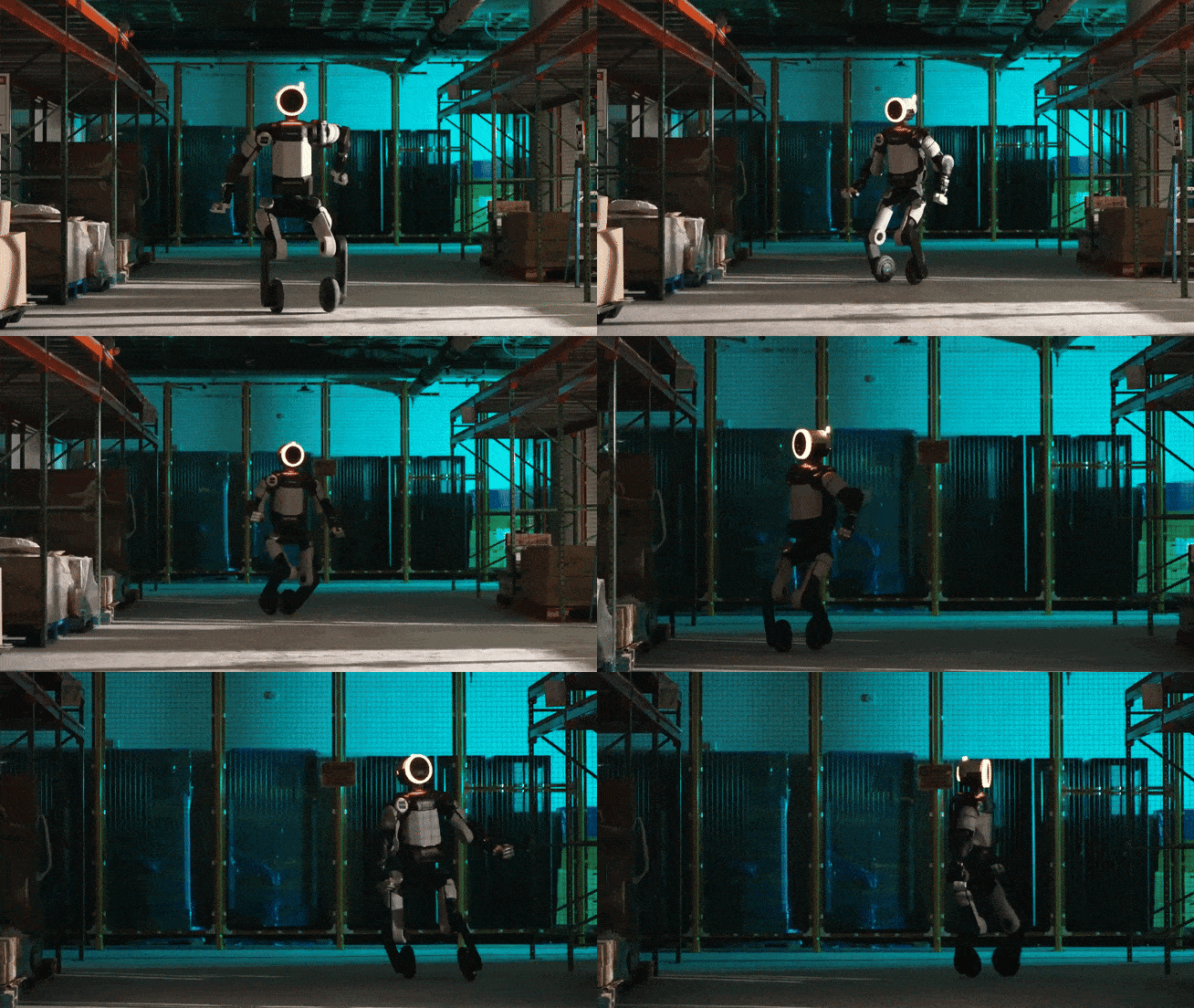
Atlas, the humanoid robot from Hyundai Motor Group, has traded its two feet for wheels — not to showcase a new mode of transport, but to push its actuators to their limits and test how precisely AI can control real-world movement.
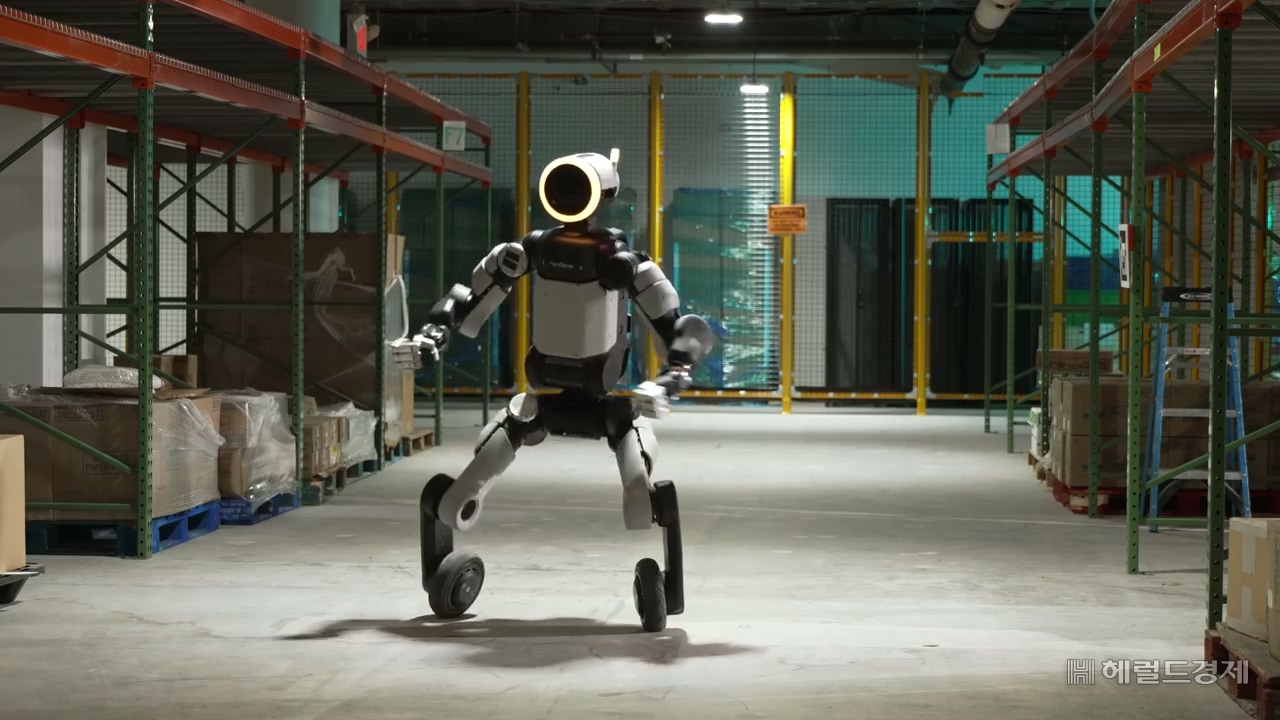
Boston Dynamics, the robotics subsidiary of Hyundai Motor Group, released a video Monday (local time) on its official YouTube channel and website titled "Atlas on a Roll."
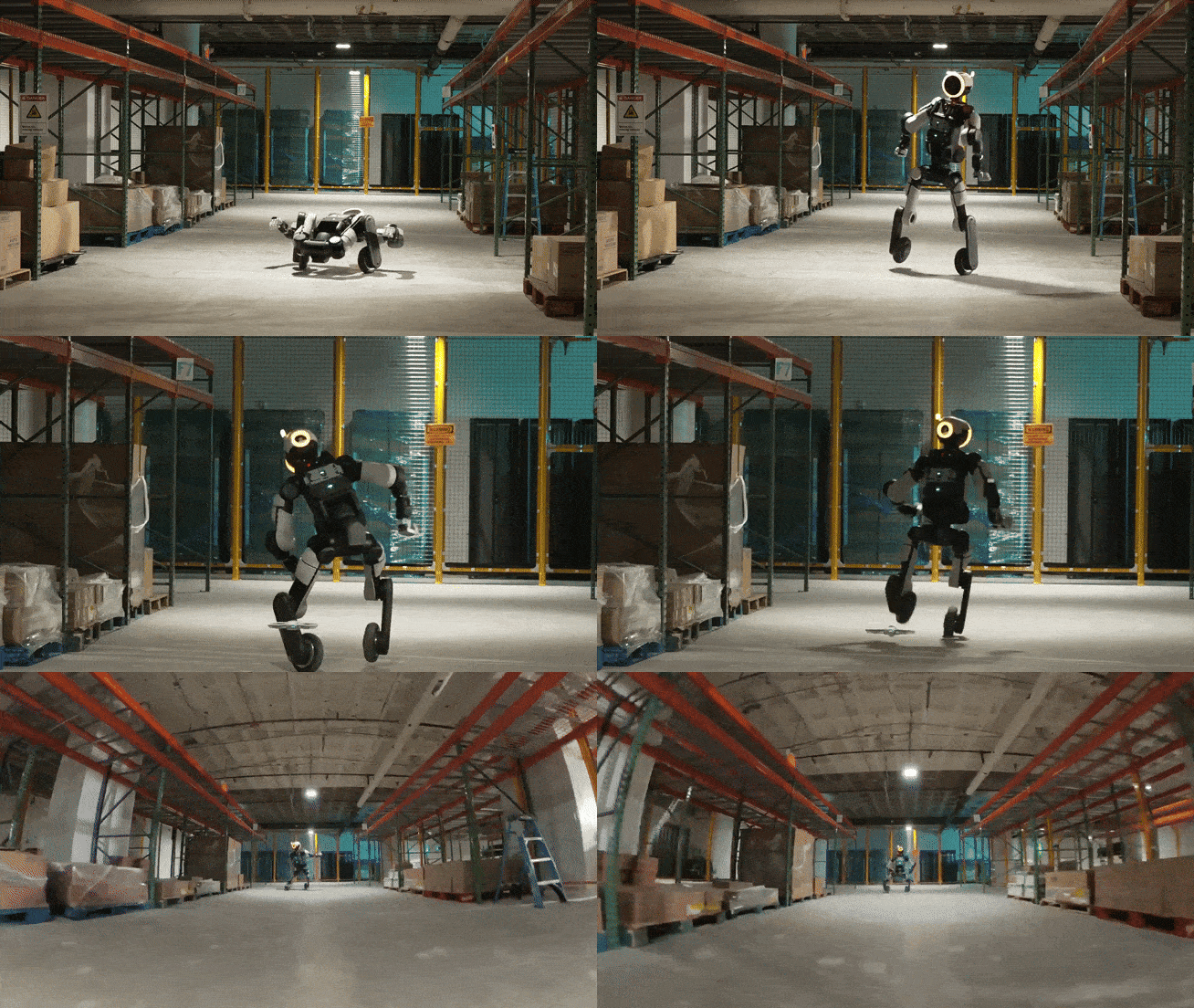
In the roughly three-minute clip, Atlas rolls on wheels mounted to both ankles in place of its usual feet, sprinting at speed before making sharp direction changes and gliding sideways. The robot dances on its wheels, then leaps from a standstill and spins its body a full 360 degrees.
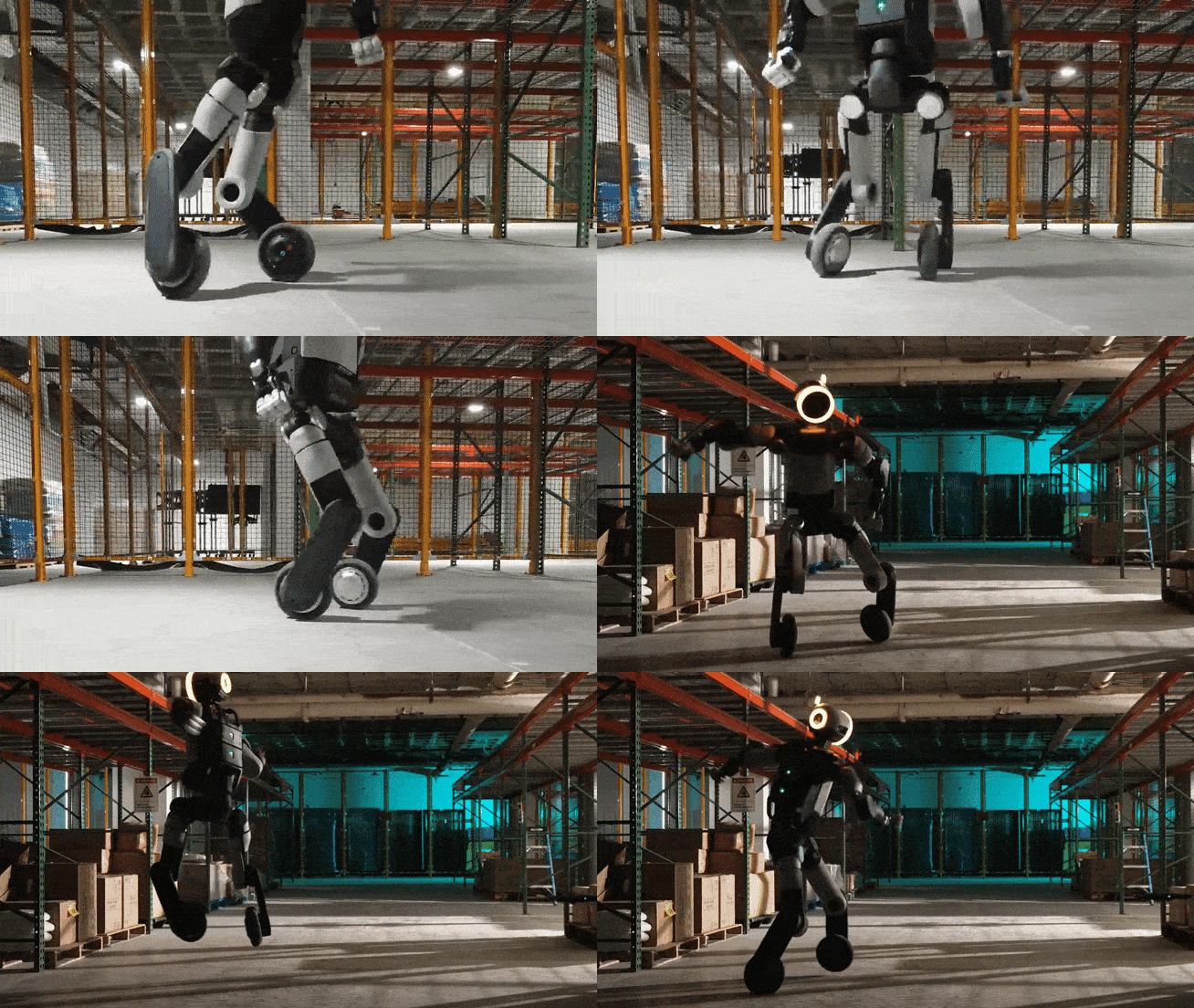
What makes the wheeled Atlas notable is that it required no major structural overhaul. Boston Dynamics simply attached commercially available scooter wheels to the existing ankle actuators. The only custom-made component was a single adapter connecting the wheels to the ankles.
Actuators are the core components that receive electrical signals and move a robot's joints, serving the same function as human muscles and joints. Boston Dynamics noted that using wheels places continuous high-speed, high-torque demands on the motors — allowing researchers to observe whether the actuators operate reliably even when pushed close to their performance limits through repeated starts, sudden stops and turns.
The experiment also focused on validating AI control technology, not just hardware.
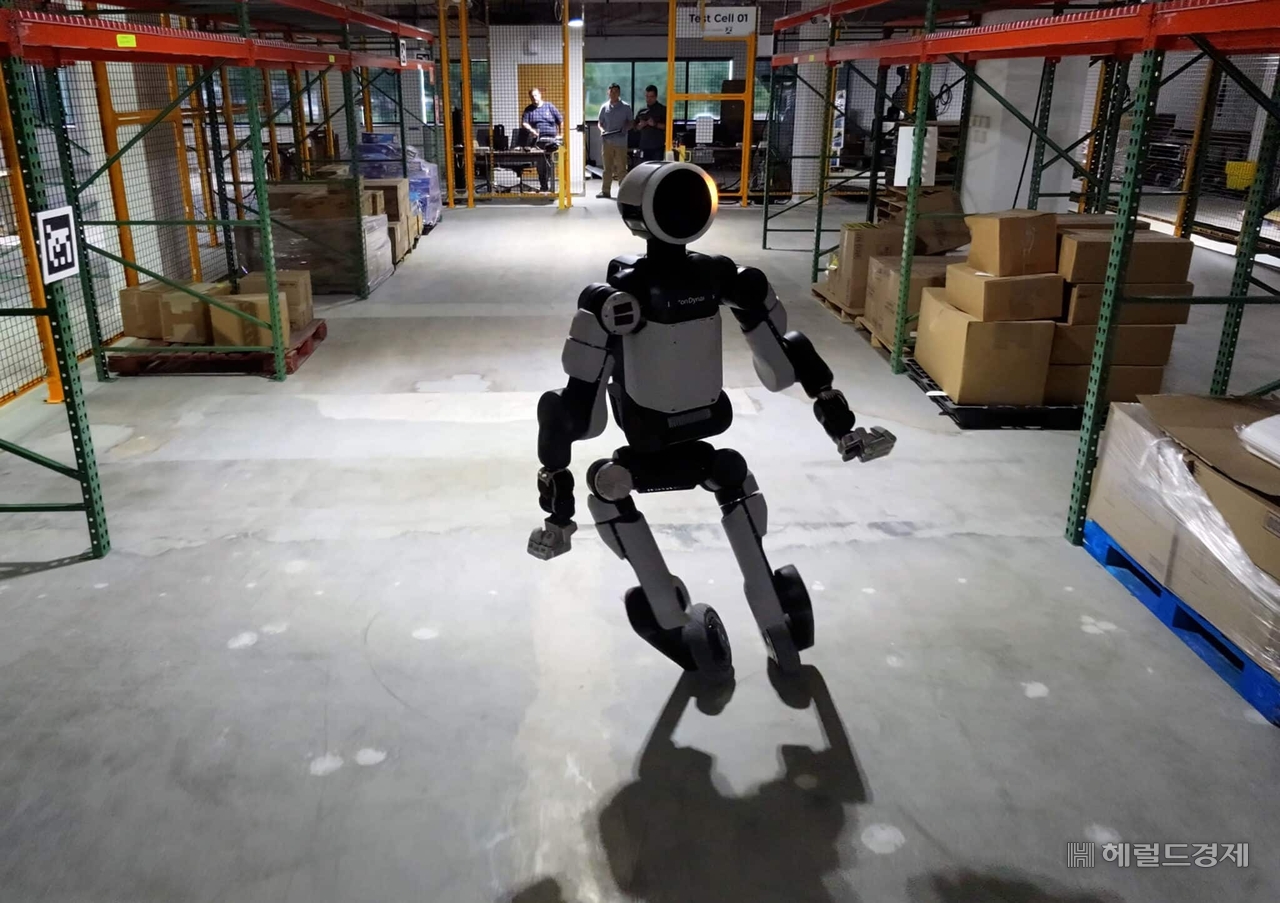
Boston Dynamics used a whole-body control system built on reinforcement learning, a method in which AI teaches itself optimal movements through repeated trial and error. Researchers trained the robot extensively in a virtual environment before verifying that the learned behaviors could be reproduced on the physical robot.
The sideways sliding motion, in particular, emerged from the AI learning to exploit the properties of wheels. The 360-degree jumping spin was trained using motion-capture data from human movement and succeeded on its very first attempt with the real robot.
"The wheels themselves were not the point of this experiment," Boston Dynamics engineer Andy Wu said. "The core goal was to push the actuators to their performance limits."
Boston Dynamics drew a clear line, however, saying the wheeled Atlas is not a new product intended for commercialization. The company described it as a research test platform designed to improve the robot's performance and reliability, given that real-world environments present situations that are difficult to predict or replicate in a laboratory.
The actuator and AI control improvements confirmed through this experiment are already being applied to the standard two-legged Atlas. The goal was never to build a wheeled robot, but to make the existing humanoid's movements more precise and stable.
Hyundai Mobis is accelerating development of the key actuators destined for Atlas. At its third-quarter earnings conference call on Oct. 30, the company said it would begin producing prototype actuators for Atlas at its research center in Uiwang, Gyeonggi Province, this month. It plans to verify performance and reliability with a target of supplying the components by 2028.
Boston Dynamics plans to further develop its AI control technology so the robot can adapt even when actuator failures occur. The ability to handle unexpected situations is critical for stable operation in environments with many unpredictable variables, such as actual factory floors.
Hyundai Motor Group plans to deploy Atlas at Hyundai Motor Group Metaplant America in the US state of Georgia from 2028, initially assigning it sequencing tasks — sorting and positioning parts in the correct order for assembly. From 2030, the scope is set to expand to include parts assembly processes.
kwater@heraldcorp.com