Reunited with Marin Alsop from Thursday through Monday, the pianist performed Rachmaninoff's Third with the Philadelphia Orchestra across five consecutive nights, capping the run at Lotte Concert Hall
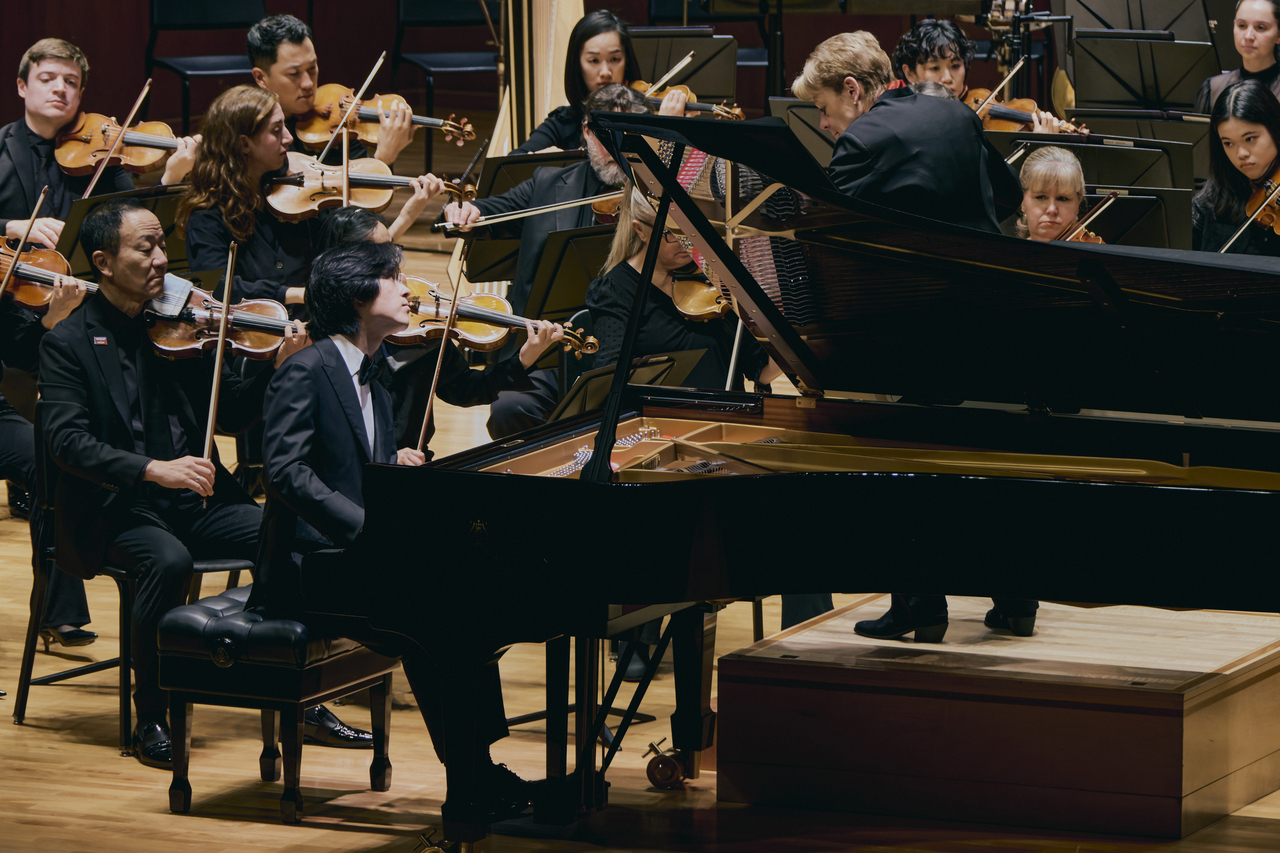
The notes flowed with effortless grace. Four years ago, his touch struck the keys like a comet marking its coordinates in a distant universe — ferocious, incandescent. Now that same force had settled into something far more inward and remote. Like a first step onto a late-autumn path not yet touched by sunlight, the piano's opening note seeped cautiously into the air. His hands moved with such suppleness that they scattered the notes like wind, then gathered the drifting fragments of melody back into a single, coherent narrative. As those wayward notes found their direction, Lim was writing his own margins into the dense score of Rachmaninoff.
Four years have passed since the Van Cliburn International Piano Competition. The white-hot flame that blazed from an 18-year-old has deepened into a light that illuminates the transparent inner world of a young artist.
Pianist Lim Yunchan and the Philadelphia Orchestra under conductor Marin Alsop gave five consecutive performances together, beginning Thursday and concluding Monday at Lotte Concert Hall. The run followed three performances in Philadelphia from Oct. 29 to Oct. 31, making it eight appearances in all on both sides of the Pacific. News that Lim would perform Rachmaninoff's Piano Concerto No. 3 — a work that tests a pianist's stamina and concentration with its relentless density — night after night drew expressions of concern from fans.
Lim answered those concerns with the artistic conviction of Paul Cézanne, who painted Mont Sainte-Victoire again and again and found a new landscape each time. Even climbing the same mountain every day, the light and the air are never the same. His hunger for music surpassed any physical fatigue, and through the final performance, Lim, Alsop and the Philadelphia Orchestra drove the long narrative forward without wavering.
The collaboration was a stage classical music fans had long wanted to see. At the 2022 competition final, Alsop wiped away tears immediately after Lim's explosive performance — an image that left a powerful impression on the global music world. After the last note of Rachmaninoff's Piano Concerto No. 3 faded, the conductor's tears became an indelible symbol of what the performance had left behind.
Four years on, Alsop was no longer a jury chair but a full partner, giving Lim's artistry the freedom to soar. The two had already performed the concerto together at the Bravo! Vail and Ravinia festivals in the United States in 2023, but this was the first time they shared a stage in Korea. The pairing with the Philadelphia Orchestra — an ensemble Rachmaninoff himself held in special affection during his lifetime — conjured a scene from music history in its own right.
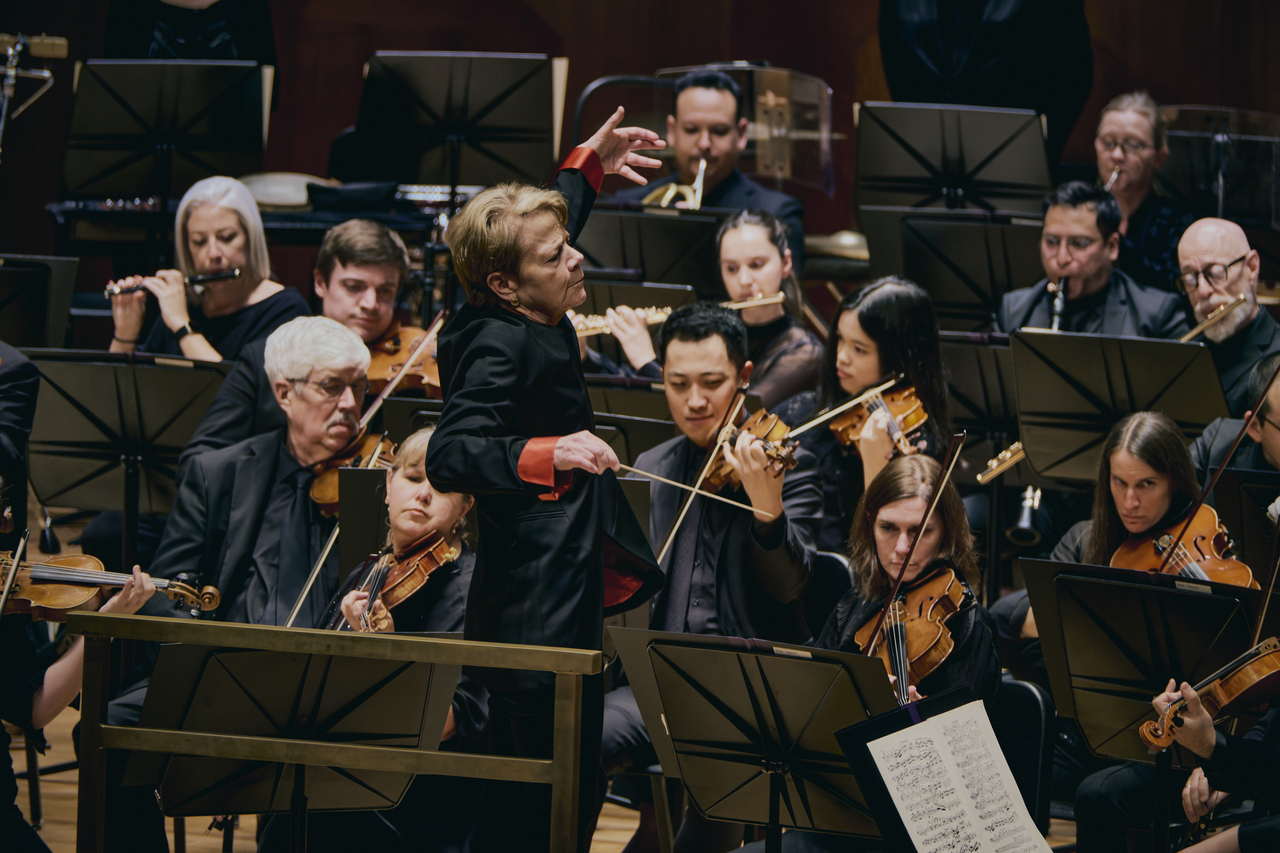
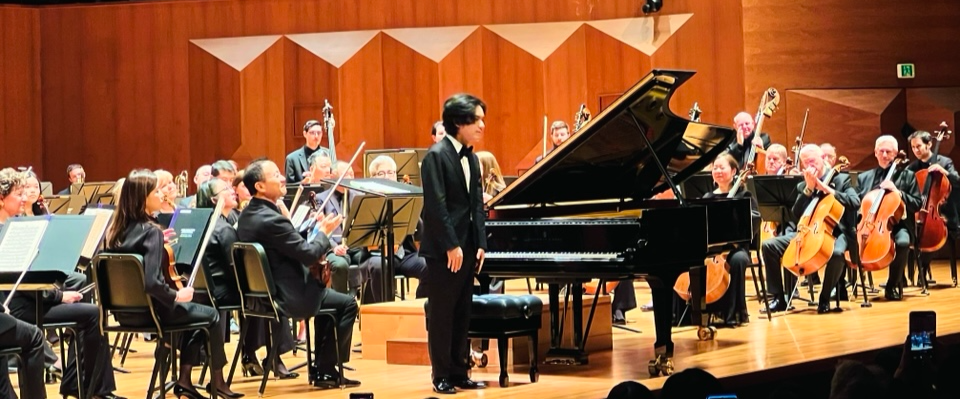
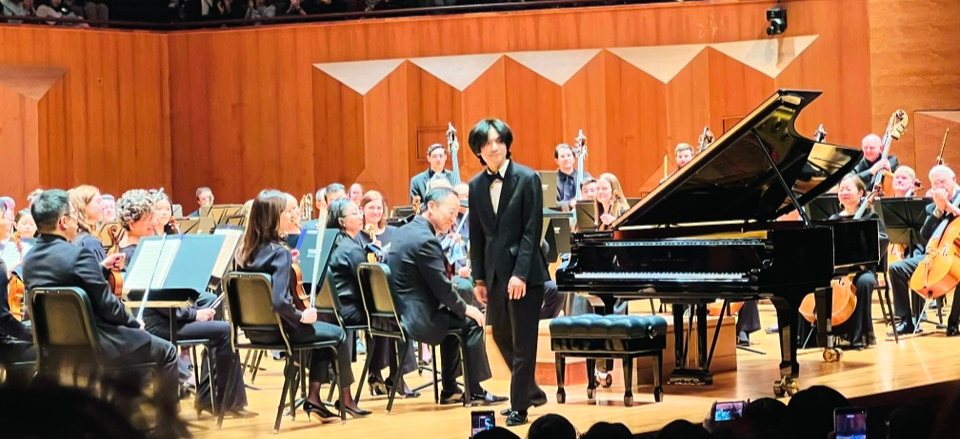
Saturday at Seoul Arts Center Concert Hall. The auditorium was packed to the point where an empty seat was hard to find — only the occasional gap where latecomers, caught in weekend traffic or the venue's notorious parking shortage, had yet to arrive. Audience members of every age and background filled the hall, and from the very temperature of the house it was clear: Lim commands a fandom that rivals any idol group.
Yet on stage, Lim showed no awareness of the crowd's adoration. He gave himself entirely to the music's fleeting moments of birth and dissolution. He was not a performer content to reproduce the notes on the page; he was an explorer, tracing in real time where that evening's music would lead.
Rachmaninoff's Piano Concerto No. 3 is like a thick, sprawling novel. Its three movements carry different landscapes but breathe as one long arc. The melody that begins in exposition builds through development, accumulating tension and conflict, until the final movement arrives at a vast explosion and release. Lim's performance rendered the work not as a display of technique but as the journey of a single person passing through the depths of the self and finally stepping into the light.
In the first movement, the keyboard opened the door to the abyss with careful restraint. Rachmaninoff introduces his first theme not with dazzling virtuosity but as if tracing a worn memory. Lim seemed to understand that intention completely — he did not rush the notes forward. He savored the resonance of each one fully while never losing the organic flow of the whole. The piano's tone was transparent as glass, yet carried within it a deep, abiding shadow.
The music gradually expanded. When the orchestra took up the melody and carried it forward, the piano stepped back, then returned to reclaim its voice. Lim's hands sometimes grazed the keys as if in passing; at other times they pressed deep, reaching the very floor of the sound. The dynamic range was wide, but the shifts were never showy. Even the smallest note carried weight, and even within the grandest chords the outline of the melody never blurred.
At the first movement cadenza — the concerto's great watershed — the music reached a dramatic turning point. Lim chose the original cadenza, as he had at the Van Cliburn Competition. Unlike the ossia version, which showcases the piano's raw power through massive chords, the original cadenza builds tension through lighter, more agile movement.
But lightness did not mean light music. Even amid the rapidly scattering notes, Lim anchored the music with a weighty bass. The layered voices never lost their individual contours, and the structure of the music remained clear even within the most complex figurations. Where brilliant technique had passed, what remained was a solid musical skeleton.
As the cadenza subsided and the flute took up the theme, the piano draped the wind instrument in a dreamlike play of light and shadow, rendered in a barely-there pianissimo that seemed on the verge of dissolving. The piano's tone was as light and delicate as a harp. It was as though the notes that had exploded moments before had vanished without a trace, and the keyboard was breathing quietly once more.
Alsop kept her gaze turned toward the piano, carefully matching each breath. Even with minimal movement of the baton, the orchestra absorbed the piano's subtlest shifts in tempo. It was a moment that recalled the heat of the competition final four years ago — and yet these performances were no mere reenactment of the past. Rather than rekindling that old flame, the two were making new music from the warmth it had left behind.
With the second movement Intermezzo, the stage took on an entirely different color. As the strings' grief-laden melody wrapped the hall like thick fog, the piano answered softly, reaching for the intimacy of chamber music. Lim's supple rubato — the technique of freely stretching and compressing tempo according to the performer's instinct — imposed no forced interpretation. It simply invited the listener to linger, naturally, within the landscape of melancholy.
When the orchestra paused to breathe, the piano filled the empty space; when the keyboard stepped back, a dense carpet of strings spread beneath. The piano stood out without ever sticking out. The two instrumental forces matched each other's pace and stride — interlocking like well-fitted gears, fitting together like puzzle pieces completing a single picture, without a single gap.
Alsop's conducting, absorbing Lim's every subtle breath, was exquisitely attentive. When the piano stretched the tempo, the orchestra received that space intact; when the keyboard receded, the ensemble found room to unfurl its melody. Yet that very attentiveness occasionally allowed the music's tension to slacken. In concentrating so closely on following the piano's breathing, the Philadelphia Orchestra's rich sonority and dramatic momentum did not always fully assert themselves. The care lavished on the piano left a faint, lingering wish that the orchestra's own presence had been pushed a little further.
That thought, however, did not linger long. Attacca — the second movement ending without pause and plunging directly into the third — transformed the stillness in an instant into a battlefield where primal energies collided.
Each time Lim's left foot stamped the stage floor in time with the furious rhythm, a thunderclap burst from the keys. The piano was an engine driving a ferocious storm. Even through the lightning-fast leaps, the melodic direction surged forward with relentless force. Lim did not rely on sheer volume alone. In the midst of the violent keystrokes, he never lost the rhythmic center, and even among the exploding notes he preserved tension and space.
At last the orchestra, too, summoned its full momentum, as if throwing a final fastball. Waves of strings rolled in, and the winds laid a vast resonance over them. Piano and orchestra did not swallow each other; they moved as a single current, each amplifying the other's energy. They fused into one radiant mass of light, releasing a catharsis of liberation. Throughout all three movements, Alsop kept each instrumental section distinct while never letting the overall balance collapse. Only then, looking back, did her conducting — which never let any instrument lose its native color even in the most hushed passages — reveal its full depth.
The finale of Rachmaninoff's Third was a place of liberation reached at the end of a long journey. The solitary melody found new meaning within the vast resonance of the orchestra. The music that had begun on a late-autumn walk passed through thunder and storm and finally touched a clear sky. Lim's Rachmaninoff No. 3 was a complete story — exposition, development, crisis, climax and resolution. His ending was not a period that closes firmly and turns away. It was an open ending that made you want to go back to the beginning.
Within the coda's D-major chords, piano and orchestra did not consume each other but fused into a single brilliant light, releasing a catharsis of liberation.
The standing ovation that followed gave way to an encore: the second movement of Mozart's Piano Sonata No. 8. The Mozart that settled into the space swept clean by thunder was achingly spare and luminous. After the passion of Rachmaninoff, Mozart did not seem diminished. If anything, it sang of a pure, effortless simplicity that only someone who has passed through extremity can reach.
If the Rachmaninoff four years ago in Texas was a flame that seemed ready to burn everything to ash, this performance was the brilliant shaft of light left behind after that fierce flame had purified itself. He had grown deeper, more supple, and capable of saying more while saying less.
The 22-year-old pianist who climbs the same mountain every day and finds a new landscape each time did not retrace the glories of his past. The musical horizon he is still charting has no visible end. Lim's Rachmaninoff No. 3 offered vivid proof of who Lim Yunchan is now — and a glimpse of who he is yet to become.
shee@heraldcorp.com