Ages 15–34 also down for 32nd straight month, led by declines in IT and manufacturing; 71% of overall membership growth driven by workers 60 and older; unemployment benefit budget 90% spent through October, with 500–600 billion won more needed
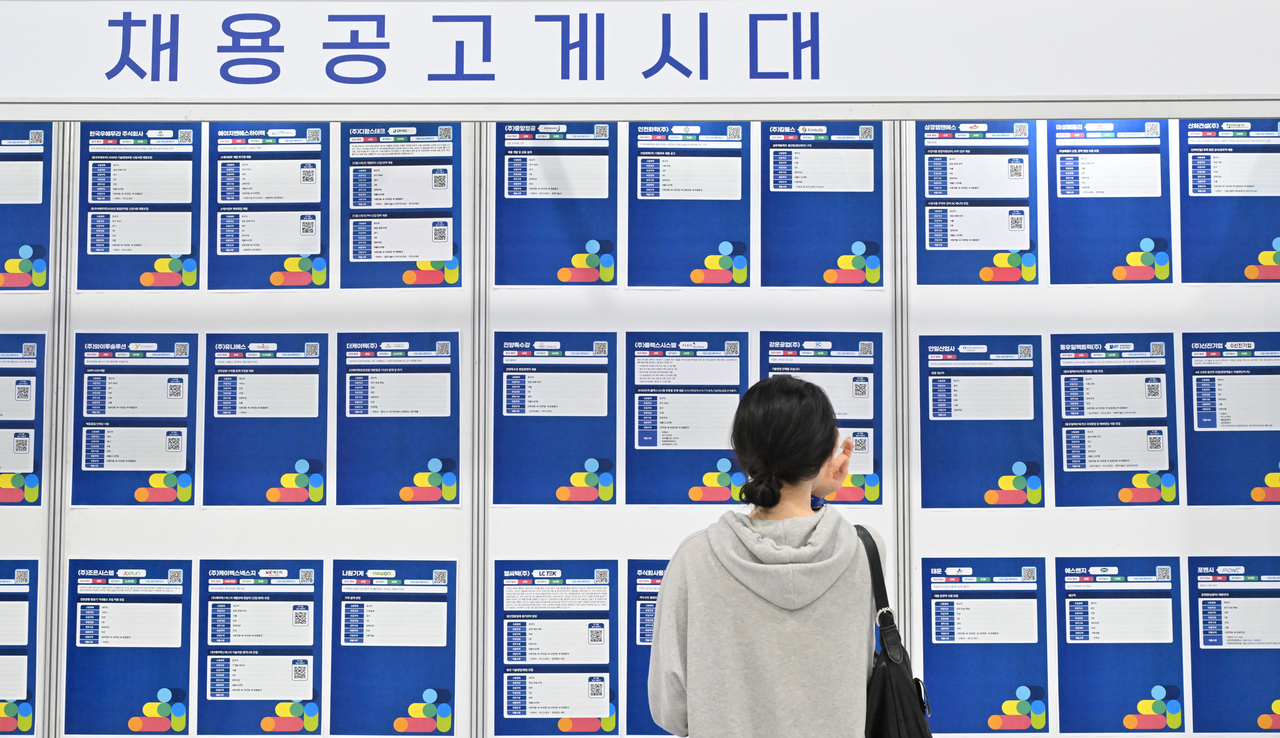
The number of workers aged 29 and under enrolled in employment insurance fell for the 50th consecutive month in October, marking the longest such streak on record. Among those aged 15 to 34, enrollment also declined for the 32nd straight month. While the pace of decline among workers under 30 narrowed slightly from the previous month, the drop widened when the 30–34 age group was included.
According to the Ministry of Employment and Labor's October labor market report released Monday, the number of workers aged 29 and under with active employment insurance stood at about 2.203 million at the end of October, down 54,100, or 2.4 percent, from a year earlier. The year-on-year decline narrowed by 600 from September's 54,700. Jo Won-sik, head of the ministry's future employment analysis division, said under-30 enrollment had fallen for 50 consecutive months, the longest streak ever recorded.
Decline widens for ages 15–34; IT sector alone loses 15,000
The ministry began tracking enrollment statistics for the 15–34 age group this month in line with a revised definition of youth under the Special Act on Promoting Youth Employment. In October, about 4.184 million workers in that age range were enrolled, down 15,100, or 0.4 percent, from a year earlier. The decline widened by 4,800 from September's drop of 10,300, largely because the year-on-year increase among workers aged 30 to 34 shrank from about 44,400 in September to about 39,000 in October.
Among workers aged 15 to 34, enrollment fell by 15,000 in the information technology sector and by 10,000 in manufacturing. Overall IT sector enrollment also dropped by 1,000, extending a losing streak to eight consecutive months. The ministry said the spread of AI has shifted demand for software developers, widening the enrollment decline in the publishing industry, which includes software development and supply firms.
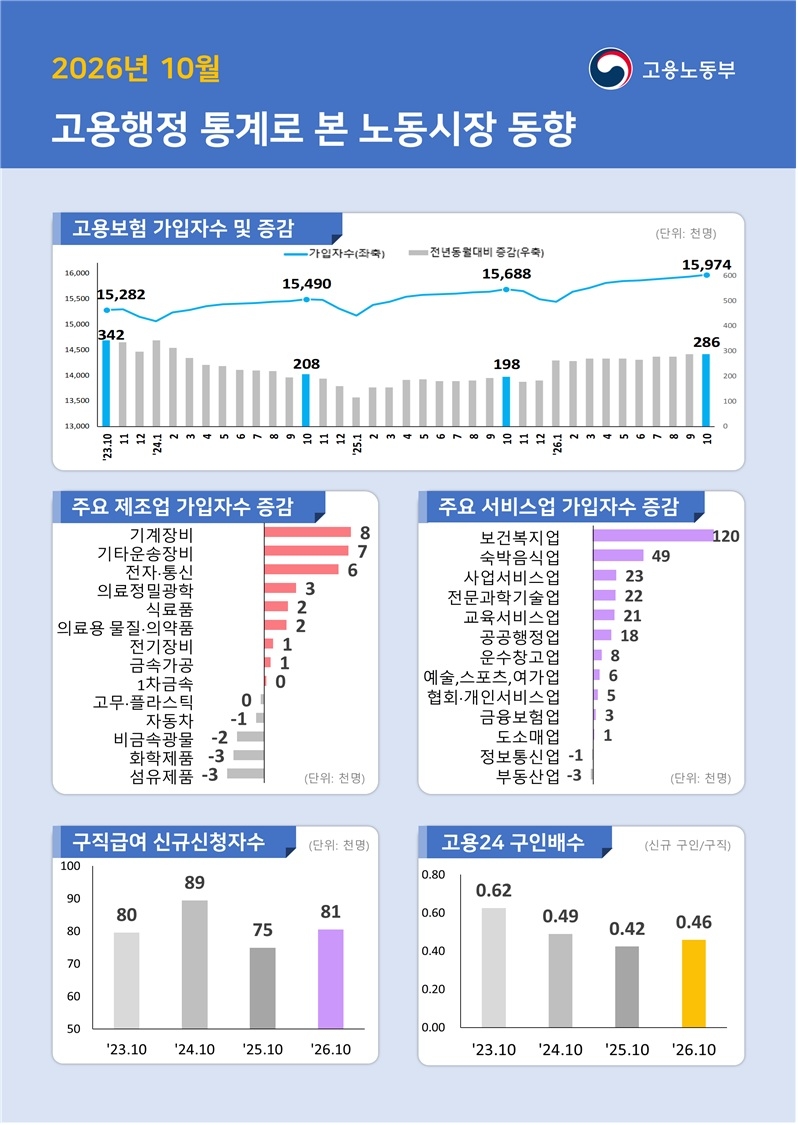
Total active employment insurance enrollment reached about 15.974 million, up 286,000, or 1.8 percent, from a year earlier. Workers aged 60 and older accounted for 204,200 of that gain, or about 71 percent of the net increase. Workers in their 30s added 90,800 enrollees, extending their streak of growth to 62 consecutive months. The service sector grew by 276,000, led by health and welfare industries, which added 120,000. Construction fell by 5,200, marking its 39th consecutive monthly decline.
Manufacturing enrollment stood at about 3.858 million, up 14,000 for a third straight month of growth. Excluding mandatory enrollees under the Employment Permit System for foreign workers on E-9 and H-2 visas, manufacturing enrollment also turned positive, swinging from a decline of 4,000 in September to an increase of 2,000 in October. Jo said semiconductors and shipbuilding drove the manufacturing gains. Semiconductor manufacturing added 7,900 enrollees, while the shipbuilding and boat construction sector added 5,400.
Unemployment benefits exceed 1 trillion won for 8th straight month; year-end funding gap looms
Unemployment benefit payouts in October reached 1.0025 trillion won ($738 million), down 46.8 billion won, or 4.5 percent, from a year earlier, but still exceeded 1 trillion won for the eighth consecutive month since March. Cumulative payouts from January through October totaled 10.35 trillion won, equal to 90 percent of the annual budget of about 11.5 trillion won. A ministry official said the government would need to revise its fund management plan to secure an additional 500 billion to 600 billion won to cover payouts through year-end.
New unemployment benefit applications in October totaled 81,000, up 6,000, or 7.5 percent, from a year earlier, while the number of recipients fell by 4,000, or 0.7 percent, to 571,000. New job postings through the government's Employment24 platform rose 16.2 percent to 165,000, and new job seekers increased 7.4 percent to 360,000. The job-openings-to-applicants ratio — the number of available positions per job seeker — improved to 0.46 in October from 0.42 a year earlier.
fact0514@heraldcorp.com