A field report from Korea Energy Terminal in Ulsan's Nam-gu
Built as a joint venture between SK Gas and Korea National Oil Corp.
First terminal in South Korea to operate oil and LNG on the same site
In operation since 2024; has handled 55 LNG carrier calls
Ulsan Port completed world's first ammonia bunkering demonstration in April
'Proactive investment in green fuel infrastructure key to port competitiveness'
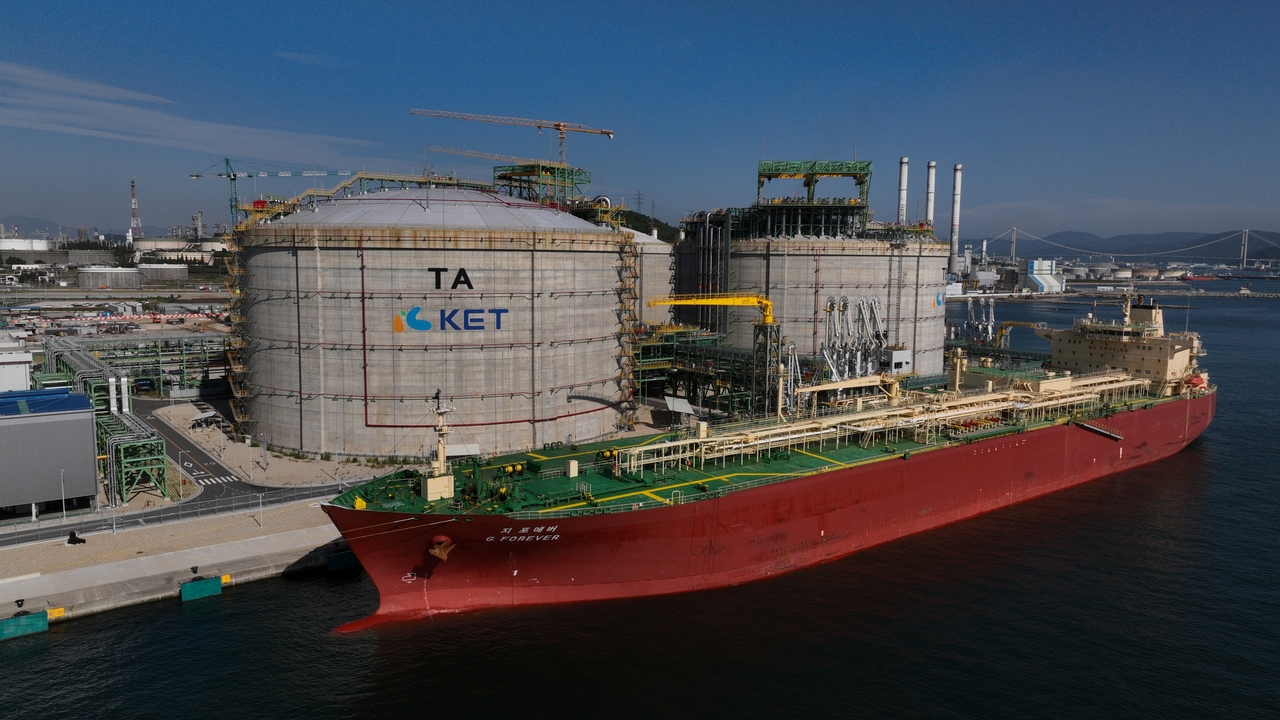
Arriving at Korea Energy Terminal (KET) in Nam-gu, Ulsan on Thursday, a visitor is immediately struck by three massive LNG tanks looming over the waterfront. Each tank measures 90.6 meters in diameter and 54.7 meters in height — larger than Jangchung Gymnasium, which stands 80 meters across and 26 meters tall. A web of pipelines surrounds the tanks, carrying stored LNG to nearby power plants.
KET was built as a joint venture between SK Gas and Korea National Oil Corp. SK Gas holds a 47.6 percent stake and Korea National Oil Corp. holds 52.4 percent. The Ulsan Port Authority provided the site and infrastructure.
The terminal comprises three LNG tanks with a combined storage capacity of 645,000 kiloliters and 12 oil tanks capable of holding 270,000 kiloliters. It is Ulsan's first LNG terminal and the first in South Korea to operate both oil and LNG on a single site. Total investment in the facility reached 1.2 trillion won ($884 million).
"KET originally started as an oil products terminal project, but we added LNG to the scope in 2019 in line with the shift in the energy paradigm," a KET official said.
KET has been in full operation since 2024. Since then, the terminal has handled 342 oil product vessel calls and 55 LNG carrier calls, cementing its role as a hub in Ulsan Port's push to become a green energy logistics port.
Ulsan Port is pursuing a range of projects to reinvent itself as a green fuel hub. In April, it carried out the world's first ammonia bunkering demonstration. In 2023, it successfully supplied 1,000 tons of green methanol to a 2,100-TEU container vessel operated by Maersk. Next year, the port plans to conduct LNG bunkering in partnership with SK Gas.
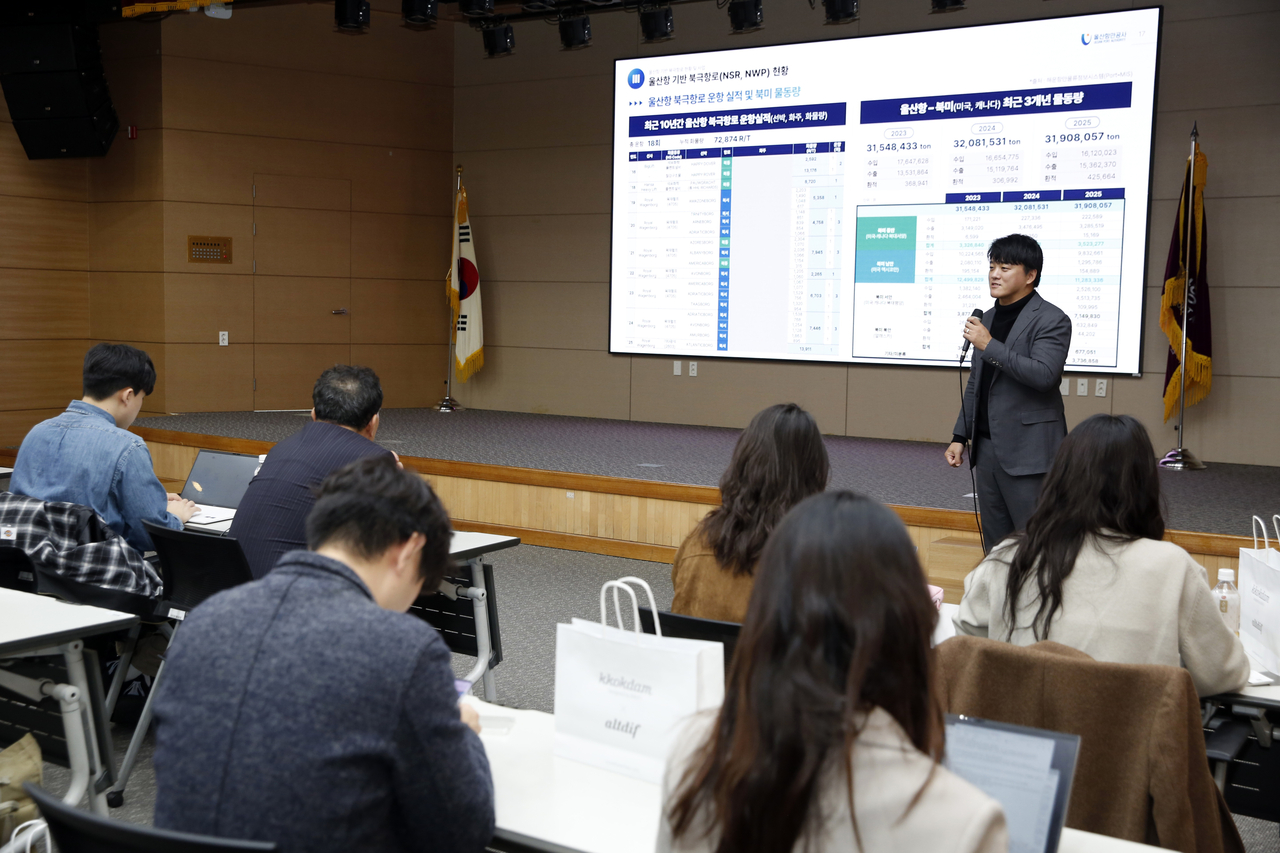
"Unlike Ulsan, other ports have no experience with green fuel bunkering," Kwak Nam-hun, a senior official at the Ulsan Port Authority's green energy division, said at a press briefing at UPA headquarters on Friday. "The director-general of the Maritime and Port Authority of Singapore even visited Ulsan Port to assess our ammonia bunkering capabilities."
Ulsan Port also plans to build a green hydrogen logistics hub — a storage and distribution terminal for imported green ammonia — and to develop the country's largest commercial tank terminal cluster.
UPA's focus on green energy stems from expectations that decarbonization regulations will drive growing demand for LNG, ammonia and other alternative fuels. Under International Maritime Organization rules, shipping companies will face a carbon levy of up to $480 per ton of greenhouse gas emissions above the permitted threshold starting in June 2028, giving carriers a strong financial incentive to switch to cleaner fuels.
"Shipping accounts for 3 percent of global greenhouse gas emissions — equivalent to the seventh or eighth largest emitting country in the world," Kwak said. "The direction toward reducing carbon emissions is clear, so shipping companies will have to respond to regulations one way or another."
"There are concerns that the IMO's net-zero plans have been set back by opposition from the US government," Kwak added, "but to strengthen port competitiveness, we need to proactively build green fuel infrastructure."
This article was produced with support from the Korea Ocean Foundation and the Korea Marine Journalists Association.
yeongdai@heraldcorp.com