A family leather craft legacy dating to a 1930s Gyeongju cobbler shop
Jung Yun-ho exhibits 'Breath of a Craftsman' at Insadong showcase, mentors next generation
"The first version was not this beautiful. It is a product that emerged after dozens of rounds of refinement and attention to detail."
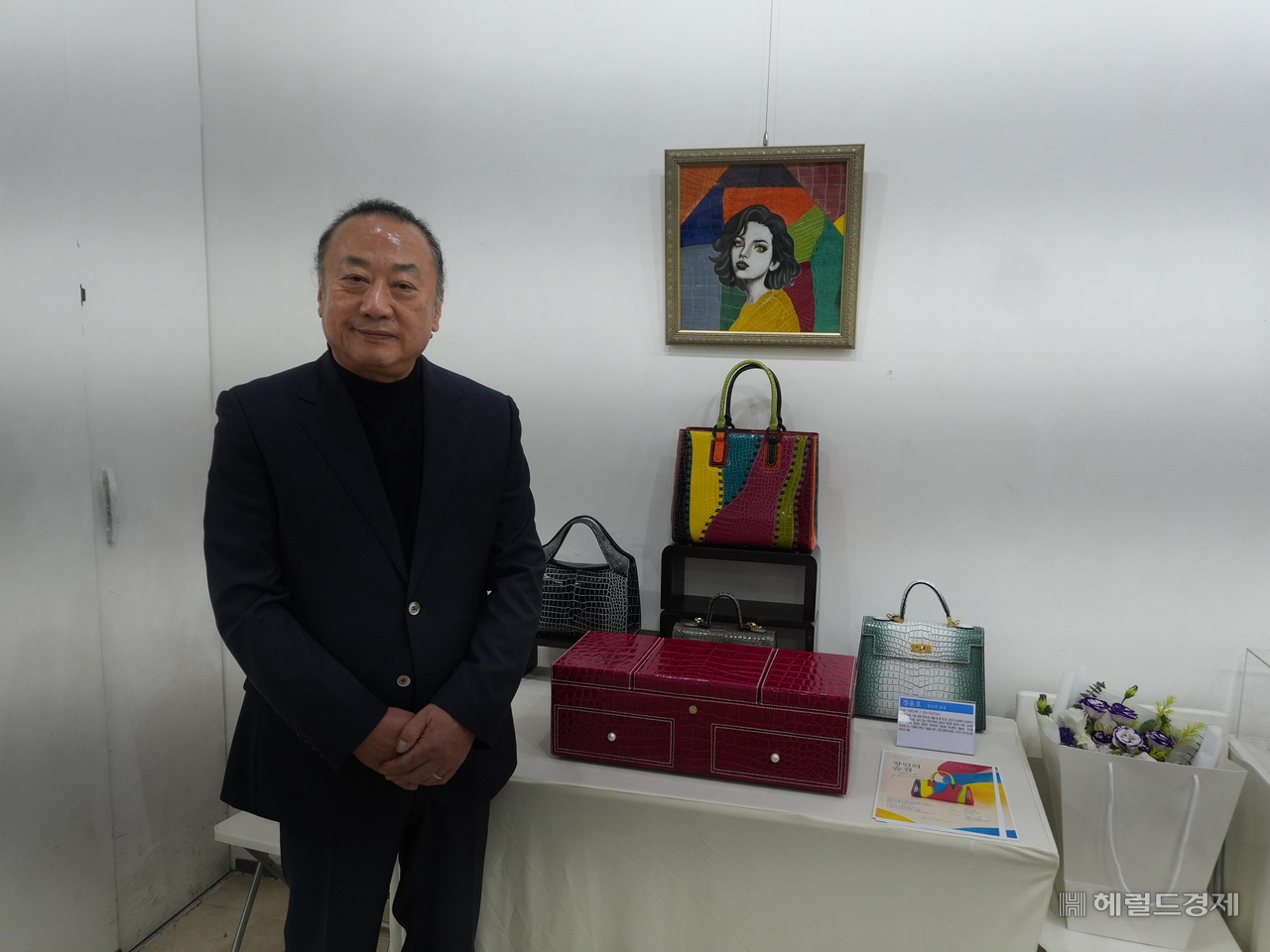
Jung Yun-ho, CEO of Hwikwon Yanghang and operator of the leather goods brand Homiga, made the remarks in an interview at the 2026 Korea Traditional Crafts Inheritors Annual Exhibition, held at the Korea Art Museum in Insadong, Jongno-gu, Seoul, where he presented his entry, "Breath of a Craftsman." The work, which he began more than 30 years ago, has taken its current form through repeated rounds of shaping and refinement.
Jung's leather craft is deeply tied to his family's shoemaking tradition. His paternal uncle, Jung Seong-man, began working with leather and making shoes at a Gyeongju cobbler shop called Dwaejiyangwhajeom in the 1930s. Jung grew up watching that work from an early age and learned leather processing techniques from his uncle.
Building on those family-taught skills with experience gained on the workshop floor, Jung expanded the range of materials and products he handled. He mastered the properties and processing methods of specialty leathers, moved into handmade bag production and exports, and obtained a patent for a method of processing crocodile leather — all while continuing to research techniques and refine his products in actual production.
His work has extended overseas as well. Jung operates a business in Japan in addition to his domestic operations. Alongside building production and sales experience at home and abroad, he has also worked to pass his skills on to younger craftspeople.
His exhibited crocodile leather bag, "Breath of a Craftsman," reflects years of revision. Jung said he did not stop at the original form but refined individual details dozens of times. At the exhibition, he walked visitors through the adjustments made from the earliest version to the present, showing the piece in person.
Jung also spoke about the bag's weight and practicality, not just its appearance. Holding up another piece, he said, "This is one of the products I have made — it is very light and practical." He also introduced a piece designed to hold jewelry, explaining how the form and construction vary depending on the intended use.
A collaboration with a pop art painter illustrates how Jung has broadened the expressive range of leather craft. According to Jung, the artist saw one of his bags and proposed working together, leading to a piece called "Eyes of the Crocodile," which combines a human face with the eyes of a crocodile.
"The artist saw this work and said they wanted to collaborate with us," Jung said. "We put the eyes of a crocodile on the face." The piece merges the material qualities Jung employs in bag-making with the visual perspective of an artist from a different field.
Jung continues to pass his experience on to the next generation. He has taken part in skills training and mentoring for younger craftspeople and young entrepreneurs. In 2025, he was named a Seoul Master Craftsman in the handmade shoes and bags category.
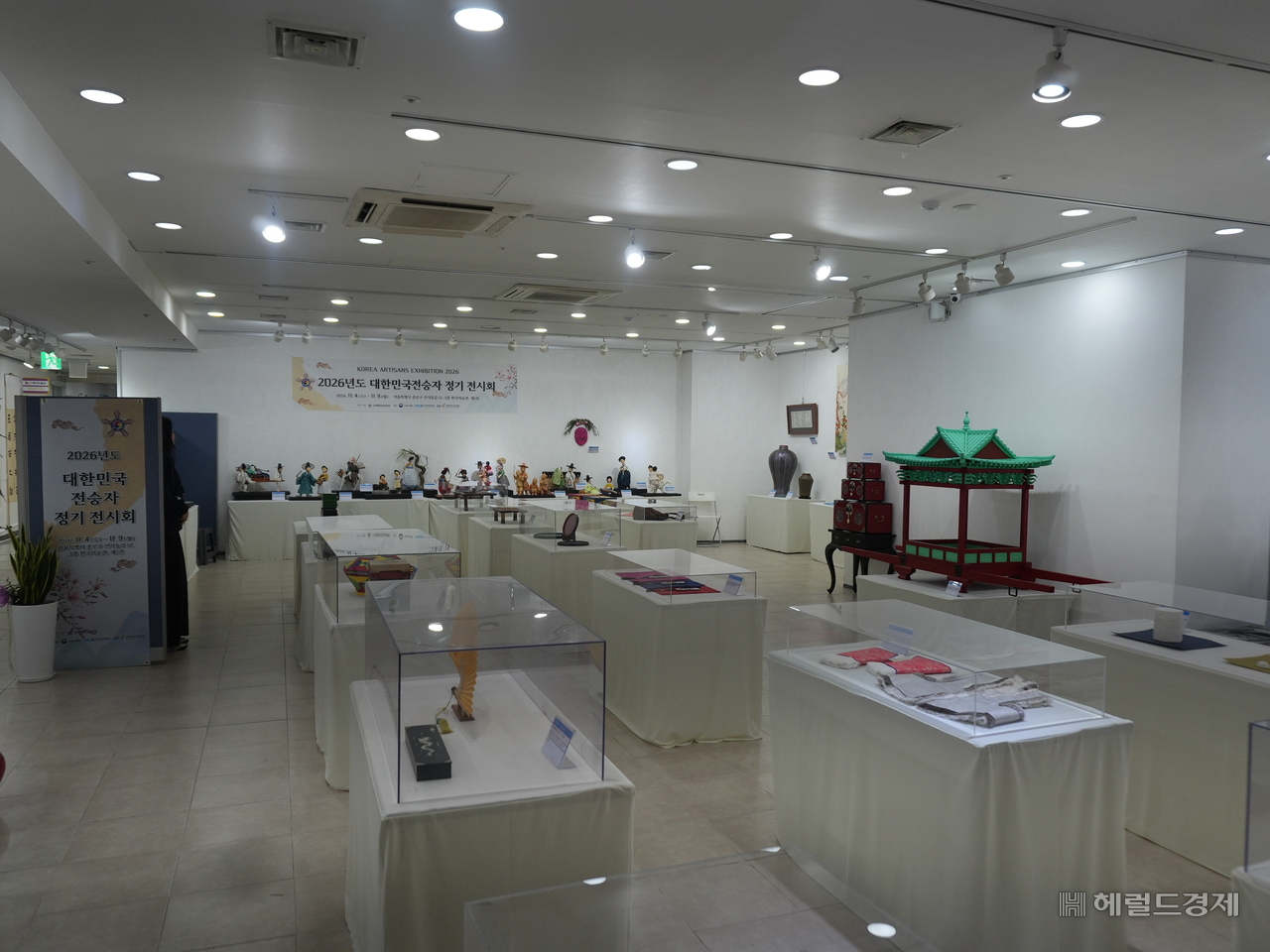
The exhibition, organized by the Korea Traditional Crafts Inheritors Association, brought together works spanning leather craft, woodworking, metal fittings, dyeing, rush weaving, hanji craft and lacquerware. By presenting pieces by inheritors, successors and certified practitioners side by side, the show offered visitors a window into the techniques and transmission processes of each discipline.
Choi Mi-hwa, the association's managing director, led on-site commentary, explaining the materials and techniques behind metal fittings, colored-thread quilting and fishskin craft. Her explanations went beyond the finished surfaces to illuminate the properties of the materials and the handwork involved, helping visitors understand not just what they were looking at but how each form came to be.
Running through the exhibition was a sense of the time and experience accumulated behind each finished piece. Just as Jung described refining the shape of a single bag dozens of times, the details of each craft object carried the weight of repeated work and revision. Seeing works from different disciplines together in one place offered a chance to look again at everyday objects through the lens of materials, technique and the maker's hand.
The exhibition showed that transmission is not only about preserving techniques but about ensuring they continue to be used by the next generation of makers. By presenting the works, the processes behind them and the people who carry them forward together, the show prompted reflection on where craft stands today and what it means to pass it on.
sjkim@heraldcorp.com