Solo exhibition 'Where Cool Meets Warm–Studio Curtain' on view at Hori Art Space through Dec. 5
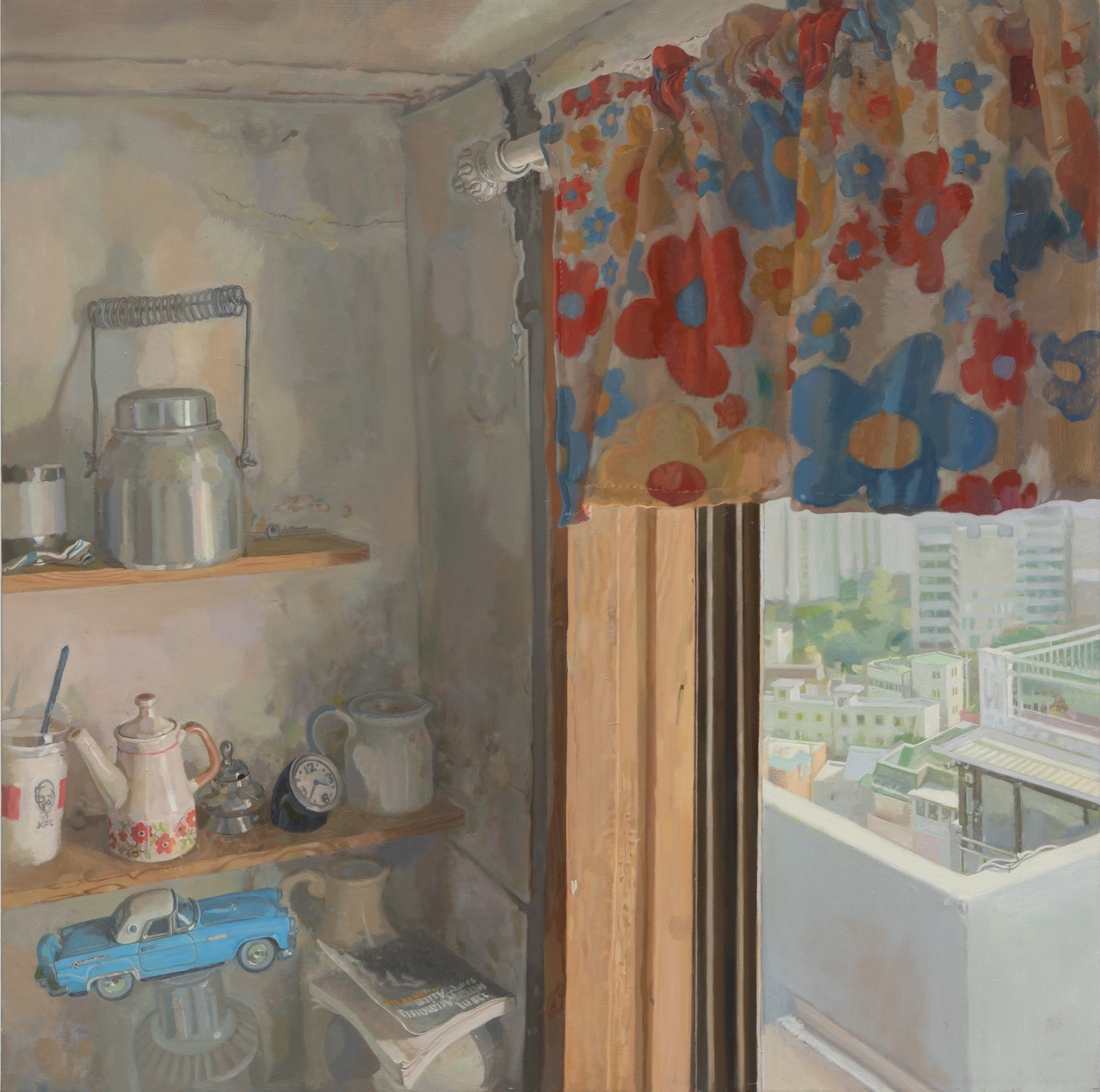
A flamboyant floral curtain hanging in a worn studio, a leather bag and wall clock bearing the marks of time, the dense cityscape of Seoul spreading beyond the window — ordinary scenes that pass unnoticed take on new life as painterly spaces through the artist's eye.
Lee Chang-nam's solo exhibition "Where Cool Meets Warm–Studio Curtain" runs through Dec. 5 at Hori Art Space. The show explores the relationship between visual perception and pictorial representation, a subject the artist has pursued over many years.
Lee has consistently painted the objects around him, the studio where he works, and the urban landscape visible from its windows. A hallmark of his practice is the delicate rendering not merely of an object's outward form but of the relationships among light and shadow, color and shape.
The central motif of this exhibition is the curtain. In "The Curtain" (2026) and "The Studio Curtain" (2026), a curtain patterned with red, blue and orange flowers forms a vivid contrast against the muted tones of an aged wall and window frame. Light filtering through the fabric adds a subtle tension to the interior space.
The curtain in these works is more than decoration. It serves as a boundary dividing the interior world the artist inhabits from the world outside, while also acting as a conduit connecting the two. The artist's gaze, which once rested on objects within the room, extends through the curtain and beyond the window to the landscape outside.
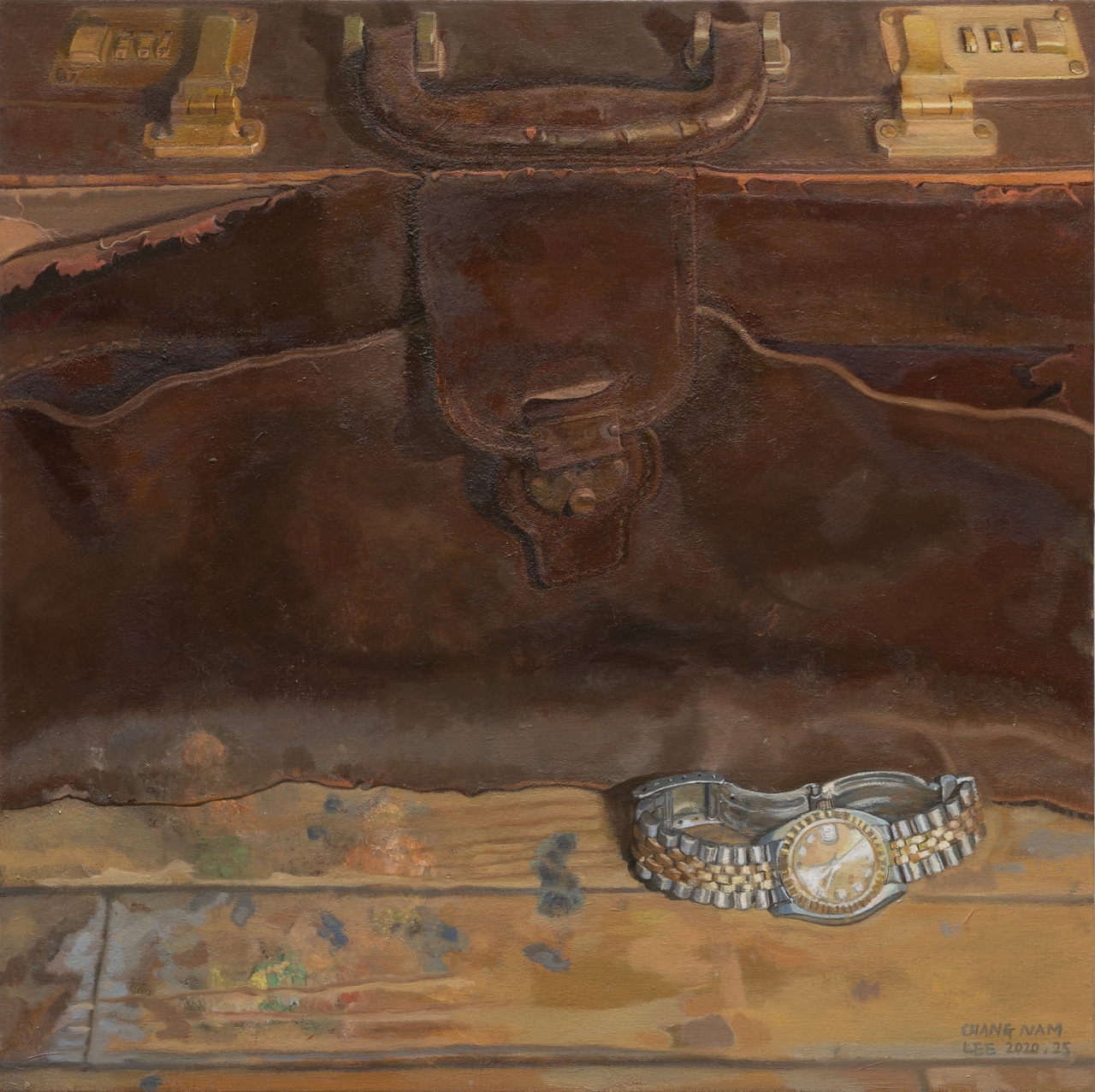
"Old Briefcase" (2020, 2025), depicting a weathered leather bag, and "Two Work Lamps and Wall Clock" (2025) showcase Lee's characteristic powers of observation. The creases of aged leather, light reflected off metal surfaces, and the stains and shadows on a wall are rendered with meticulous precision.
Turning from the studio to the world outside, the exhibition opens onto Seoul's urban landscape. "New Apartment Buildings" (2018, 2025) and "Seen from the Rooftop" (2018, 2026) capture the houses and low-rise buildings of the Geumho-dong neighborhood, newly constructed apartment towers, and the Han River and high-rise buildings visible in the distance. The shifting face of the city, rendered in fine gradations of tone and light, carries within it the artist's years of experience and memory of looking at the same place over time.
Lee's paintings create different impressions depending on the viewing distance. The densely layered planes of color and brushwork on the canvas coalesce into recognizable forms when seen from a certain remove, prompting the viewer to reflect on how we perceive the world around us.
Lee graduated from the Department of Western Painting at Seoul National University's College of Fine Arts. Since his debut solo exhibition at Gallery Ikon in 1994, his work has been shown at Hakgojae, Leeahn Gallery, Yiwhaaik Gallery and Culture Station Seoul 284, among other venues. His paintings are held in the collection of the National Museum of Modern and Contemporary Art art bank, among other institutions.
pink@heraldcorp.com